Thailand scraps its 53-year afternoon alcohol ban for a 6-month trial as tourism pushes for longer hours, but midnight cutoffs and stiff fines remain, leaving nightlife restricted while officials monitor safety and sales before any permanent change.
Wednesday saw an outdated junta law that has impeded the country’s hospitality and retail sector for the last 53 years abolished on a test basis. The 2 pm to 5 pm alcohol ban for the next 6 months is no more, and it is expected to extend beyond then. The welcome good news came from Deputy Prime Minister Sophon Zarum. The move came in response to recent legislation, which introduced a stiff fine for drinkers who were found on premises beyond extended opening hours. The government, however, has not extended late-night drinking hours with alcohol due to be stopped at 12 midnight and a one-hour period to drink up until 1 am.
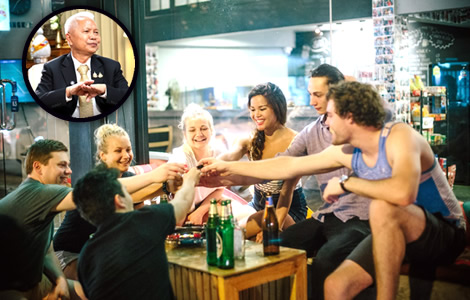
Thailand ended its long-standing afternoon alcohol sales ban earlier than expected after final consultations cleared the way for a nationwide trial. The decision removed the 2 pm to 5 pm restriction that had stood for fifty-three years. It had troubled tourism operators and retail businesses for decades.
The new liberalised daytime drinking regime has taken effect after Deputy Prime Minister Sophon Zarum confirmed on Tuesday that the review process had concluded. The government will now conduct a 180-day trial before issuing a permanent ruling.
Moreover, the trial began on Wednesday, December 3, following confirmation in the Royal Gazette on December 2. The announcement stated that the temporary measure aims to keep the Alcohol Beverage Control Act aligned with current conditions.
New afternoon alcohol window opens as officials begin nationwide monitoring of sales and safety data
Thailand will now allow legal alcohol sales between 2 pm and 5 pm for the first time in decades. The Alcohol Control Committee will track sales trends, road accidents, crime data and public health incidents. High-tourism areas will receive particular scrutiny. A full report will be submitted before the trial ends.
Two weeks ago, the National Alcohol Policy Committee agreed that the afternoon ban no longer matched modern lifestyles. It also concluded that the rule did not fit Thailand’s current tourism landscape.
The committee said economic conditions had changed since the ban’s introduction in 1972. Academics, hospitality operators and many drinkers had criticised the restriction for years. They argued that the ban encouraged illegal sales in neighbourhood shops and community groceries. Informal trade often replaced legal sales during the afternoon window.
Health officials warn of workplace drinking risks as committee backs six-month trial
Nonetheless, public health officials warned the committee of possible risks. They raised concerns about increased daytime drinking. They also pointed to the risk of consumption during working hours. Enforcement challenges were another concern. Thus, the committee chose to support a trial period to collect real-world data before making a final decision.
Deputy Prime Minister Sophon Zarum said the public hearing process had ended before the new regulation was issued. The hearing lasted fifteen days and gathered opinions nationwide. He said he expected the rule to take effect before the New Year holiday. The announcement on Wednesday met that timeline. Many operators immediately welcomed the confirmation.
However, not every shop will qualify under the new arrangement. Sophon confirmed that only registered establishments may sell alcohol between 2 pm and 5 pm.
Registered grocery stores qualify, he said, but unregistered shops do not. Confusion had already spread among some owners. Officials stressed that existing licensing rules remain unchanged.
Entertainment venues retain midnight sales cutoff as stiff fines and licensing limits are enforced
Additionally, rules for entertainment venues remain in place. Sales must stop at midnight. Drinking on premises may continue until 1 am. Anyone caught drinking alcohol after legal hours faces a fine of up to ฿10,000.
This fine stemmed from a rule previously criticised by members of the public and business concerns. That criticism contributed to broader scrutiny of alcohol regulations. The decision to revoke the afternoon ban followed those discussions.
The National Alcohol Policy Committee approved the revocation on November 13. The aim was to stimulate tourism and economic activity during peak seasons. These seasons include the New Year and Songkran. Visitor numbers usually rise sharply during these periods. Spending from foreign tourists also increases.
Meanwhile, industry groups have requested even broader changes. Hotel operators, nightlife venues and tourism associations urged the government to extend legal drinking hours to 4 am. They said later hours would improve competitiveness with regional nightlife destinations. They also claimed the change would boost tourism income.
4 am rejected as data shows a drunk-driving spike. Long-standing afternoon ban removal is a test
Nevertheless, the Ministry of Public Health rejected the proposal. Data showed an increase in drunk-driving incidents between 2 am and 3 am. Officials said a 4 am closing time would raise risks during those hours. The government instead approved a smaller extension from midnight to 1 am. That change remains in effect.
Thailand’s afternoon ban had shaped daily retail operations for decades. Retailers were required to block off alcohol displays each afternoon. Many stores said the rule confused foreign visitors.
Operators in tourist zones said customers often misunderstood the restrictions. The confusion sometimes required staff to explain the rule repeatedly each day.
In addition, business groups argued that the ban caused operational inefficiencies. Staff had to close and reopen alcohol sections daily. Some venues said the rule disrupted purchasing patterns and reduced revenue. These concerns intensified as Thailand’s tourism sector recovered.
Now, the 180-day trial will test whether legal afternoon sales reduce illegal activity. Officials will measure any changes in compliance and public safety. They will also assess whether the new window affects accident and crime statistics. The trial will monitor tourism spending as well, especially during the high season.
Government sets no benchmarks for success as temporary trial proceeds with late-night restrictions
Importantly, the government has not outlined specific thresholds for success or failure. Officials said only that the findings will guide the next step. The trial does not amend other sections of the Alcohol Beverage Control Act. It focuses solely on the afternoon window.
Furthermore, authorities emphasised that the trial is temporary. They said the trial’s purpose is evaluation, not liberalisation. All other alcohol regulations remain in force. Enforcement will continue under current rules.
The Royal Gazette announcement confirmed that the trial began on Wednesday. It stated that the change was needed to keep regulations appropriate for present conditions.
The Alcohol Control Committee will handle all monitoring duties. Officials will review data throughout the trial. They will then submit their conclusions to the government.
Some relief for foreign tourists and hospitality sector but Thai nightlife to remain stunted by new law
PM promises clarity on alcohol law but business sector says it’s not enough after this latest debacle
Alcohol law debacle continues to decimate not only tourism industry but also wider grassroots economy
Alcohol law shoots foreign tourism in foot for High Season with stiff fines for visitors drinking up at watering holes
For now, Thailand enters a testing phase after more than half a century of restrictions. The outcome will determine whether the country keeps or abandons its long-standing afternoon ban. The final decision will follow once the 180-day trial ends.
The original ban was introduced on November 15th, 1972, by the Revolutionary Council headed by Field Marshal Thanom Kittikachorn as Order Number 253. It was particularly aimed at denying civil servants access to alcohol at lunch. The Revolutionary Council was a junta government which came to power in the 1971 coup d’état.
Join the Thai News forum, follow Thai Examiner on Facebook here
Receive all our stories as they come out on Telegram here
Follow Thai Examiner here
Further reading:
Closure of Phuket bars and alcohol restrictions turn off prospective foreign tourists says survey
Blow for travellers: strict rules, no bars and entertainment venues allowed to open in Phuket