Thailand reels from the US-Iran war as fuel prices jump by ฿6 a litre and stations are hit by panic buying. Ships stall near Hormuz, costs surge and power prices loom higher. PM Anutin apologises while tourism faces a possible 5-million visitor drop and mounting economic pressure from the 1-month-old war.
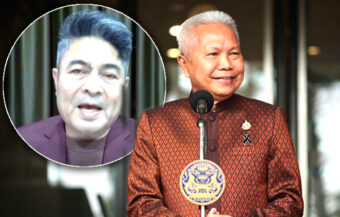
An apology from Prime Minister Anutin Charnvirakul on Saturday, even as officials prepare the submission of his second government for Royal approval, shows how devastating the US-Iran war has been for Thailand since it opened with Operation Epic Fury on Saturday, February 28th. A key development this week is a warning from the Ministry of Tourism and Sports that foreign tourist arrivals have been severely hit by the war and the disruption and uncertainty it has unleashed. One estimate suggests Thailand may have to welcome just 28 million foreign tourists in 2026, a sharp 15% drop from the figure seen in 2025.
Thailand has been left reeling from the impact of the US-Iran war. Over the weekend, the conflict continued to rage, and escalation remained possible. As a result, the government in Bangkok faced mounting pressure across several sectors.
Officials are being forced to juggle fuel shortages, shipping disruptions and rising costs. Meanwhile, global oil markets reacted quickly to the fighting, and fuel prices moved upward. Consequently, the economic shock reached Thailand within days.
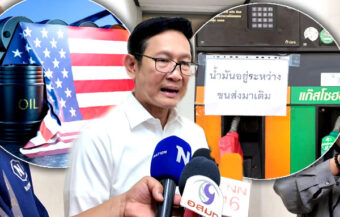
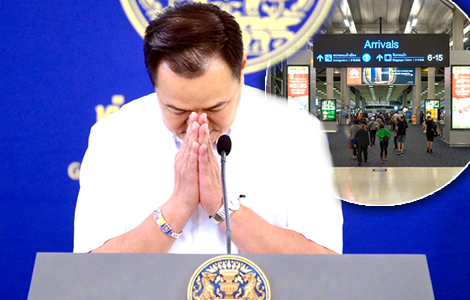
Prime Minister Anutin publicly apologised to the Thai people after gasoline prices surged nationwide. The increase reached ฿6 per litre in a short period. As a result, motorists rushed to petrol stations across the country. However, many petrol stations struggled to meet demand during the surge.
Fuel demand surges before Songkran as supply pressure builds and officials monitor reserves closely nationwide
In particular, supply pressure intensified ahead of the Songkran holiday period. Traditionally, travel increases sharply during Songkran. Therefore, fuel consumption rises across highways, cities and tourist areas. At the same time, officials monitored reserves and distribution closely. Critics, however, warned that gasoline and oil supplies were already tight before the holiday travel period.
On Saturday, Prime Minister Anutin explained that the price of oil has suddenly surged. In addition, he gave some idea of the uncertainties presently being faced by the government. Certainly, he promised that gasoline and oil products would be in stock over Songkran. However, he asked motorists and the public to conserve energy. He spoke about the kingdom fighting to “survive” yet another crisis.
Meanwhile, that crisis has also affected cargo shipments linked to the Middle East. On Saturday, Ministry of Commerce official Suphajee Suthumpun confirmed a major delay. Specifically, five cargo ships carrying fertiliser for Thailand were stalled.
The disruption occurred because of the crisis in the Strait of Hormuz. That route is one of the most critical shipping corridors in the world. Consequently, vessels moving through the region faced delays and uncertainty. Therefore, fertiliser shipments bound for Thailand could not proceed on schedule. Agriculture depends heavily on imported fertiliser supplies. As a result, officials began monitoring domestic supply implications closely.
Shipping disruption in Hormuz slows cargo traffic and raises wider supply chain uncertainty concerns
At the same time, global shipping traffic connected to the Middle East slowed noticeably. Insurance costs increased, and shipping companies adjusted routes. Consequently, cargo schedules became less predictable across several supply chains.
Meanwhile, the government attempted to reassure the public. Prime Minister Anutin said there was relief in working toward solutions to the crisis. However, critics warned that the situation remained difficult to control. In particular, analysts pointed to limited fuel supplies during a period of rising demand. Moreover, the approaching Songkran travel season could intensify the pressure further.
As a result, concern spread across the transport and tourism sectors. Bus operators, logistics firms and tour companies depend heavily on fuel. Therefore, disruptions in supply could quickly affect travel activity. Furthermore, the crisis has weakened confidence in the government’s ability to manage costs.
Fuel price spikes often trigger wider economic concern. At the same time, households are facing rising living expenses. Consequently, attention has shifted toward other cost pressures emerging in the economy.
Electricity pricing proposals emerge as rising fuel costs reshape energy policy debate nationwide
Meanwhile, the electricity sector has also entered the spotlight. The Energy Regulatory Commission has proposed three electricity pricing options for the next billing period. These options apply to the May to August 2026 period.
Therefore, the commission opened a public consultation running from March 25 to March 31. After that period, a final decision will be announced. However, all three scenarios involve price increases for consumers nationwide. Rising fuel costs and earlier energy subsidies have shaped the proposals.
Under the first scenario, electricity prices would rise sharply. The average electricity price would reach 4.59 baht per unit, excluding VAT. Consequently, the increase would total 71 satang compared with the current rate. That change represents about an 18 per cent increase nationwide. Officials linked the increase to accumulated costs absorbed by the Electricity Generating Authority of Thailand.
Previously, the authority covered fuel and electricity purchase costs during the global energy crisis. However, those costs must now be repaid. In total, the outstanding amount stands at 35,928 million baht. Therefore, the fuel adjustment charge would be used to recover those funds.
EGAT repayment strategy drives debate over electricity price rises and financial recovery measures
As a result, EGAT would repay loans taken during the earlier energy crisis. Officials said the repayment would restore the authority’s financial liquidity to normal levels more quickly. Meanwhile, the second option proposes a smaller increase in electricity prices.
Under that scenario, electricity prices would reach 4.08 baht per unit. Consequently, the rise would total 20 satang compared with the current price of 3.88 baht. However, EGAT would continue absorbing accumulated costs under this option. Therefore, the financial burden would remain with the electricity authority rather than consumers.
Finally, the third option proposes the lowest increase among the three scenarios. Under this plan, electricity prices would reach 3.95 baht per unit. As a result, the increase would total only 7 satang from the current rate.
To achieve this outcome, regulators are considering the use of clawback funds. These funds total about 9,472 million baht. They were accumulated during earlier energy market disruptions linked to unrest in the Middle East.
Electricity price pressure grows as consultation continues and political support becomes uncertain
Therefore, the funds could help reduce the burden on electricity users. However, electricity prices would still rise during the May to August period. Significantly low and controlled electricity costs have proved a key consideration for voters and political popularity.
Basically, this crisis is seen as undermining public support for Prime Minister Anutin and his proposed new government, which may be sworn in next week.
Meanwhile, the commission emphasised that the consultation process remains open to the public. Feedback is being collected through its website during the consultation window. Afterwards, officials will review responses and determine the final tariff decision.
At the same time, rising fuel costs have begun affecting everyday goods and services across Thailand. The Ministry of Commerce has already assessed potential impacts linked to diesel prices. Officials examined scenarios where global crude oil remains around US$120 per barrel. Consequently, transport and production costs would increase across many sectors.
Cost pressures spread across consumer goods, food and services as oil price risks climb
To estimate the likely outcome, analysts reviewed the Russia-Ukraine conflict of 2022 as a case study. That period also saw sharp increases in global energy prices. As a result, officials mapped possible impacts across consumer goods, food products and services.
Consumer goods are expected to rise moderately in price. Specifically, everyday items may increase by around 3 to 5 per cent. These include shampoo, detergent and laundry liquid. Higher distribution and transportation costs are the primary drivers behind these increases.
Meanwhile, food products could face stronger price pressure. Officials estimate an average increase of about 10 per cent in this sector. This category includes eggs, pork, palm oil and ready-to-eat meals. Food prices often react quickly to changes in fuel costs.
Production, storage and delivery depend heavily on transportation networks. Consequently, rising diesel prices feed into retail food prices relatively quickly.
Service sector faces steep fare increases as fuel costs push transport and operating expenses
Furthermore, the service sector may experience the largest increases. Motorcycle taxi fares are projected to rise sharply if fuel prices remain high. Officials estimate average increases of about 30 per cent. Motorcycle taxi services depend directly on fuel for daily operations.
Therefore, operators may adjust fares to cover rising costs. Meanwhile, men’s haircuts could increase by around 20 per cent on average. Although not fuel-intensive directly, service providers face higher operating costs linked to utilities and transport.
As a result, rising oil prices are expected to feed into the final price of many products and services. Businesses across the economy must adjust to higher operating expenses. At the same time, domestic demand may tighten as costs rise across sectors. Consequently, the economic pressure linked to the war extends beyond fuel markets alone.
Meanwhile, attention has turned sharply toward the tourism sector, one of Thailand’s most important economic drivers. The Ministry of Tourism and Sports has warned of potential declines in visitor numbers. The conflict in the Middle East has affected global travel conditions significantly. Airlines worldwide are grappling with rising oil prices. Consequently, ticket prices have increased across many routes.
Tourism outlook weakens as airlines raise fares and global travel demand shows strain
As a result, some travellers have cancelled trips altogether. Others are rushing to secure lower fares before prices rise further. According to ministry projections, Thailand could see a significant drop in arrivals this year.
Officials warned that visitor numbers could fall to the lowest level in three years if the conflict continues. Specifically, the country could lose around three million foreign tourists this year. That estimate assumes the war drags on for six months.
Consequently, Thailand could see nearly 10 per cent fewer visitors than last year. Officials estimate the economic loss could reach about 150 billion baht. That figure equals roughly 10 per cent of foreign tourist receipts recorded last year.
The projections were presented by Natthriya Thaweevong, permanent secretary of the Ministry of Tourism and Sports. Previously, the government had set a target of 35 million foreign visitors for 2026. However, prolonged disruption could reduce arrivals even more significantly. Under current projections, visitor numbers could fall to around 28 million. That level matches the total recorded in 2023 and 20% below start-of-year expectations.
Airlines adjust schedules and strategy shifts toward Middle Eastern visitors with higher spending
Meanwhile, airlines continue adjusting to the surge in aviation fuel costs. Fuel represents one of the largest operating expenses for airlines. Therefore, many carriers have increased ticket prices or adjusted flight schedules.
Natthriya said travel depends fundamentally on fuel availability. Without fuel, flights cannot operate normally. Consequently, the tourism industry becomes highly sensitive to energy price shocks.
She also warned that the sector could still lose visitors even if the war ends soon. If the conflict ends at the end of March, Thailand may still lose one to two million tourists this year. Therefore, tourism authorities have begun adjusting strategies to mitigate losses. Officials are now focusing on attracting high-spending travellers from the Middle East.
The government aims to attract at least 200,000 visitors from that region in 2026. That figure represents roughly a quarter of last year’s arrivals from the Middle East. Meanwhile, marketing budgets are being redirected to support this shift. Funds originally allocated to Europe and the United States will now support targeted campaigns in Middle Eastern countries. Officials note that travellers from the Middle East tend to spend more per trip.
Spending data highlights Middle Eastern tourists as campaigns pivot and flight cancellations fall
Government data shows that Middle Eastern tourists spend around 80,000 baht per visit on average. In comparison, European visitors spend about 61,000 baht per trip. Meanwhile, tourists from Asia spend roughly 39,000 baht on average.
These differences influence how tourism campaigns are designed. Furthermore, officials said many Middle Eastern travellers can absorb higher airfare costs. Some are willing to pay increased commercial or charter flight fares.
At the same time, flight operations have begun stabilising after earlier disruptions. Initially, hundreds of flights were cancelled each day. However, cancellations have dropped significantly. Officials say fewer than 30 flights per day are currently cancelled.
Meanwhile, Thailand continues promoting its medical tourism sector to attract affluent travellers. The country markets itself as a destination for world-class treatment.
Medical tourism push expands while regional markets provide steadier travel demand for Thailand
Major hospital operators are involved in these campaigns. These include Bangkok Dusit Medical Services, which operates Bangkok Hospital, and Bumrungrad Hospital. Consequently, medical tourism remains a central element of Thailand’s strategy to attract higher-spending visitors.
In addition, tourism authorities are tailoring campaigns toward nearby Asian markets. Short-haul travellers may provide steadier visitor numbers during global disruptions.
These travellers can reach Thailand with shorter flights and lower fuel costs. Therefore, travel demand from nearby countries may remain relatively stable. Despite these adjustments, tourism remains highly important to the Thai economy.
The sector contributes about 12 per cent of gross domestic product directly. However, the indirect impact is even larger. Tourism accounts for roughly 20 per cent of GDP when related sectors are included. Furthermore, tourism is linked to about 40 per cent of employment nationwide. Hotels, airlines, restaurants and transport companies all rely on visitor spending. Recent data shows that growth has already slowed slightly this year. Thailand welcomed 8.54 million tourists between January 1 and March 22. That figure represents a decline of about 3 per cent from the same period last year.
Tourism setbacks continue after disasters, conflicts and weaker visitor demand across key markets
Meanwhile, last year’s tourism performance also faced several setbacks. Thailand recorded 33 million foreign visitors in 2025. However, that total was down 7.2 per cent from the previous year. Several events disrupted travel demand during that period.
First, the country experienced an earthquake. Later, Thailand endured its worst flooding in recent history. In addition, deadly clashes occurred with neighbouring Cambodia. These developments affected visitor confidence across several markets.
Looking at visitor composition, Asian tourists formed the largest group in 2025. About 22 million visitors came from Asian countries. Meanwhile, Europe accounted for more than 8.25 million travellers. The Middle East contributed more than 750,000 visitors.
As the war continues, authorities are considering measures to support domestic tourism activity. One proposal would allow taxpayers to claim allowances from tourism receipts. This measure aims to encourage more domestic travel spending. Meanwhile, other support options are under discussion within the government. Lower tax rates for hotel operators are being examined. In addition, debt moratoriums may be offered to businesses facing financial strain. Another proposal involves managing fuel supplies during peak travel periods. Officials are discussing rationing measures at filling stations.
Government considers domestic tourism support tax incentives and fuel management during travel surge
The aim would be to ensure tour bus operators receive enough fuel during the Songkran travel surge. Despite these measures, government planners face limited visibility into the future. Many departments are planning only weeks ahead due to the conflict.
Currently, officials focus on the next four to six weeks. The outlook depends largely on developments in the war.
Oil and energy crisis deepens in Thailand as Prime Minister Anutin shows off new EV car to reporters
Thai ships can sail through the Hormuz Strait but there is renewed concern for the three missing sailors
Prime Minister Anutin has said a new government will likely be in place next week. Administrative adjustments may follow soon after that transition. However, uncertainty surrounding the conflict remains the dominant factor shaping policy decisions. Officials say it remains unclear when the war will end.
Ongoing war uncertainty continues to shape policy planning energy risk and economic outlook
Moreover, the future condition of the Middle East region is unknown. In the meantime, the war continues to weigh heavily on government operations. Rising fuel prices, supply disruptions and tourism risks remain immediate concerns for Thailand.
Speaking with reporters over the weekend, Prime Minister Anutin was forced to dismiss the label now being applied to Thailand’s economy as the “sick man of Asia”. Certainly, these last two decades have seen the country buffeted by emergency after emergency, storm after storm, including two coup d’états, trade wars, a falling and ageing population, sky-high household debt, an education system malaise, an international scammer crisis, a gold crisis, an international pandemic, war with Cambodia and an earthquake.
On the one hand, the country has a surprisingly resilient economy, which helps to maintain stability. However, it has not found an interval in which to apply decisive policies to ramp up economic growth beyond the 2–3% average recorded in the last decade.
Some analysts believe that given its population demographics and underlying structural problems, it never will.
Join the Thai News forum, follow Thai Examiner on Facebook here
Receive all our stories as they come out on Telegram here
Follow Thai Examiner here
Further reading:
Oil and energy crisis deepens in Thailand as Prime Minister Anutin shows off new EV car to reporters
Anxiety about oil supplies and prices as economic growth in 2026 now dependent on the US Iran War
US Ambassador Seán O’ Neill briefed Prime Minister Anutin Charnvirakul at Government House on War
Visa waivers, discounted hotel stays and 2,000 baht a person per day for stranded tourists announced
Liquidity crisis or shortage of cash on the ground is shrinking Thailand’s economic growth prospects
Thai Minsters engage with US trade chief Jamieson Greer in Paris at global OECD ministerial meeting