Travellers are being blocked from flights and denied entry to Thailand as immigration tightens security amid the escalating war with Cambodia targeting suspected mercenaries, foreign agents and infiltration risks during the pre-Christmas tourist rush.
A security crackdown tied to the Thai–Cambodian war is blocking travellers deemed security risks from entering Thailand during the busy pre-Christmas period. The Immigration Bureau confirmed that, following a high-level meeting on December 11, enhanced screening measures linked to the conflict are now in force. The focus is on potential mercenaries, hired operatives and foreign agents working for Cambodia who may attempt to enter through Thai airports posing as tourists. The move comes as tensions rise nationwide over espionage and infiltration, with the war intensifying and the Thai military’s death toll climbing. On Sunday, a 16th Thai soldier was reported killed just hours after leaving his wife at home.
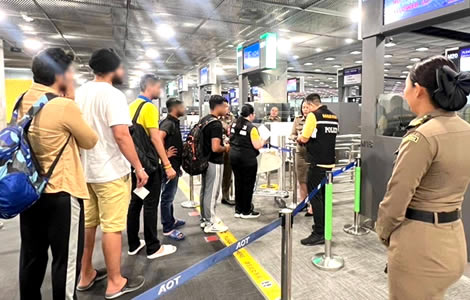
Thailand is moving through one of its busiest tourism periods of the year, with airports operating at near capacity and arrivals climbing daily. However, amid this seasonal surge, reports have emerged of foreign travellers being blocked from boarding flights. In several cases, airlines told passengers they were “restricted” from flying to Thailand. Importantly, the reason cited was guidance from the Immigration Bureau in Bangkok.
Over the past 24 hours, these reports have spread rapidly across travel forums and passport-related groups. Similarly, tourist networks linked to Thailand have shared repeated accounts of boarding denials.
In each instance, airlines used near-identical language. Consequently, travellers were informed they could not board flights bound for Thailand. Notably, no written explanations were provided to affected passengers.
Reports of airline boarding denials grow as travellers cite immigration restrictions during Thailand’s peak season
One traveller posted online that the incident involved his first trip to Thailand. Immediately, the claim drew concern from other forum users. Typically, restrictions of this nature are associated with prior deportations or blacklisting. As a result, many questioned how a first-time visitor could be affected. However, the traveller became evasive when asked for details.
Specifically, he declined to name the airline involved. Moreover, he refused to state his country of departure. Consequently, forum participants noted that the lack of information prevented verification. As the discussion continued, uncertainty surrounding the case increased rather than eased.
At the same time, another traveller shared a similar experience. He said his airline denied boarding despite his eligibility for visa-free entry. Thailand currently grants visa-free access to citizens of 93 countries. Nevertheless, the airline told him he could not travel. Again, immigration restrictions were cited without further explanation.
Boarding denials coincide with widening Thai-Cambodian conflict and heightened scrutiny of arrivals
These reported incidents emerged as Thailand’s conflict with Cambodia intensified sharply. Over the weekend, fighting expanded beyond earlier expectations. Previously described as border clashes, the situation is now openly referred to as war. Crucially, hostilities are being conducted on land, sea, and air.
As the conflict escalated, Thai forces advanced in several contested areas. However, commanders reported unexpected resistance. In recent days, Thai units were surprised by the tenacity of Cambodian forces. Their operational capability exceeded prior assessments.
Notably, Cambodian units have deployed drone warfare along the front. In addition, advanced weapons systems have appeared suddenly. Thai sources suggest some of this equipment originated from China. Previously, such systems had not been observed in the conflict zone. As a result, battlefield conditions shifted rapidly.
At the same time, Thai authorities intensified internal security measures nationwide. Within the last 24 hours, officials announced additional enforcement steps. These measures span immigration control, intelligence coordination and information monitoring.
Immigration ordered to block suspected mercenaries and conflict-linked travellers after security escalation
On Monday, senior officials confirmed new immigration instructions. Specifically, the Immigration Bureau was ordered to block individuals suspected of being mercenaries. Likewise, those believed to be assisting Cambodia’s war effort are to be denied entry. As a result, immigration officers were granted expanded discretion at checkpoints.
These decisions followed a broader national security escalation. Consequently, coordination between immigration, police, and intelligence agencies increased. Officials emphasised the need for faster information sharing. Screening criteria were tightened accordingly.
In parallel, authorities launched a crackdown on misinformation. Officials warned that false reports could interfere with military operations. Several incidents have already resulted in arrests across the country.
On Koh Phangan, police arrested a woman accused of spreading false claims online. The posts alleged that U.S. mercenaries were operating drones in support of Cambodia. Authorities said the claims were entirely fabricated. Investigators stated there was no supporting evidence.
Intelligence and police probe drone use, espionage claims and foreign involvement tied to Cambodia conflict
Separately, Thai intelligence released information last week regarding drone operations. Analysts said some Cambodian drone operators were using English. However, officials did not identify nationalities. They said monitoring efforts were ongoing.
Meanwhile, security concerns also surfaced in northeastern Thailand. In Nakhon Ratchasima, police began investigating reports of espionage. On Sunday evening, officers said the allegations involved Russian nationals. According to the reports, these individuals were allegedly hired by Cambodia to spy on Thai military facilities.
Later, immigration authorities issued formal statements addressing the broader security situation. They ordered strict controls on Cambodian nationals using visa-free entry. Additionally, officials said high-risk foreign groups would face increased scrutiny. National security was cited as the primary reason.
Authorities urged foreign tourists to understand the measures. They emphasized that the actions were precautionary. Waiting times, they said, remained within acceptable limits.
Senior police leaders warn of infiltration risks as conflict deepens despite continued commercial flights
These developments followed growing concern among critics and academics. On social media, some warned that visa-free entry could be exploited by hostile actors. Consequently, these warnings gained traction online.
On December 15, 2025, senior officials addressed the situation publicly. Pol. Maj. Gen. Cherngron Rimphadee spoke as Immigration Bureau spokesperson. He outlined the rationale behind the stricter controls.
He said police leadership was deeply concerned by the renewed fighting. National Police Chief Pol. Gen. Kittirat Phanphet raised alarms over the conflict’s intensity. Pol. Lt. Gen. Panumas Boonyalak echoed those concerns. Together, they warned of heightened security risks.
Despite the violence, commercial flights between Thailand and Cambodia continue. Nevertheless, officials fear exploitation of regular travel routes. They believe mercenaries or enemy agents could operate behind front lines. Both Thai and Cambodian territories were cited as potential targets.
Border crossings and airport screening tightened as authorities target unusual travel during active conflict
Regarding border crossings, officials pointed to natural routes as a concern. Such crossings could be used covertly. As a result, they could enable espionage or logistical support operations.
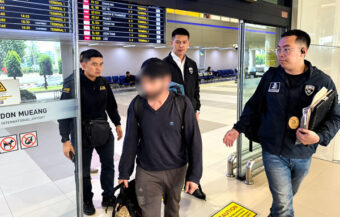
On December 11, 2025, the Immigration Bureau convened a high-level meeting. Commanders from five major airports attended. These included Suvarnabhumi, Don Mueang, Chiang Mai, Phuket, and Hat Yai.
The meeting focused on decisive countermeasures. Officials discussed how to identify travellers posing security risks. Behavioural indicators were emphasised over nationality alone.
Two specific groups received attention. First were mercenary groups from Eastern Europe and Upper Asia. Second, there were Cambodian nationals using visa-free entry during the active conflict.
Officials said such travel patterns appeared unusual for tourists. Therefore, travellers with legitimate business were advised to apply for visas. Embassy screening was stressed as essential.
Authorities deny entry to 185 people as airport queues grow amid heightened security screening
Since the clashes began, immigration officers have denied entry to 185 individuals. Authorities did not disclose their nationalities. Security concerns were cited in all cases.
The Immigration Bureau said coordination with intelligence agencies would continue. Officials noted that better information improves targeting. Consequently, they aim to block prohibited individuals without affecting general tourism.
This approach is critical during peak season. Thailand currently receives between 75,000 and 80,000 tourists daily. Immigration officers have limited time per passport. On average, checks last no more than 45 seconds.
Stricter screening has increased queues at major airports. In particular, Suvarnabhumi Airport has seen longer waits during peak hours. Waiting times have risen from around 20 minutes to approximately 45 minutes.
Nevertheless, officials said staffing levels remain sufficient. They confirmed that Thai citizens are unaffected. Entry and exit for nationals continue normally.
Deleted police warning fuels confusion after claims of foreign spies targeting military sites
Meanwhile, police actions in Nakhon Ratchasima drew public attention. On December 14, Phon Krung Police Station posted a warning online. The post alleged foreign spying activity targeting military sites.
The message claimed Cambodian forces hired Russian nationals. It named Korat Royal Thai Air Force Base as a target. It also mentioned drone usage. Residents were urged to report suspicious foreigners.
The post appeared around 6 p.m. and was later deleted. No explanation followed. As a result, confusion spread among local residents. Some online users criticised the deletion. Others supported the decision, arguing that sensitive information should not be public.
Subsequently, police issued a revised post. This version focused on general indicators of espionage. No countries or drones were mentioned. The revised message listed warning signs, including secretly filming military areas and suspicious surveillance behaviour.
Additional signs included entering restricted zones and possessing equipment such as drones, GPS devices and binoculars. Police warned of severe penalties under Thai law.
Soldier deaths, active fighting, and misinformation cases underline rising pressure on internal security
As border fighting continued, casualties mounted. On December 14, reports confirmed the death of a 16th Thai soldier. The soldier had messaged his wife earlier that morning. Two hours later, his family received news of his death.
Gunfire and explosions were still reported the following morning. Border areas remained active combat zones. Officials from the Second Army Area urged restraint on social media, warning against posting photos, videos, or livestreams that could compromise operations.
The misinformation crackdown intensified further south. On Koh Phangan, police charged a 72-year-old woman. The case involved false claims about American mercenaries.
Authorities said she spread the information through LINE groups. The posts alleged Jewish American soldiers were travelling by boat to Cambodia, with Sihanoukville named as the destination.
Police trace false mercenary claims to LINE groups after viral posts spread during conflict
The messages claimed 180 foreigners were preparing to depart, while another 200 were said to remain on the island. Photos accompanied the claims. Police said all allegations were false.
Investigators traced the first post to December 12. It originated from a house on Koh Phangan. The initial LINE group had 270 members. The content was later forwarded to two smaller groups with 24 and 29 members.
Police identified the sender as a local resident. The woman admitted to sharing the messages. She said she did not verify the information and did not know the source.
War to continue says PM Anutin. Dismisses President Trump’s ceasefire talk as a ‘misunderstanding’
Top tourist body expresses concern about the Thai Cambodian war’s impact on foreign tourism industry
Police charged her under computer crime laws. The offence involves importing false information likely to harm the public. Authorities displayed the messages during a briefing and reiterated that no U.S. mercenaries were involved. Investigations into security threats remain ongoing.
The timing coincided with a televised discussion on December 12. Political scientist Panitan Wattanayagorn appeared on Channel 3 and discussed military drone usage. During the programme, he mentioned detainees linked to the battlefield and referred to military consulting companies. He did not identify nationalities.
He said such companies operate under military command and train or operate military drones. His comments were later distorted online by social media users.
Join the Thai News forum, follow Thai Examiner on Facebook here
Receive all our stories as they come out on Telegram here
Follow Thai Examiner here
Further reading:
War to continue says PM Anutin. Dismisses President Trump’s ceasefire talk as a ‘misunderstanding’
Confusion after Trump’s 20 minute phone call with PM Anutin. US side claimed a ceasefire was agreed
People’s Party on campaign but on guard against potential legal complaints to oversight agencies
Wealthy young People’s Party leader aims to create a technology-driven and efficient welfare state