Fragile US-Iran ceasefire wobbles within hours as Iran blocks Hormuz after Israeli strikes. Gulf states warn attacks continue, China’s role questioned, and US military flights in Krabi raise eyebrows.
Confusion deepened on Wednesday evening as the US-Iran ceasefire appeared to falter, with reports that Tehran moved to block vessels transiting the Strait of Hormuz after an Israeli strike on southern Lebanon. Thailand’s Ministry of Foreign Affairs, Sihasak Phuangketkeow, announced plans to visit the region, while Bangkok continued urging nationals to return home amid uncertainty and the risk of renewed war. Questions also grew over the exact terms of the US-Iran deal and the role China played in the accord brokered by Pakistan’s Foreign Minister Ishaq Dar.
A last-minute ceasefire between the United States, Israel and Iran was announced on Tuesday evening in Washington DC. However, the agreement followed a 40-day war that began on February 28. Consequently, governments and markets reacted with caution. The conflict had already triggered a major economic shock across global energy and financial systems. Therefore, the announcement brought measured relief rather than certainty.
By Wednesday, attention shifted quickly to the ceasefire’s durability. Meanwhile, officials began assessing its terms and immediate implications.
Early reports indicated uncertainty on the ground. In particular, Iranian sources pointed to complications within hours of the announcement. As a result, confidence in the agreement remained limited.
Iran blocks Hormuz transit after Israeli Lebanon strikes as ceasefire stability faces immediate strain
By Wednesday evening, Iran signalled problems with implementation. Specifically, Iran moved to block transit through the Strait of Hormuz again. This action followed Israeli aerial strikes on southern Lebanon.
Therefore, tensions rose sharply despite the ceasefire. Iranian media stated that oil tanker passage had been suspended. Consequently, concerns over global oil supply intensified once more.
Israel, however, described the bombardment as separate from the ceasefire. In contrast, Jerusalem said the Lebanese theatre fell outside the agreement’s scope. However, this interpretation was immediately challenged.
Pakistan’s Minister of Foreign Affairs, Ishaq Dar, rejected that position. He stated that Lebanese operations should be included within the ceasefire framework. As a result, disagreement emerged over the agreement’s boundaries and enforcement.
US calls ceasefire fragile as Gulf states report continued attacks and regional anxiety escalates
In Washington, US Vice President JD Vance addressed reporters on Wednesday. Notably, he described the ceasefire as fragile. At that stage, the agreement had not reached 24 hours. Therefore, US officials signalled caution in their public messaging. His remarks reflected concern over rapid escalation risks.
At the same time, Gulf states issued formal complaints. For example, the United Arab Emirates, Bahrain and Kuwait reported continued attacks. They insisted that hostilities had not fully ceased. As a result, regional anxiety increased.
Previously, these states had urged Washington to continue military operations. Their objective was the removal of the Iranian threat. Accordingly, their position did not change after the ceasefire announcement.
Meanwhile, Iranian expatriates and activist groups also reacted. Many expressed dissatisfaction with the agreement. In addition, they continued to call for political change in Tehran. Their responses added another layer to the international reaction. Consequently, the ceasefire faced pressure from multiple directions.
China’s mediation role disputed as competing narratives emerge over influence in Iran US ceasefire deal
At the same time, confusion surrounded China’s role in securing the agreement. Sources in Beijing stated that China played a key mediating role. Therefore, attention shifted to China’s growing diplomatic influence.
However, some conservative sources offered a different view. They described the outcome as a strategic win for the United States. In contrast, they framed it as a lesson for Beijing. Consequently, competing geopolitical narratives emerged.
Reports confirmed that Iran and the United States agreed to a two-week ceasefire. This took effect in the early hours of April 8, Thai time. Notably, China was identified as a central mediator in the process. Previously, Pakistan had attempted to mediate between the two sides. However, those efforts failed to secure an agreement. Therefore, China’s involvement became decisive.
China’s role is closely linked to its economic ties with Iran. For instance, Iran supplies large volumes of oil to China. In addition, both countries cooperate in technology and military equipment. Furthermore, China has invested heavily in Iranian infrastructure. Projects under the Belt and Road Initiative include ports and logistics networks. As a result, China holds considerable leverage in negotiations.
China seeks regional influence as Thailand monitors crisis and prepares diplomatic engagement efforts
China has also promoted itself as a regional peacemaker. For example, it facilitated an agreement between Iran and Saudi Arabia in 2023. However, its attempts to advance Israeli-Palestinian dialogue have not succeeded.
Geopolitically, analysts expect shifts following the conflict. Specifically, some Middle Eastern states may diversify alliances. Consequently, reliance on the United States could decline. In contrast, China’s focus on trade and development may attract greater regional engagement.
On the other hand, this White House sees the opposite effect. In effect, a new US brokered and facilitated peace in the region, including a more malleable Iran. This is the gambit that US President Donald Trump has undertaken.
In Bangkok, Thailand’s Ministry of Foreign Affairs responded to developments. Sihasak Phuangketkeow announced plans to travel to the Middle East. He is expected to meet counterparts from Oman and Iran.
Meanwhile, Thailand is monitoring the situation closely. Authorities are assessing risks to Thai nationals in affected areas. Therefore, citizens have been urged to return home as a precaution.
Thailand urges nationals to return home as ceasefire uncertainty persists and diplomatic efforts intensify
At the same time, Thailand hopes a more formal agreement will emerge. However, officials acknowledge ongoing instability in the region. Accordingly, diplomatic engagement remains active. Thailand is also evaluating long-term implications for regional alignment and economic cooperation.
Details of the ceasefire remain limited. However, reports suggest provisions addressing Iran’s nuclear programme. Specifically, the United States may oversee the removal of enriched uranium. In addition, the agreement focuses on the Strait of Hormuz.
This waterway remains a critical route for global oil shipments. Approximately 20 per cent of the world’s oil passes through it.
Since the war began, shipping in the strait has been severely disrupted. Consequently, tanker traffic declined sharply. This disruption affected global energy markets and supply chains. Iranian media reported further restrictions following Israeli strikes on Lebanon. Therefore, Iran linked the suspension to alleged ceasefire violations.
Trump outlines US role in Hormuz shipping as ceasefire terms remain unclear and tensions persist
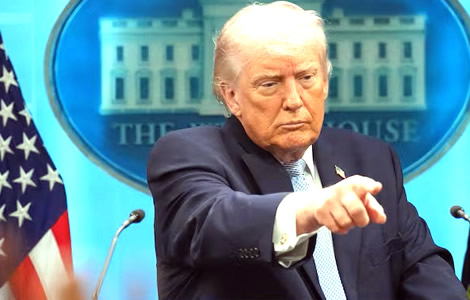
US President Donald Trump addressed the situation publicly. He stated that the United States will help manage maritime congestion in the Strait of Hormuz. This role forms part of the ceasefire framework. According to Trump, the plan must be implemented immediately and safely. He expressed confidence in a positive outcome. In addition, he predicted increased financial flows and economic recovery.
He also stated that Iran could begin reconstruction efforts without delay. The United States, he said, is prepared to provide supplies and resources. Meanwhile, monitoring mechanisms will be established to oversee implementation.
Earlier, Iranian Foreign Minister Abbas Araghchi commented on navigation through the strait. He stated that shipping could resume during the ceasefire. However, coordination with Iranian military authorities would be required. In addition, technical limitations remain unresolved.
Previously, joint US-Iran management of the strait had been proposed. However, Iran has not responded publicly to that proposal. Consequently, this aspect of the agreement remains unclear. Despite the ceasefire, scepticism remains widespread. Iran has suffered significant losses during the conflict.
Scores of senior leadership figures have been killed. At the same time, US and Israeli forces remain on alert. Both governments assess Iran as a continuing and possibly heightened threat.
US military aircraft activity in Krabi raises questions amid regional tensions and unclear mission details
Meanwhile, developments in Thailand have drawn attention. Reports of US military activity in Krabi have emerged. These reports coincided with ongoing tensions in the Middle East. On April 7, multiple US aircraft were observed at Krabi International Airport. Witnesses reported frequent take-offs and landings throughout the day and night. Consequently, local concern increased.
Aircraft identified included C-130 transport planes, MV-22 Osprey tiltrotors and H-60 Seahawk helicopters. Videos showed low-altitude flights and loud noise across the area. Locals reported dozens of movements within a single day. Many described the activity as unprecedented. In addition, passengers appeared to wear military-style clothing. These individuals used a separate terminal from regular travellers.
Online discussions quickly followed. Some observers speculated about the establishment of a US military base. Others suggested troop rotations linked to Middle East operations. At the same time, questions were raised about authorisation.
Observers asked why a civilian airport was used instead of a military facility. Typically, such operations are conducted at designated bases.
Thailand denies role in US strikes on Iran as Krabi flights fuel speculation over covert operations
Thai authorities responded to the reports. Officials confirmed that Thailand had no involvement in US attacks on Iran. They reiterated Thailand’s position as a military ally of the United States. However, they denied any operational role. Therefore, uncertainty remains regarding the purpose of the flights. Airport officials declined to comment and referred enquiries to an Air Force spokesperson.
One suggestion linked the flights to rest and relaxation programmes. These programmes support deployed personnel between operations. In particular, elite US forces were mentioned in reports. These forces were described as having played a decisive but covert role in Operation Epic Fury. However, no official confirmation of this link has been provided.
Anutin’s second cabinet takes office amid Premier’s warning about the growing energy crisis over Iran
Anutin apologises as the economy is throttled by the Iran US war leaving ministers struggling to cope
As a result, the situation in Krabi remains under close observation. Further clarification from authorities is expected. Meanwhile, the ceasefire itself has entered a critical early phase. Disputes over scope, enforcement and compliance continue. Therefore, the coming days will determine whether the agreement can hold under sustained pressure.
Join the Thai News forum, follow Thai Examiner on Facebook here
Receive all our stories as they come out on Telegram here
Follow Thai Examiner here
Further reading:
Oil and energy crisis deepens in Thailand as Prime Minister Anutin shows off new EV car to reporters
Anxiety about oil supplies and prices as economic growth in 2026 now dependent on the US Iran War
US Ambassador Seán O’ Neill briefed Prime Minister Anutin Charnvirakul at Government House on War
Visa waivers, discounted hotel stays and 2,000 baht a person per day for stranded tourists announced
Liquidity crisis or shortage of cash on the ground is shrinking Thailand’s economic growth prospects