Thailand faces a political and economic storm as soaring oil prices, Middle East war fears and a Constitutional Court battle over a ฿400 billion emergency loan threaten supply shortages, rising living costs, business collapse and mass unemployment.
Thailand is heading for a major political and economic showdown as the government pushes a ฿400 billion emergency loan decree amid soaring oil prices and escalating Middle East tensions. However, the crisis deepened after the opposition People’s Party asked the Constitutional Court to block the measure, accusing ministers of illegally bypassing Parliament under emergency powers. With oil above US$101 a barrel and fears growing of wider war involving Iran and the US-Israeli coalition, the government warns Thailand faces severe economic disruption and possible mass unemployment. Meanwhile, the opposition argues the borrowing plan fails the Constitution’s test for “urgent and unavoidable necessity”, setting up a fierce battle over executive power, public debt and the country’s economic future.
Thailand’s political tensions intensified on Monday as the House of Representatives prepared to debate the government’s ฿400 billion emergency loan decree. However, the situation shifted sharply after the opposition People’s Party filed a petition with the Constitutional Court challenging the legality of the measure.
The decree, already published in the Royal Gazette, is now legally in force. Nevertheless, the opposition argues the government improperly used emergency powers to bypass Parliament and accelerate massive public borrowing.
The emergency decree authorises the Ministry of Finance to borrow ฿400 billion to confront Thailand’s worsening energy crisis and support a national energy transition programme.
Opposition invokes Article 172 as rising oil prices deepen fears over widening Middle East war risks
However, opposition lawmakers immediately questioned whether the decree satisfies Article 172 of the Constitution. Under that provision, emergency decrees are only permitted in cases involving national security, public safety, economic stability or disaster prevention.
Furthermore, the Constitution requires “urgent and unavoidable necessity” before the executive branch can legislate without parliamentary approval.
The political confrontation intensified as global economic pressures worsened. Oil prices hovered above US$101 a barrel on Tuesday. Meanwhile, fears of wider conflict in the Middle East deepened after renewed tensions involving Iran and the US-Israeli coalition.
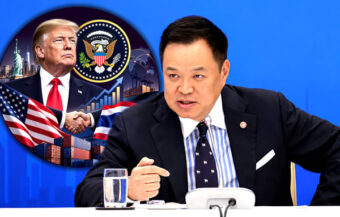
US President Donald Trump dismissed an Iranian proposal to end the conflict as “garbage”. Moreover, he warned reporters there was a 99% chance that the ceasefire on hostilities would soon collapse. Consequently, Thai officials warned that Thailand faces rising exposure to global instability because of its heavy dependence on imported energy.
Thailand fears severe supply disruption as Ekniti defends emergency decree at Government House
Thailand imports 51% of its oil from Middle Eastern suppliers. Therefore, officials fear the kingdom could suffer severe economic disruption if the conflict expands further. Authorities also confirmed interruptions to oil shipments, helium gas supplies and fertiliser imports. Helium gas remains essential for electrical engineering industries.
Fertilisers, meanwhile, remain critical for agricultural production. Consequently, the government argues that immediate intervention is necessary to prevent more serious economic damage and rising living costs.
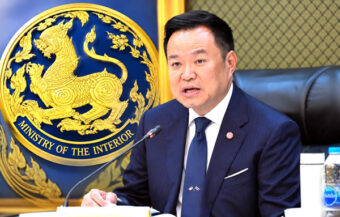
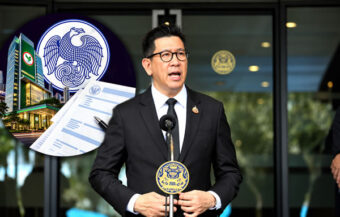
Against that backdrop, Deputy Prime Minister and Finance Minister Ekniti Nitithanprapha strongly defended the emergency decree during an interview at Government House on Monday afternoon.
At 12.05pm, Mr Ekniti responded directly to questions regarding the opposition’s Constitutional Court petition. He insisted the country was facing a genuine economic security emergency affecting ordinary households and businesses across Thailand.
Ekniti warns that living costs and shrinking incomes threaten Thailand with deeper economic pain ahead
“It’s clear this is a matter of economic security and a crisis affecting the livelihoods of the people,” Mr Ekniti said. According to the finance minister, the crisis extends far beyond Thailand. Instead, he said governments worldwide are struggling with energy instability, rising costs and economic pressure linked to international conflict. “The whole world is facing this crisis,” he said. “Every country has a responsibility to ensure the economic well-being of its citizens.”
Mr Ekniti also rejected comparisons with Thailand’s 1997 financial crisis. Instead, he described the current threat as broader and more dangerous because it directly affects daily living costs. “There have been comparisons to the 1997 crisis, which was a currency crisis,” he said. “But this crisis is different.”
He said the current emergency concerns household survival, shrinking incomes and rising expenses. “This crisis is about the cost of living and the people’s livelihoods,” he said.
Furthermore, Mr Ekniti said the Cabinet carefully examined the decree before approving it. Therefore, he insisted the measure fully satisfies constitutional requirements for emergency action. “The government maintains that this is an urgent necessity,” he said. “If we don’t act now, many more crises will follow.” He then outlined what he described as the severe risks facing Thailand if intervention is delayed.
Finance minister warns of mass unemployment as opposition attacks second loan tranche borrowing plan
“If we can’t stop the crisis now and wait for the cost of living to rise, people’s incomes to shrink, and small businesses to be unable to survive, we will be severely affected,” he said.
According to Mr Ekniti, prolonged disruption could trigger mass unemployment and widespread business collapse. Therefore, he argued that immediate borrowing remains unavoidable. “If we let it continue, it will be even more difficult to resolve,” he said. “Therefore, I reiterate the necessity of issuing this emergency decree.”
The finance minister also confirmed the decree had already entered legal effect following publication in the Royal Gazette. “We will proceed with it,” he said.
However, opposition MPs continued challenging the structure of the borrowing package itself. The government divided the programme into two separate ฿200 billion tranches. Nevertheless, critics questioned whether the second allocation truly qualifies as emergency spending requiring extraordinary constitutional powers.
Opposition MPs challenge the second loan tranche as Thailand fears prolonged energy disruption
People’s Party finance spokeswoman Sirikanya Tansakul led much of the criticism. Furthermore, several opposition MPs argued the second tranche could proceed through the normal annual budget process instead of emergency borrowing powers. Reporters asked Mr Ekniti whether the second ฿200 billion lacked immediate urgency. However, the minister rejected the suggestion and defended the full package as a unified response strategy.
Mr Ekniti insisted the two tranches should not be treated separately. Instead, he argued the programme simultaneously provides immediate relief and longer-term economic recovery support. “Today, the objective is 400 billion baht for relief and assistance,” he said. “Wouldn’t it be better to achieve two goals at once, mitigating the impact and helping them recover and become stronger?” he added.
The finance minister repeatedly linked the decree to Thailand’s energy dependence and growing geopolitical risks. “Thailand faces a greater risk of an energy crisis than others because we have high energy imports,” he said. Moreover, he warned that the international conflict showed no sign of ending. “The war crisis has no end in sight,” he said.
Shin tax questions ignored as opposition presses Constitutional Court over emergency decree powers
Before leaving the interview area, reporters attempted to question Mr Ekniti about another politically sensitive issue. They asked about progress in collecting ฿17 billion in taxes linked to Shin Corporation share transactions. However, the minister refused to answer. Instead, he immediately entered his vehicle and departed Government House without responding further.
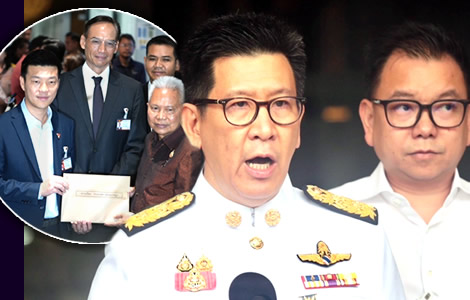
The opposition petition was formally submitted on May 11 by People’s Party leader Nattapong Ruangpanyawut, a party-list MP. The filing requests that the Speaker of the House refer the matter directly to the Constitutional Court.
Specifically, the opposition seeks a ruling on whether the emergency decree violates Article 172 of the Constitution by bypassing normal parliamentary procedures governing public borrowing and debt approval.
According to the petition, legislative authority normally belongs to Parliament. Therefore, emergency decrees must remain limited to genuinely exceptional situations. The opposition argues the government failed to demonstrate the immediate necessity for several major parts of the programme, particularly policies connected to long-term energy transition planning.
Opposition says energy transition plans require years of investment and legal parliamentary review
The petition specifically identified fossil fuel reduction plans, clean energy promotion measures, energy infrastructure projects and workforce development schemes. It also referenced support for green innovation and broader structural reforms.
However, the opposition argued that such programmes require years of implementation and investment. Therefore, it said they cannot reasonably qualify as immediate emergency measures.
The filing also raised technical concerns regarding Thailand’s electricity system. Currently, fossil fuels account for approximately 69% of total electricity generation. Consequently, the opposition questioned how natural gas use could rapidly decline while private power plants remain locked into long-term concession agreements. Many of those agreements will remain active for several more years.
The petition also examined the government’s rooftop solar expansion strategy. According to the opposition, substantial increases in rooftop solar generation would require major transmission infrastructure upgrades.
People’s Party cites smart grids and electric vehicles in challenge to emergency borrowing powers
Specifically, the filing referenced the need for smart grid development. However, such projects involve long-term planning, phased investment and extensive implementation periods. Therefore, the opposition argued that they cannot satisfy constitutional emergency standards.
The People’s Party also highlighted existing electric vehicle policies already financed through ordinary budget mechanisms. According to the petition, those measures have already produced measurable results without emergency borrowing powers.
Electric vehicles now account for 49% of all newly registered vehicles in Thailand. Notably, that figure continued rising even after government incentive programmes expired.
Consequently, the opposition argued Thailand’s energy transition should proceed through standard parliamentary budgeting and long-term legislative planning. According to the petition, successful structural reform requires phased investment over at least four years. Therefore, the opposition insists the government should not rely on emergency executive powers to implement policies extending far beyond the immediate crisis period.
Constitutional Court petition increases pressure before crucial parliamentary loan debate begins
“While energy transition is necessary, we disagree with doing so through the use of special powers,” the petition stated. The opposition also warned against weakening parliamentary oversight on major public borrowing decisions. Consequently, the Constitutional Court challenge now places additional pressure on the government ahead of the parliamentary debate.
Thai cabinet approves 400 billion baht loan to combat the Middle East War energy crisis and inflation
Thai Foreign Minister lashes out at the United States over Iran War as ships remain stuck in the Strait
At the same time, external economic conditions remain volatile. Oil prices continue rising while geopolitical tensions deepen.
Therefore, the government insists that immediate intervention remains essential to protect businesses, households and economic stability. However, the opposition maintains the decree stretches constitutional emergency powers beyond their intended limits. The Constitutional Court has not yet indicated when it may consider the petition.
Join the Thai News forum, follow Thai Examiner on Facebook here
Receive all our stories as they come out on Telegram here
Follow Thai Examiner here
Further reading:
60-day visa regime to be ended confirms Minister responding to rising industry security concerns
Tourism boss warns Thailand it is facing a Chinese blacklist if another security controversy erupts