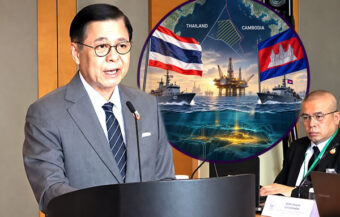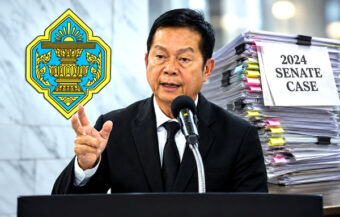
Thailand has scrapped its 25-year maritime agreement with Cambodia ahead of the ASEAN Summit in Cebu. The move has triggered renewed tension between Bangkok and Phnom Penh over disputed Gulf of Thailand maritime claims and underwater resources.
A diplomatic rupture is escalating between Thailand and Cambodia after Bangkok abruptly scrapped a 25-year maritime pact days before the ASEAN Summit in Cebu. Prime Minister Anutin Charnvirakul insists the failed agreement delivered nothing, while Cambodian leaders warn the move could deepen tensions between the two countries. Mr Anutin insists that the agreement was scrapped because the context had shifted since it was signed. However, he insists that a new pact may emerge.
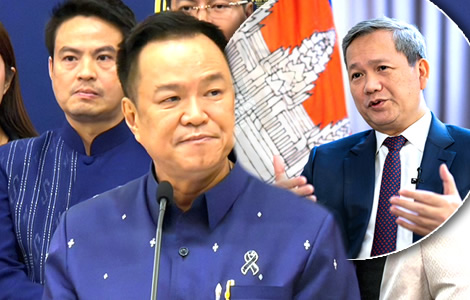
Thai Prime Minister Anutin Charnvirakul arrived in the Philippines on Thursday for the 48th ASEAN Summit in Cebu, where regional leaders are meeting until May 9. Cambodian Prime Minister Hun Manet is also attending the summit.
However, the regional gathering opened amid renewed tension between Bangkok and Phnom Penh over disputed maritime claims in the Gulf of Thailand.
Earlier this week, Thailand’s cabinet approved the cancellation of the 2001 Memorandum of Understanding known as MOU 44. The agreement established a framework for negotiations over overlapping maritime claims and undersea resources between Thailand and Cambodia. However, after 25 years, the framework failed to produce a final settlement.
Thailand ends MOU 44 after 25 years, as maritime tensions with Cambodia return at ASEAN summit talks
Meanwhile, Cambodia’s government expressed grave disappointment over Thailand’s decision. Former Cambodian prime minister and current Senate President Hun Sen also warned that scrapping the agreement could intensify disputes between the two countries. Nevertheless, the Thai government insisted the move was administrative and policy-driven.
At 12:30 p.m. on May 5, Anutin addressed reporters after a cabinet meeting at Government House in Bangkok. He confirmed the cabinet had formally approved the cancellation of MOU 44. According to Anutin, the decision reflected a policy review rather than any immediate dispute with Cambodia.
“This is unrelated to any dispute with Cambodia,” Anutin said.
Instead, the prime minister argued that the framework had become ineffective after more than two decades without progress. Therefore, Thailand no longer considers the agreement useful as a negotiating mechanism. He stressed that no conclusions had emerged despite the framework remaining active for 25 years.
Anutin says failed maritime framework no longer serves Thailand after decades without progress
Accordingly, Thailand will formally notify Cambodia through an official letter. The notification process will complete the cancellation procedure. However, Anutin said the move carries no immediate legal consequences beyond formally ending the framework.
“For Thailand, MOU 44 no longer exists,” he said.
The 2001 agreement focused on overlapping maritime claims in the Gulf of Thailand. Specifically, it created a mechanism for discussing the division of benefits from underwater resources. However, those discussions never produced a lasting agreement.
Furthermore, Anutin said future negotiations would require an entirely new framework. He stressed that any future talks should not be tied to what he called the “old context.” Instead, Thailand intends to approach future discussions differently.
“There have been no negotiations yet,” he said.
Thailand seeks new maritime framework under UNCLOS after formally scrapping MOU 44 talks
Therefore, Anutin argued the current situation should be viewed as a reset rather than a collapse in talks. He also suggested that any future agreement could carry a completely different structure and name.
“If talks resume, a new framework must be negotiated,” he said. “Possibly an MOU 70 instead of 44.”
Meanwhile, Thailand plans to rely more heavily on international legal mechanisms moving forward. Anutin specifically referenced the United Nations Convention on the Law of the Sea, or UNCLOS. Both Thailand and Cambodia are parties to the convention. Therefore, Bangkok believes UNCLOS can provide a common legal ground for future discussions.
At the same time, Anutin rejected suggestions that the cancellation could destabilise bilateral relations or trigger border tensions. He said Thailand’s security agencies and military forces remain fully alert. Moreover, he said the armed forces continue monitoring developments closely and provide regular updates to the government.
“There is no cause for concern,” he said. “In fact, the situation has improved.”
Hun Sen warns dispute could worsen as Thailand insists border situation has improved despite tensions
However, Cambodian leaders reacted sharply to the decision. Hun Sen warned that ending the agreement could worsen existing disputes. Even so, Anutin declined to directly respond to the criticism.
“One should interview Hun Sen for his views,” he said.
The cancellation marks a major shift in Thailand’s handling of maritime negotiations with Cambodia. For 25 years, MOU 44 served as the primary bilateral framework governing disputed claims in the Gulf of Thailand. Yet the agreement failed to deliver a permanent resolution.
Consequently, Thailand now appears determined to abandon the previous process entirely. Future negotiations, if they occur, would begin under completely new terms. Moreover, Bangkok has made clear that the former framework will no longer guide discussions.
The timing of the decision has also drawn attention because both governments are attending the ASEAN Summit in Cebu. Anutin confirmed he expects to meet Cambodian Prime Minister Hun Manet during the summit. However, no formal bilateral talks specifically focused on MOU 44 have been announced publicly.
“We have no problem meeting and talking,” Anutin said.
Thailand First policy shapes future talks as Cambodia previously filed Hague court action over border dispute
At the same time, the prime minister repeatedly invoked his government’s “Thailand First” policy. He said the approach would protect Thailand’s national interests during any future negotiations.
“I can assure the Thai people of a Thailand First approach,” he said. “There will be nothing for the country to lose.”
Previously, in 2025, Cambodia filed a complaint at the International Court of Justice (ICJ) against Thailand. This referred to ongoing terrestrial border disputes.
Cambodia files complaint against Thailand with International Court of Justice (ICJ). What comes next?
Hun Manet confirms Cambodia ultimately may decide to send border dispute with Thailand to the Hague
Meanwhile, the Gulf of Thailand remains strategically important because of its underwater resources and contested maritime zones. Therefore, future negotiations could carry major economic and political significance for both countries. However, Thailand’s current position remains firm.
For now, MOU 44 is finished. The 25-year framework has ended. Any future negotiations between Thailand and Cambodia will proceed under entirely new conditions.
Join the Thai News forum, follow Thai Examiner on Facebook here
Receive all our stories as they come out on Telegram here
Follow Thai Examiner here
Further reading:
Dangerous impasse between Thailand and Cambodia as PM rules out International Court of Justice (ICJ)
Hun Manet confirms Cambodia ultimately may decide to send border dispute with Thailand to the Hague
Khmer soldier killed in deadly gunfire between Thai and Cambodian armies near Ubon Ratchathani