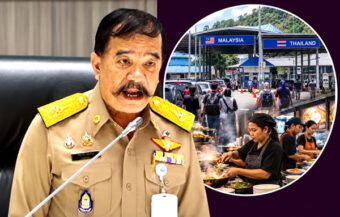
Thailand plans to end visa-free entry for 124 countries, signalling a tough new approach to foreign visitors amid falling tourist numbers and concerns over abuse.
On Wednesday, Thailand’s newly installed Minister of Tourism and Sports, Surasak Phancharoenworakul, made clear the kingdom will tighten screening of foreign tourists before arrival. He confirmed visa-on-arrival access for 124 countries, including 93 now granted 60-day visa waivers, is under review. The minister said the issue is being studied by the Ministry of Foreign Affairs and will go to Cabinet. The move comes as Thailand faces a collapse in foreign tourist numbers linked to the Middle East conflict.
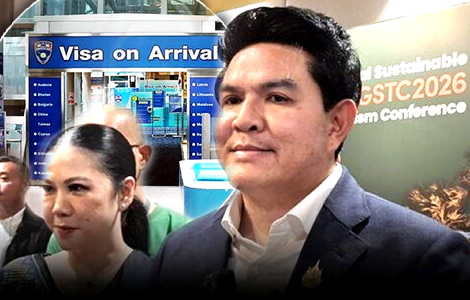
Thailand is preparing a major shift in visa policy, according to Minister Surasak, who outlined the plan at a sustainability conference on Wednesday. During his address, he confirmed that visa-on-arrival access for 124 countries is under formal review. These include 63 countries granted 60 days, and an additional 31 countries allowed to stay for up to 15 days.
Presently, travellers from these countries can enter Thailand without securing visas in advance. However, that framework may soon be dismantled as authorities tighten entry controls.
Moreover, Surasak stated that the Ministry of Foreign Affairs is leading the review, while security agencies are also assessing risks.
Government signals sweeping visa overhaul affecting 124 countries as tighter entry controls move forward
As a result, the government is considering stricter screening measures for all incoming travellers. “The initial step is to cancel all 60-day visas for all countries,” Surasak said. “We are not discriminating; we are cancelling all visas.” Therefore, the widely used 60-day visa scheme could be withdrawn entirely. In addition, authorities may require travellers to obtain visas in their country of origin before departure.
At the same time, Surasak emphasised that stricter vetting will be central to the revised system. “Tighter screening and vetting of potential arrivals will be the order of the day,” he said. Furthermore, he stressed that all countries will be treated equally under any new framework.
“We will treat all countries the same, whatever the new dispensation may be,” he added. Consequently, the policy aims to standardise entry procedures while increasing oversight.
Previously, concerns had been raised about misuse of visa privileges, particularly the 60-day entry scheme. In several cases, foreign visitors were found to be living and working in Thailand.
Authorities move to curb visa abuse after reports of foreigners living and working under 60-day stays
As a result, authorities began reviewing how the system was being used. Accordingly, Surasak said multiple sectors contributed data and analysis. “All sectors have gathered information and discussed how to adjust the system to reduce problems,” he said. Therefore, the proposed changes reflect a coordinated review process.
Meanwhile, the Ministry of Foreign Affairs has already held preliminary meetings on the issue. The proposal is expected to be submitted to the Cabinet for approval. However, Surasak noted that any changes must comply with existing legal procedures.
In addition, he confirmed that security agencies are closely involved in evaluating visa applications. “Regarding visas, the Ministry of Foreign Affairs and the security sector carefully consider each visa application,” he said.
Furthermore, Surasak addressed specific enforcement concerns involving foreign residents. He referred to online claims about tax-free residency in Thailand.
Tax-free residency claims trigger investigations as authorities tighten enforcement and scrutiny of visitors
“When issues arise, such as a foreigner posting that they can reside without paying taxes, it is necessary to verify whether their statement is true,” he said. If confirmed, such claims would trigger legal investigations. “If it is true, it is illegal and must be investigated by the relevant authorities,” he added. Meanwhile, local officials in Phuket are already examining reported cases.
Beyond visa enforcement, the minister linked the review to a broader shift in tourism policy. Specifically, the government is prioritising higher-value visitors. “It is an important goal to both upgrade ourselves and be more selective in screening tourists,” Surasak said.
Therefore, the focus is moving toward so-called “quality tourists.” This approach aligns with the policy direction of the Bhumjaithai Party, which has emphasised higher spending and sustainability.
Similarly, the strategy reflects earlier policy thinking during the administration of Prayut Chan-o-cha. At that time, officials described the pandemic as an opportunity to raise tourism standards. Now, the current government is pursuing comparable objectives, although with a stronger emphasis on screening and compliance. Consequently, visa reform is being positioned as a key policy tool.
Sustainable tourism drive reinforces policy shift towards higher value visitors and stricter entry controls
At the conference, Surasak also highlighted Thailand’s commitment to sustainable tourism. The Global Sustainable Tourism Conference 2026 drew participants from multiple countries. Moreover, it recorded the highest attendance since its inception.
Representatives from several governments attended, including the tourism minister from Oman. “The organisation of this conference is in line with the government’s policy to promote sustainable tourism,” Surasak said. Therefore, the event served as a platform to reinforce policy direction.
In addition, Surasak stressed that sustainability must cover all dimensions. “All aspects must be integrated to achieve true sustainability,” he said. This includes environmental protection, economic benefits, and public safety. Furthermore, he said local communities must benefit directly from tourism activity. As a result, future policies will increasingly target higher-end markets.
However, these policy shifts come amid significant pressure on Thailand’s tourism sector. Globally, travel demand has weakened due to rising costs. “It must be acknowledged that travel has been affected globally, especially long-distance travel,” Surasak said. Specifically, higher airfares and jet fuel costs have reduced long-haul travel. Consequently, Thailand’s long-distance markets have been hit.
Long-haul travel slump and weak demand from key markets deepen pressure on Thailand tourism sector
In particular, European markets have seen a decline. Previously, these markets helped sustain tourism numbers. However, recent trends show reduced arrivals. At the same time, Chinese and regional short-haul markets have weakened. Officials linked this to a recent security scare. As a result, overall tourism flows have declined sharply.
Additionally, airlines have cancelled long-haul flights, further reducing capacity. Therefore, the tourism sector is facing multiple external pressures. Officials confirmed that the industry has not recovered to its 2019 peak. That decline followed strict measures during the COVID-19 crisis. Indeed, the country closed its airspace to all flights for an extended period. Consequently, recovery remains incomplete and uneven.
In response, Surasak outlined several support measures. After the conference, he met with the Phuket governor and private sector representatives. The discussions focused on rising fuel costs and geopolitical risks. These factors could affect tourism across multiple regions. “Whatever the government can do to support tourism, we will do it,” Surasak said. Therefore, authorities are preparing coordinated responses.
Government prepares domestic tourism push and structural reforms as international arrivals remain weak
Furthermore, the government is pursuing structural reforms within the tourism sector. These include funding support and workforce development. “It must include support for funding, upskilling, and reskilling personnel,” he said. In addition, short-term measures are being prepared for Cabinet approval. These are described as “Quick Win” initiatives.
In particular, domestic tourism is being prioritised. Authorities plan to introduce tax incentives to encourage local travel. “We are supporting increased domestic tourism,” Surasak said. Moreover, some measures used during the pandemic may be reintroduced. However, he indicated that broader intervention is now required. “There are even more measures needed than those implemented during the pandemic,” he said.
Hardline foreign tourism confirmed by new minster. More charges, shorter visas and mandatory insurance
Visa entry period to go from 60 to 30 days. Agreement in principle as foreign tourism numbers fall by 10%
Thus, domestic tourism is expected to provide short-term relief. Meanwhile, international policy changes will shape long-term recovery. Visa reform remains central to this strategy. “Using international visa mechanisms is an initial screening process,” Surasak said. Therefore, entry controls will serve as a first layer of regulation.
However, final decisions depend on Cabinet approval. No timeline has been confirmed for implementation. In the meantime, authorities continue to review data and consult stakeholders. Consequently, further details are expected once policy decisions are finalised.
Join the Thai News forum, follow Thai Examiner on Facebook here
Receive all our stories as they come out on Telegram here
Follow Thai Examiner here
Further reading:
60-day visa regime to be ended confirms Minister responding to rising industry security concerns
Tourism boss warns Thailand it is facing a Chinese blacklist if another security controversy erupts
Visa waiver scheme questioned with another China Crisis for foreign tourism driven by security fears
Tourism cryptocurrency sandbox payment plan is bound to face stiff opposition from the central bank