Thailand is preparing one of its biggest tourism overhauls in years, with AI facial recognition, police bodycams, a new tourist levy, visa changes, tougher foreign visitor rules, ministry restructuring and major rail and infrastructure projects all moving ahead as ministers and officials head to Vietnam seeking a new partnership.
Thailand is pushing ahead with one of its broadest tourism policy drives in years, advancing tougher visa measures, new tourism fees, AI-powered security systems, a ministry shake-up and major infrastructure projects as Prime Minister Anutin Charnvirakul prepares for a key Vietnam visit. Notably, officials are seeking deeper ASEAN partnerships while reviewing support for the vital Indian market. In parallel, plans are moving forward to link government databases, deploy facial recognition technology and expand rail-driven tourism. Separately, ministers are preparing structural reforms that could reshape how tourism and sport are managed before the end of 2026, as key challenges are confronted.
Thailand’s tourism ministry is accelerating a broad package of policy initiatives ahead of a high-level visit to Vietnam next week. The agenda stretches from ASEAN cooperation and visa policy to artificial intelligence security systems, tourism fees and ministry restructuring.
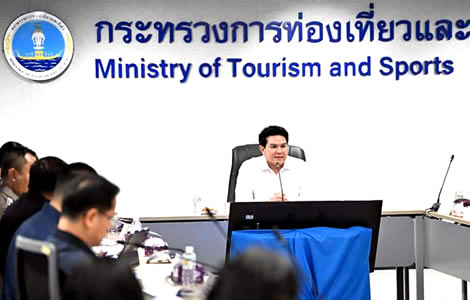
Tourism and Sports Minister Surasak Panjaroenvorakul outlined the priorities on June 5 while chairing the ministry’s second policy follow-up meeting of 2026. Executives, civil servants and officials from agencies under the ministry attended the session at the Suwanwijit Meeting Room.
At the centre of discussions was preparation for the official delegation accompanying Prime Minister Anutin Charnvirakul to Vietnam on June 8 and 9.Mr. Surasak instructed agencies to prepare discussion topics and draft cooperation agreements covering tourism and sports.
Vietnam visit to focus on ASEAN cooperation, tourism partnerships and stronger regional coordination efforts
Notably, the minister wants the visit to focus on deeper regional cooperation. In particular, he suggested Thailand should pursue mutually beneficial partnerships within ASEAN rather than competition. Officials were therefore tasked with identifying practical areas for collaboration before the trip begins.
The discussions come as the ministry pushes to strengthen its role in tourism planning and economic development. Significantly, officials insist better coordination between agencies remains a priority as visitor markets become increasingly competitive.
As part of this effort, Mr Surasak ordered the establishment of a working group promoting the Business Data Exchange system. The initiative follows wider government policy encouraging stronger use of big data.
The objective is to connect information across ministries and government agencies. Officials believe better data integration will improve tourism services and policy planning. Faster access to information could also improve decision-making and operational efficiency.
Ministry pushes big data integration and linked government systems to improve tourism planning
In parallel, the ministry reviewed progress on visa policy changes. Particular attention centred on the Indian tourism market. Officials said the market has been affected by recent reductions in visa eligibility.
India remains one of Thailand’s most important visitor sources. In response, Mr Surasak is preparing a proposal involving visa category P.15 eligibility. The measure is intended to support arrivals while preserving Thailand’s competitiveness.
Officials also examined broader implications for tourism flows. Maintaining access to key markets remains an important consideration as visa policies evolve.
On another front, the ministry provided an update on plans to introduce tourism fees. Officials said collection methods for air travellers remain under detailed study. The work is being conducted alongside relevant government agencies.
India visa concerns emerge as the ministry studies tourism fee collection for air travellers
Several operational issues still require clarification before implementation. To that end, a final meeting has been scheduled for June 16. Officials expect the session to settle remaining details and establish a final collection framework.
Separately, the ministry reviewed progress on a significant government restructuring plan. Under the proposal, tourism responsibilities would be separated and merged with the Ministry of Culture. A standalone Ministry of Sports would also be established.
The proposal is currently moving through legal procedures. Barring delays, officials expect an official announcement before the end of 2026. The restructuring is intended to create clearer responsibilities across both sectors and improve administrative efficiency.
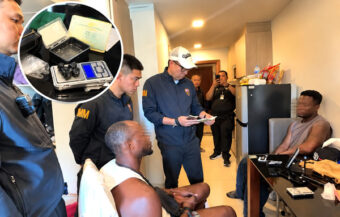
Tourist safety was another major subject during the meeting. Mr Surasak stressed the need for stronger action against mafia groups and criminal activity affecting visitors.
Accordingly, the ministry is moving ahead with artificial intelligence facial recognition systems. Officials said the technology will help identify and monitor potentially dangerous individuals. The system is expected to strengthen surveillance capabilities in major tourist destinations.
Ministry restructuring advances as AI systems target crime and tourist safety concerns
At the same time, preparations are underway for a police body camera programme linked directly to crime databases. The proposed system would allow officers to access criminal information instantly while on duty.
As a result, authorities could respond more quickly to incidents involving tourists. Officials believe the technology will strengthen security operations and improve monitoring around the clock.
Beyond security measures, the ministry reviewed several major infrastructure projects. Among them was the long-discussed Phu Kradueng cable car project. Environmental impact assessments remain underway while design work continues.
The project is expected to be submitted to the Cabinet by late this year or early next year. Officials regard the proposal as one of the ministry’s most significant tourism developments currently in preparation.
Meanwhile, efforts are being accelerated to construct, repair and transfer sports facilities nationwide. The projects cover infrastructure intended for public use and community benefit. Agencies have been instructed to speed up implementation where possible.
Cable car, sports projects and rail links drive tourism expansion beyond major destinations
Elsewhere, officials discussed closer integration with the Ministry of Transport. The focus is on promoting tourism through Thailand’s railway network. Particular emphasis is being placed on secondary cities.
The strategy aims to direct visitors beyond established tourism centres. Increased rail connectivity could support broader tourism activity across provincial areas. Officials also hope it will contribute to more balanced income distribution among local communities.
India may be biggest loser in new get tough foreign tourism visa policy approved by cabinet on Tuesday
Hardline foreign tourism confirmed by new minster. More charges, shorter visas and mandatory insurance
Looking ahead, Mr Surasak said future operations would place greater emphasis on integrated data management. He said information must be connected across agencies and used in a unified manner.
In closing, the minister said the ministry must continue serving as a key mechanism for generating revenue. He also said stronger safety measures remain essential to building Thailand’s image among international visitors. Meanwhile, technology, enforcement and inter-agency cooperation will remain central elements of that strategy.
Join the Thai News forum, follow Thai Examiner on Facebook here
Receive all our stories as they come out on Telegram here
Follow Thai Examiner here
Further reading:
60-day visa regime to be ended confirms Minister responding to rising industry security concerns
Tourism boss warns Thailand it is facing a Chinese blacklist if another security controversy erupts
Tourism cryptocurrency sandbox payment plan is bound to face stiff opposition from the central bank