Trump’s trade war is widening and Thailand is in the crosshairs. Washington is considering a 12.5% tariff on Thai exports under a forced labour probe spanning 60 countries, threatening tougher access to the US market and fresh pressure on exporters.
Thailand is facing the prospect of new U.S. tariffs after the Trump administration proposed a 12.5% duty on Thai exports under a sweeping forced labour investigation spanning 60 countries. The move would place Thailand among the hardest-hit nations, widen Washington’s trade scrutiny far beyond China and give President Donald Trump a powerful new tariff tool after a Supreme Court ruling curtailed parts of his previous trade agenda.
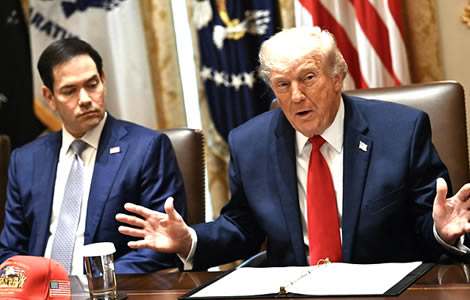
Thailand has been swept into a widening U.S. trade offensive after Washington proposed new tariffs on imports from 60 countries. The move targets nations the United States says have failed to curb trade involving goods produced through forced labour. If approved, Thailand would face an additional 12.5% tariff on exports entering the American market.
The proposal emerged on June 2 from the Office of the United States Trade Representative (USTR). It marks the latest stage of a Section 301 investigation into what Washington considers unfair trade practices.
U.S. officials argue that inadequate enforcement against forced labour distorts competition and harms American workers. As a result, the Trump administration is preparing a fresh round of trade penalties affecting economies across several continents.
USTR probe splits 60 nations into tariff tiers as Thailand joins countries facing a new 12.5% levy
Under the proposal, countries have been divided into two categories. One group would face an additional 10% tariff. That list includes Canada, the European Union, the United Kingdom, Mexico, Indonesia, Malaysia, Taiwan, Bangladesh, Pakistan, Cambodia, Argentina, Ecuador, Guatemala and El Salvador. Meanwhile, a second group of 45 countries would face a higher 12.5% duty. Thailand is among those nations.
The investigation began in March when the USTR launched inquiries into 60 countries. Officials were instructed to examine whether governments had taken meaningful action against forced labour-linked goods.
They also reviewed customs enforcement, import restrictions and regulatory controls. In addition, investigators assessed whether products produced through forced labour continued moving through international supply chains with limited oversight.
At the centre of the inquiry is Washington’s belief that weak enforcement creates an uneven trading environment. U.S. Trade Representative Jamieson Greer delivered a blunt assessment of the findings. He said the inability of major trading partners to effectively manage imports linked to forced labour was unacceptable. He further argued that such failures force American workers into unfair competition in global markets.
Trump revives tariff strategy as wider forced labour probe expands beyond supply chain policing
Notably, the investigation extends well beyond direct allegations of forced labour. It also examines how governments monitor imports and police supply chains. U.S. officials are studying whether national authorities have imposed effective bans and whether enforcement mechanisms are working in practice. The review additionally measures the economic impact on U.S. businesses and workers when such controls are judged insufficient.
The proposal arrives during a renewed effort by President Donald Trump to reassert tariffs as a central trade weapon. Earlier this year, however, that strategy suffered a significant setback. On February 20, the U.S. Supreme Court ruled that Trump’s previous broad-based tariffs were unlawful. The judgment restricted one of the administration’s most important trade tools.
In response, the White House moved quickly to preserve tariff authority. Trump subsequently announced a temporary 10% import tariff under Section 122 of the Trade Act of 1974. The measure was designed to remain in place for 150 days. It also provided the administration with breathing space while alternative legal options were explored.
As part of this effort, the forced labour investigation has become an increasingly important vehicle for future trade action. Section 301 grants Washington broad powers to investigate foreign practices deemed harmful to U.S. commerce.
Section 301 powers and Xinjiang scrutiny become key pillars of Washington’s wider trade campaign
It also permits retaliatory measures when those practices are found to be unreasonable or discriminatory. Historically, Section 301 has been used during several major trade disputes involving key U.S. trading partners.
Separately, forced labour has become a growing focus of American trade policy. Washington has repeatedly targeted products connected to China’s Xinjiang region. U.S. officials have accused Chinese authorities of operating labour programmes involving Uyghurs and other Muslim minorities. Chinese authorities have consistently denied those allegations. Beijing has also rejected accusations of human rights abuses in the region.
On another front, Congress strengthened U.S. enforcement through the Uyghur Forced Labour Prevention Act. Former President Joe Biden signed the legislation into law. Under its provisions, goods originating from Xinjiang are presumed to involve forced labour unless importers prove otherwise. Consequently, companies face substantial evidentiary hurdles before such products can enter the U.S. market.
Global forced labour review widens beyond China as Thailand faces heightened U.S. scrutiny
The latest proposal broadens that approach considerably. Rather than focusing on a single country, Washington is examining enforcement standards across the globe. Countries in Asia, Europe and the Americas now face scrutiny under the same investigation. The review reflects a wider effort to assess how governments respond to forced labour concerns within international supply chains.
For Thailand, the proposed tariff represents a potentially significant development. The country now finds itself among dozens of nations facing heightened U.S. examination.
Prime Minister pushes to seal Thailand’s trade deal with the United States as rivals lock in benefits
Trump fires back with 10% tariff under a 1974 law after Supreme Court setback. Good news for Thailand
Although no final decision has been announced, the proposal signals a tougher approach from Washington. It also places Thailand within a group facing the highest level of additional duties under the current review.
Looking ahead, the investigation remains active and further findings may follow. For now, the proposal serves as a warning to trading partners worldwide. Countries judged to have weak controls over forced labour-linked goods could soon face higher barriers to entering the United States. For Thailand and 59 other countries, that prospect has moved markedly closer.
Join the Thai News forum, follow Thai Examiner on Facebook here
Receive all our stories as they come out on Telegram here
Follow Thai Examiner here
Further reading:
Trade expert warns the government on barter deals with China being pursued by the Commerce Ministry
Top Commerce Ministry official warns that any US trade deal must wait for new parliament and cabinet
Asean Summit on Monday and Tuesday seen by United States as pivotal to restoring border peace
War to continue says PM Anutin. Dismisses President Trump’s ceasefire talk as a ‘misunderstanding’
Confusion after Trump’s 20 minute phone call with PM Anutin. US side claimed a ceasefire was agreed