Thai military has released a video it says shows Cambodian soldiers planting anti-tank mines at Chong Bok, directly contradicting Phnom Penh’s denial. Bangkok says it identified the unit involved as border tensions escalate alongside UN and Hague disputes.
Thailand and Cambodia are sliding into a new border confrontation after the Thai military released video footage it says shows Cambodian soldiers planting anti-tank mines in a disputed frontier area, directly challenging Phnom Penh’s denial and deepening a dispute over evidence, accountability and security. The clash comes as relations are already strained by competing land and maritime claims, Cambodia’s moves at the United Nations and the International Court of Justice, and growing concern over military activity near Chong Bok, where last year’s conflict killed 26 Thai soldiers and displaced hundreds of thousands. Bangkok says the footage identifies both the soldiers and their unit. Cambodia rejects responsibility, setting the stage for another dangerous escalation between the two neighbours.
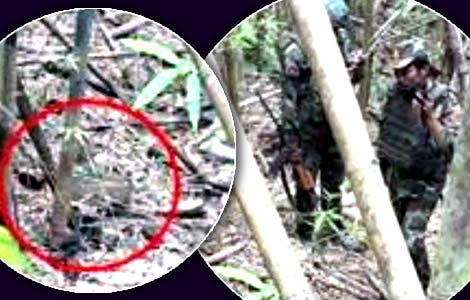
Thailand on Thursday released video footage that it says shows Cambodian soldiers planting anti-tank mines in a disputed border zone, directly challenging Phnom Penh’s official denial issued hours earlier.
The footage emerged after Thai troops discovered improvised explosive devices in the Chong Bok area of Ubon Ratchathani province. Thai military officials say the recording shows two Cambodian soldiers carrying the devices into the area before placing them near Thai positions.
Notably, the military also identified the soldiers’ unit through their uniforms. According to Thai authorities, the men belong to the 21st Infantry Brigade, 2nd Military Region of the Cambodian National Army.
Thai military releases footage it says identifies Cambodian soldiers planting mines at Chong Bok
The release of the footage has intensified an already serious dispute. Earlier the same day, Cambodia formally rejected allegations that its forces planted the explosives. In response, Thai officials pointed to the video as evidence that directly contradicts Cambodia’s account. The disagreement now extends beyond the discovery itself. It has become a dispute over responsibility, evidence and credibility.
The incident began on June 4 when Thai troops operating near Hill 745 discovered improvised anti-tank mines. The devices were found southwest of the hill, directly in front of Thai military lines.
Soldiers photographed the explosives and reported the discovery through military channels. Shortly afterwards, Thailand lodged a formal protest and requested clarification from Cambodia.
Cambodia responded through an official letter. In the document, Phnom Penh acknowledged receiving information regarding explosives discovered in the area known in Cambodia as Mombey and in Thailand as Chong Bok. However, Cambodian authorities said they could not verify the source of the devices. They also stated that they could not determine their ownership, type or date of placement.
Cambodia rejects accusations and says it cannot verify the source or ownership of explosives found
Most significantly, Cambodia insisted that its military had no involvement. The letter stated that Cambodia neither supports nor participates in activities intended to create tension along the border.
It further argued that such actions would violate international law and undermine peace and stability between neighbouring states. Accordingly, Phnom Penh formally rejected responsibility for the explosives.
The letter also called for continued communication between the two countries. As part of this, Cambodia said direct cooperation remained the most appropriate mechanism for addressing border issues.
The government also reaffirmed its commitment to existing agreements. Specifically, it cited the Joint Statement of the General Border Committee signed on December 27, 2025. Cambodian authorities said their military remained committed to peace, security, stability and mutual trust along the frontier.
Phnom Penh cites border agreements and pledges continued cooperation despite the dispute
Thai officials remain unconvinced. Instead, they argue that the video footage provides a clear account of how the explosives reached the area.
The military says the recording shows the devices being transported and planted before their discovery by Thai troops. On that basis, officials have questioned Cambodia’s assertion that it cannot identify those responsible.
The discovery has revived one of the most contentious issues along the Thai-Cambodian border. For years, Thailand has accused Cambodian forces of placing mines and explosive devices in disputed areas.
Repeated explosions have injured Thai personnel operating near contested positions. In several cases, soldiers lost feet or lower limbs after triggering concealed devices. As a result, reports of newly planted explosives generate immediate concern within military circles and among the wider public.
Mine discoveries revive longstanding Thai allegations over explosives in disputed border areas
The location itself carries particular significance. Chong Bok was one of the focal points during last year’s border conflict. Fighting erupted in May and expanded into a broader military confrontation. Hundreds of thousands of civilians were displaced during the conflict. Meanwhile, 26 Thai soldiers were killed in action. Those casualties continue to influence security calculations along the frontier.
Against that backdrop, the latest discovery has heightened concerns over renewed instability. Recent reports have pointed to military movement in border areas. While no new clashes have been reported, tensions have risen noticeably in recent days. The discovery of the mines has added further strain to an already fragile situation.
Separately, relations between Bangkok and Phnom Penh have deteriorated through diplomatic and legal channels. Last year, Cambodia referred a land dispute with Thailand to the International Court of Justice in The Hague. That move added an international legal dimension to longstanding territorial disagreements.
On another front, maritime tensions have also intensified. Thailand recently cancelled a Memorandum of Understanding covering maritime boundaries between the two countries. Following that decision, Cambodia took the dispute to the United Nations. Phnom Penh is seeking a compulsory conciliation process regarding the maritime issue.
Border tensions deepen as legal disputes and maritime disagreements widen the confrontation
Taken together, the disputes now span multiple arenas. Military tensions remain active along the border. Legal proceedings continue through international institutions.
Diplomatic disagreements have expanded into maritime issues. Consequently, each new incident carries greater significance than it might in isolation.
Prime Minister Anutin and Cambodian counterpart Hun Manet hold three way meeting at ASEAN summit
Cambodian FM appeals to Thailand’s Foreign Minister to let the border dispute be decided in The Hague
The Chong Bok mine dispute illustrates that broader deterioration. Cambodia maintains that it cannot establish who planted the explosives. Thailand argues the video footage answers that question directly. For now, both sides remain firmly committed to their positions.
Meanwhile, the footage released by Thailand has placed Cambodia’s denial under renewed scrutiny. The central issue remains straightforward. Phnom Penh says it cannot identify those responsible. Bangkok says the video identifies both the soldiers involved and the military unit to which they belong. That contradiction now sits at the centre of the latest dispute between the two neighbours.
Join the Thai News forum, follow Thai Examiner on Facebook here
Receive all our stories as they come out on Telegram here
Follow Thai Examiner here
Further reading:
Prime Minister Anutin and Cambodian counterpart Hun Manet hold three way meeting at ASEAN summit
Dangerous impasse between Thailand and Cambodia as PM rules out International Court of Justice (ICJ)