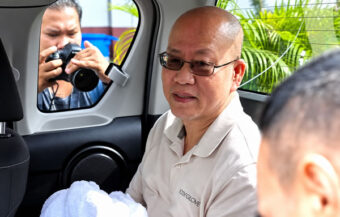
Immigration officers smash human-smuggling exploits after arresting a Sri Lankan man with a forged Canadian passport at Suvarnabhumi Airport. CCTV, phone messages and a second suspect uncovered a network using Thailand’s tourism traffic as cover.
A routine passport check at Bangkok’s Suvarnabhumi Airport has uncovered what Thai authorities believe is a sophisticated transnational smuggling network, after a Sri Lankan man carrying a forged Canadian passport was arrested before boarding a flight to London. The case quickly spread across two airports, leading investigators to a second suspect, key CCTV evidence, incriminating phone messages and a nationwide watchlist alert. Immigration officers believe the operation involved document suppliers, travel coordinators and facilitators working behind the scenes. The investigation has become a major test of Thailand’s crackdown on illegal immigration and organised international crime. More significantly, the discovery suggests Thailand may be being used as a human trafficking hub between the developing and developed world.
A forged Canadian passport at Bangkok’s main airport has exposed what Thai immigration officers believe is a wider transnational smuggling network operating through the kingdom.
The case began at Gate C5 in Suvarnabhumi Airport on Sunday, May 31. However, it quickly expanded into a cross-airport investigation involving surveillance footage, mobile phone evidence and a second suspect.
The breakthrough came after Thai Airways alerted immigration officers to a suspicious traveller. The man was preparing to board flight TG916 from Bangkok to London Heathrow. Initially, he presented a Canadian passport under the name Mr. A. Yet officers became suspicious during routine checks. As a result, they subjected both the traveller and his documents to closer examination.
Sri Lankan traveller caught with forged Canadian passport as airport probe rapidly widens nationwide
Investigators soon discovered the passenger was not Canadian. Instead, he was a Sri Lankan national identified as Mr. K. Authorities said he was about 20 years old. During further checks, officers found he possessed a Sri Lankan passport.
Records showed he had used that passport when entering and exiting Thailand. At the same time, officers uncovered additional travel documents. Those included a boarding pass for a Bangkok-Mumbai flight. They also found another boarding pass for onward travel to Colombo.
Crucially, forensic examinations revealed the Canadian passport was forged. Consequently, officers arrested Mr. K on the spot. The fake passport was seized immediately. Thereafter, he was handed over for legal proceedings. He faces charges linked to forged travel documents and related offences.
What appeared to be a straightforward passport fraud case soon widened dramatically. Following the arrest, investigators searched immigration databases for the identity appearing in the forged document. That search produced an immediate lead. Officials found that Mr. A had previously entered Thailand. Moreover, records indicated he remained in the kingdom.
Immigration watchlist alert triggered after suspect linked to forged passport remained in Thailand
In response, immigration authorities placed Mr. A on a nationwide watchlist. The move triggered monitoring at airports across the country. Shortly afterwards, officers at Don Mueang International Airport issued an alert. An individual matching the watchlist record was preparing to leave Thailand. He was using a Canadian passport under the name Mr. A. Furthermore, he was booked on AirAsia flight AK887 from Bangkok to Kuala Lumpur.
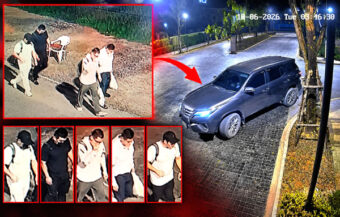
At that point, the investigation accelerated. Pol. Maj. Gen. Kathathorn Khamthiang ordered an immediate review of CCTV footage from Suvarnabhumi Airport. Investigators were tasked with establishing any connection between Mr. A and the arrested Sri Lankan national. Notably, the footage produced a significant breakthrough.
Officers found that Mr. A had checked in at Suvarnabhumi Airport on the very same day. Records showed he obtained a boarding pass at approximately 9.11am. Significantly, authorities regard that timing as a key circumstance connected to Mr. K’s use of the forged passport.
In parallel, immigration officers at Don Mueang moved to secure further evidence. They seized Mr. A’s mobile phone for examination. The results deepened suspicions. Investigators found messages containing instructions and advice about what should be said to immigration officers. More importantly, authorities linked those communications to the Sri Lankan suspect arrested at Suvarnabhumi Airport.
Mobile phone messages and airport CCTV footage deepen suspicions over coordinated travel scheme
On another front, Immigration Bureau Region 2 moved against Mr. A. Based on the evidence gathered, officials revoked his visa. Subsequently, he was detained. Authorities also ordered an expedited investigation to determine whether an arrest warrant should be sought.
The case has emerged amid an intensified national campaign against illegal immigration and transnational crime. Earlier, National Police Chief Pol. Gen. Kittirat Phanphet ordered all police units to strengthen inspections and enforcement.
The directive requires a three-month crackdown on illegal immigrants and organised criminal networks. Additionally, authorities were instructed to prevent Thailand from being used as a transit route, refuge or operational base for offenders.
As part of this strategy, the Immigration Bureau has upgraded screening measures nationwide. Under the command of Commissioner Pol. Lt. Gen. Panumas Boonyalak, officers have increased scrutiny of forged travel documents and illegal border movements. Equally important, immigration units have expanded intelligence sharing and investigative coordination. The objective is faster detection and suppression of criminal activity.
Nationwide crackdown targets illegal migrants, forged documents and organised crime networks
Meanwhile, airport immigration checkpoints have been ordered to intensify inspections. Special attention is being given to suspicious travellers and unusual travel patterns. Authorities are focusing particularly on individuals using Thailand as a gateway to third countries.
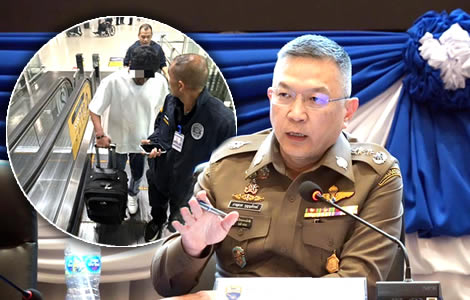
Speaking about the case, Pol. Maj. Gen. Kathathorn said the investigation extends far beyond the individual carrying a forged passport.
“Following the policy of Pol. Gen. Kittirat Phanphet, the Commissioner General of the Royal Thai Police, to intensify area inspections, crack down on illegal immigrants, and eradicate transnational crime, Immigration Division 2 has upgraded its inspections at all airports. This arrest is not just about prosecuting those using fake passports, but we must expand the investigation to include those who provide the documents, coordinate travel, facilitate, order, and support all involved.”
He added: “Thai airports must not be transit points for transnational criminals. Airport Immigration will conduct thorough inspections and investigations, utilising technology, databases, and proactive investigations to prevent Thailand from being used as a haven, transit point, or base of operations for illegal activities. Anyone found to be involved will be prosecuted decisively, transparently, and without discrimination.”
Immigration chief vows wider probe targeting facilitators, coordinators and passport suppliers
Separately, Pol. Col. Pongthorn Pongrachatanan said the case demonstrates the importance of expanding investigations after every arrest. According to him, the objective is to identify everyone involved in the operation, not merely the person carrying a forged document.
He said investigators are tracing those who supplied the passport, coordinated travel arrangements and supported the movement of suspects. Likewise, authorities are examining ticket purchases, travel routes and communication records.
According to investigators, the case highlights how modern transnational criminal networks operate. Rather than relying on one offender, they often involve multiple participants. Some provide documents. Others coordinate travel. Additional individuals may issue instructions, facilitate movements or provide logistical support.
Investigators trace travel routes, ticket purchases, communications and wider criminal connections
For that reason, immigration authorities increasingly rely on intelligence databases, surveillance systems and behavioural analysis. Alongside those measures, cooperation with airlines has become a critical enforcement tool. Rapid information sharing between checkpoints has also become increasingly important.
Going forward, investigators will continue tracing the origin of the forged Canadian passport. They will also examine how travel arrangements were made.
Rapid response by Immigration Bureau officers as surveillance target moves to the airport from Pattaya
24 year old New Zealand tourist arrested. Cocaine found inside his passport clearing Phuket Airport
In addition, officers are identifying anyone who may have facilitated the suspects’ movements. Authorities have made clear the investigation will not stop until every available lead has been pursued.
Ultimately, officials say the arrest reflects a broader effort by the Royal Thai Police and the Immigration Bureau to combat illegal immigration and organised transnational crime. As the investigation widens, officers remain focused on identifying accomplices, facilitators and coordinators. Anyone found connected to the network faces legal action under Thai law.
The case and discovery raise substantial security concerns. Moreover, it suggests that an elaborate system was in use, employing forged documents and people management to allow people from developing countries to migrate by air to developed countries. Furthermore, the gang involved appears to be using Thailand’s foreign tourism traffic as a cover for human trafficking.
Join the Thai News forum, follow Thai Examiner on Facebook here
Receive all our stories as they come out on Telegram here
Follow Thai Examiner here
Further reading:
60-day visa regime to be ended confirms Minister responding to rising industry security concerns
Tourism boss warns Thailand it is facing a Chinese blacklist if another security controversy erupts