Thailand’s central bank has ruled out easy fixes for the economy, insisting rate cuts, QE and baht intervention cannot solve deep structural problems despite upgrading growth prospects and easing inflation pressures due to falling oil prices.
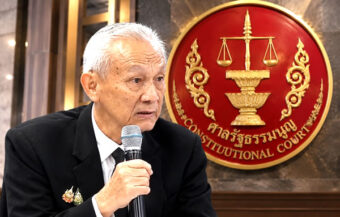
Thailand’s central bank has drawn a firm line under calls for more aggressive intervention, warning that lower interest rates, quantitative easing and baht management cannot cure the economy’s deepest problems. Bank of Thailand Governor Mr Vitai Ratanakorn said policy would support growth, contain inflation and protect financial stability, but not create a short-lived boom. The benchmark rate has already been cut twice to 1%, while the Bank forecasts 2.3% growth this year. Yet Mr Vitai said the recovery remains weak, uneven and constrained by structural problems. His warning came as the IMF upgraded Thailand’s 2026 growth forecast to 1.9%, although regional rivals continue outperforming the kingdom through stronger technology exports and AI-driven investment.

Thailand’s central bank has reaffirmed that monetary policy will continue supporting the economy while preserving price stability and safeguarding financial system stability.
The message comes as policymakers navigate global conflict, slowing growth and persistent structural challenges. Bank of Thailand Governor Mr Vitai Ratanakorn said the institution remains focused on stability rather than short-term economic stimulus.
Mr Vitai delivered the remarks on July 11 during the 2026 High-Level Economic Potential Development Program. The forum examined “Opportunities and Survival in a Volatile Economic Era Amidst Global Geopolitical Conflicts.” It was organised by the Economic Journalists Association in collaboration with Bangkok Bank Public Company Limited and the University of the Thai Chamber of Commerce.
Governor says monetary policy must preserve stability while fiscal policy delivers targeted stimulus
At the outset, the governor acknowledged growing public expectations that the Bank of Thailand should intervene more aggressively during periods of uncertainty. However, he stressed that monetary policy cannot perform the same role as government spending. Instead, he said each policy serves a distinct economic purpose and must be judged accordingly.
“During the current economic climate of war and volatility, people want the Bank of Thailand to intervene,” Mr Vitai said.
He explained that monetary policy exists primarily to preserve stability across the economy. Fiscal policy, by contrast, is designed to stimulate activity and generate faster growth over shorter periods. Consequently, the two approaches should not be viewed as interchangeable.
According to Mr Vitai, monetary policy has two principal responsibilities. The first is maintaining financial system stability. That means ensuring banks remain financially strong while protecting the integrity of Thailand’s payment system. The objective, he said, is not maximising commercial bank profits. Rather, it is maintaining confidence in the institutions supporting economic activity.
Bank of Thailand says financial stability and inflation control remain its two overriding policy priorities
The second responsibility is maintaining price stability. The Bank of Thailand continues targeting inflation between 1% and 3%. Mr Vitai said inflation can occasionally fall below the lower boundary without causing serious economic disruption.
However, inflation above the upper limit carries much greater consequences because it rapidly increases household living costs. Therefore, keeping inflation within the target range remains the preferred outcome.
Mr Vitai said he has also emphasised another responsibility since taking office. Monetary policy should sustain the economy rather than artificially stimulate it. Interest rates and exchange rates influence businesses, households and financial markets simultaneously. As a result, every adjustment affects millions of people across the country.
Fiscal policy operates differently. It can direct support towards selected sectors while encouraging faster short-term expansion. Monetary policy, meanwhile, works across the entire economy and usually produces broader but slower effects. The Bank of Thailand therefore approaches interest rate decisions with greater caution.
“The Bank of Thailand’s monetary policy is implemented primarily through the Monetary Policy Committee (MPC), which sets the policy interest rate,” Mr Vitai said.
Governor says central bank has fewer policy tools than many critics believe during economic uncertainty
In response to repeated criticism, the governor said many observers overestimate the powers available to the central bank. He argued the Bank of Thailand possesses fewer effective tools than public debate often assumes. Monetary policy cannot eliminate every source of economic weakness or every bout of inflation.
For example, Mr Vitai said reducing interest rates cannot stop inflation driven by higher production costs or supply shortages. Current inflation, he noted, reflects price pressures originating on the supply side of the economy. Likewise, increasing interest rates cannot reduce international oil prices or lower imported production costs.
Instead, higher interest rates mainly reduce borrowing demand. They discourage credit expansion across households and businesses. Inevitably, that also slows wider economic activity. Some countries choose that approach when inflation becomes excessive. Even so, Mr Vitai said policymakers must accept weaker growth as the unavoidable consequence.
“During my tenure, monetary policy also had another function that I emphasised: sustaining the economy, not stimulating it,” he said.
He added that monetary policy affects a much broader population than many people appreciate. Every movement in interest rates influences borrowing costs, investment decisions, household spending and financial conditions. Consequently, central bank decisions cannot focus solely on accelerating growth.
Governor says Thailand avoided worst war fears but economy remains weaker than growth suggests
The governor then outlined Thailand’s latest economic outlook. The Bank of Thailand currently forecasts GDP growth of 2.3% this year. Nevertheless, he cautioned against interpreting that figure as evidence of a healthy economy.
“And what about the economic expansion, the Gross Domestic Product (GDP), which we projected to grow by 2.3%? A 2.3% growth doesn’t mean the economy is doing well,” he said.
Instead, Mr Vitai said the forecast represents a significant improvement over the worst expectations held during the early stages of the conflict. At that time, policymakers feared serious shortages of essential imports, including crude oil, fertiliser and plastics. Those shortages threatened both production and supply chains throughout the economy.
Had those disruptions materialised, Thailand’s economic performance would have deteriorated much further.
“If that had happened, Thailand’s GDP this year might have been very low, around 1.5%,” Mr Vitai said.
Instead, Thailand adapted more quickly than anticipated. Businesses secured alternative sources of oil and fertiliser. Supply chains adjusted faster than expected despite continuing geopolitical uncertainty. Meanwhile, international crude oil prices fell much sooner than forecast. Consequently, production costs eased and confidence gradually improved.
“And best of all, global crude oil prices fell much faster than expected, allowing the economy to recover,” he said.
Structural weaknesses and uneven growth continue despite an inherent resilience to adversity
Even so, Mr Vitai warned that Thailand’s economy remains well below its long-term potential. Recovery has stabilised conditions but has not eliminated deeper structural weaknesses. Growth remains modest by historical standards and continues to slow over the longer term.
“But it’s not yet a booming economy,” he said.
“We have a steadily declining average growth rate, unresolved structural economic problems, and K-shaped economic growth.”
Notably, the governor described the recovery as increasingly uneven. Different sectors continue performing at sharply different speeds. Large companies generally retain stronger access to capital and investment opportunities. Smaller businesses continue facing tighter financial conditions and more limited access to funding.
Likewise, lower-income households remain more vulnerable to economic weakness than wealthier groups. Export performance also remains concentrated in relatively few industries. As part of this, the benefits of stronger overseas demand are not spreading evenly throughout the economy.
Mr Vitai said those structural issues cannot be solved through interest rate policy alone. Instead, they require targeted measures operating alongside monetary policy. Consequently, the Bank of Thailand has adopted both monetary easing and structural support measures.
Since taking office, Mr Vitai has reduced the policy interest rate twice. The benchmark rate now stands at 1%. He said those decisions were intended to sustain economic activity while addressing longer-term economic challenges rather than creating temporary surges in growth.
Falling oil prices ease inflation pressure as governor defends current interest rate and policy direction
Current inflation, he added, continues reflecting supply-side pressures rather than excessive domestic demand. Thailand has also adjusted quickly to changing global conditions. Oil prices have fallen more rapidly than expected. In turn, inflation pressures have eased faster than earlier forecasts suggested.
Therefore, the Bank of Thailand now expects inflation this year to remain below its previous forecast of 2.8%. Mr Vitai also said inflation should remain below 4.5% throughout the year. Accordingly, policymakers can afford to look beyond current inflation readings when setting monetary policy.
Looking ahead, he expects inflation to decline further next April because this year’s higher prices will create a larger comparison base. That statistical effect should produce lower annual inflation readings. Consequently, he said current inflation does not represent a major policy concern under existing conditions.
Mr Vitai also addressed repeated calls for the Bank of Thailand to inject more money into the economy. Some economists have questioned why the central bank has not adopted quantitative easing, or QE, on a larger scale. However, the governor said Thailand’s financial system has repeatedly shown that such measures deliver limited results.
He said any decision to inject liquidity must first answer one question.
“Injecting money into the system requires consideration of where the money will end up,” he said.
Governor rejects quantitative easing after previous liquidity injections failed to reach the real economy
According to Mr Vitai, previous experience demonstrated that additional liquidity often failed to reach the wider economy. Instead, it remained inside the banking system.
Previously, the Bank of Thailand released funds through commercial banks. However, almost all the money returned to the central bank the following day. It flowed back through the repurchase market and became deposits within commercial banks. Consequently, very little of the liquidity circulated through businesses or households.
Similarly, purchases of long-term government bonds produced disappointing results. Those operations failed to generate broader lending activity. Commercial lending rates did not decline significantly. Nor did the additional liquidity create stronger economic momentum. Therefore, Mr Vitai concluded that quantitative easing has not proved effective under Thailand’s financial structure.
“Similarly, releasing money through the purchase of long-term bonds did not have a ripple effect that would lower commercial bank lending interest rates,” he said.
“Therefore, QE, or injecting money into the system as done in other countries, is not effective in Thailand.”
Separately, the governor outlined the Bank of Thailand’s approach towards managing the baht. He rejected suggestions that the central bank actively controls normal exchange rate movements. Instead, he said the currency is primarily driven by market demand and international capital flows.
“The BOT is not involved in that cycle,” he said.
Central bank says baht intervention targets excessive volatility while remaining within trading rules
However, the central bank will intervene when movements become unusually rapid or excessive. Those interventions apply whether the baht weakens sharply or appreciates too quickly. The objective is to limit disruption to businesses while protecting financial stability.
According to Mr Vitai, excessive exchange rate volatility increases uncertainty for exporters, importers and investors. Rapid currency movements also raise business costs and complicate financial planning. Consequently, the Bank of Thailand remains prepared to act when volatility threatens broader economic stability.
Nevertheless, the governor stressed that intervention has clear limits. The Bank of Thailand cannot intervene whenever it chooses. Instead, every action must comply with internationally recognised standards governing foreign exchange operations.
Mr Vitai referred to United States monitoring thresholds covering currency intervention. Those guidelines generally limit intervention to around 2% of gross domestic product. Operating within those boundaries helps Thailand avoid wider consequences affecting trade and investment.
“This allows the BOT to act appropriately without impacting other areas, such as tariffs or trade and investment barriers from the United States,” he said.
IMF upgrades Thailand but regional rivals continue posting far stronger medium-term growth
The governor’s remarks came one day after the International Monetary Fund upgraded Thailand’s economic outlook. The revision offered a more optimistic assessment than the IMF’s previous forecast. Even so, the institution still expects Thailand to trail several regional competitors.
According to the IMF’s latest World Economic Outlook Update, Thailand’s economy is now forecast to grow 1.9% during 2026. That represents an increase from the previous estimate of 1.5%.
The IMF attributed the stronger projection to emergency government stimulus measures. It also cited robust technology-related exports and investment. Together, those factors helped offset continuing global uncertainty.
Meanwhile, the IMF also upgraded Thailand’s 2027 growth forecast. It now expects expansion of 2.2%, compared with the previous estimate of 2.1%.
Even after those revisions, Thailand’s projected growth remains below several neighbouring economies.
Vietnam received one of the largest upgrades in the IMF report. Its 2026 growth forecast increased by 0.4 percentage points to 7.5%. The IMF credited strong domestic demand together with expanding technology exports.
Global AI investment boom continues reshaping regional growth while Thailand struggles
Malaysia’s outlook remained unchanged at 4.7%. Indonesia also retained its projected growth rate of 5.0%. By contrast, the Philippines saw its 2026 forecast reduced by 0.2 percentage points to 3.9%.
Globally, the IMF expects economic growth of 3.0% during 2026. Growth is forecast to strengthen slightly to 3.4% during 2027. Even so, both figures remain below the 3.5% average recorded during 2024 and 2025.
According to the IMF, conflict in the Middle East continues to weigh on global activity. However, stronger investment linked to artificial intelligence is offsetting part of that weakness. Expanding AI adoption is also supporting demand across multiple industries and economies.
The report said the impact differs widely between countries. Exposure to geopolitical conflict remains one important factor. Position within global technology supply chains is another.
In parallel, economists continue examining why Thailand has benefited less from the global AI investment cycle than several regional competitors.
Pipat Luengnaruemitchai, chief economist at Kiatnakin Phatra Financial Group, said artificial intelligence investment has become the principal driver of regional export growth.
Writing on his Facebook page, Mr Pipat said economies including Taiwan, Vietnam and Malaysia have captured stronger gains because of their deeper integration into advanced technology supply chains.
Economist says Thailand’s export gains mask limited benefits from rapidly expanding artificial intelligence
Thailand’s export performance has nevertheless remained resilient. Exports increased 17% year-on-year during the first five months of the year. However, Mr Pipat argued that the country has benefited relatively little from the AI boom despite that growth.
Instead, he said Thailand’s technology manufacturing base remains relatively narrow. Production continues concentrating in computers, hard disk drives and electronics rather than higher-value AI technologies.
Computers and hard disk drives account for only 3.3% of value added within Thailand’s Manufacturing Production Index. Electronics contribute roughly 10% of manufacturing value added despite recording solid export growth.
Consequently, those sectors remain too small to transform the wider economy. Export gains have generated only limited additional value and employment. Strong shipment growth alone cannot produce sustained nationwide expansion while the industries remain comparatively small.
Economist urges industrial transformation to increase value added and strengthen future growth
“As a result, the added value and employment generated for the Thai economy remain relatively limited,” Mr Pipat wrote.
“Even if these sectors continue to expand at an extraordinary pace, they are still too small to drive the country’s economy.”
On another front, Mr Pipat argued Thailand must accelerate the transformation of its traditional industries if it hopes to capture greater benefits from future technology investment.
Greater automation would increase productivity across existing manufacturing sectors. Workforce training would also improve long-term competitiveness. Together, those changes would increase the value added generated by Thailand’s exports rather than relying primarily on shipment volumes.
His assessment echoed many of the structural concerns highlighted earlier by the Bank of Thailand governor. Both pointed to uneven economic development despite stronger exports and improving headline forecasts.
Bank of Thailand says structural reform essential despite improving forecasts and easing inflation
While recent data suggest Thailand has avoided the worst outcomes feared during the early stages of global conflict, policymakers continue describing the recovery as moderate rather than robust.
The economy has adapted faster than expected to supply disruptions and falling oil prices. Nevertheless, structural weaknesses, uneven growth and limited high-value industrial expansion continue shaping the country’s medium-term outlook.
Economy to be transformed with new reverse income tax system. Everyone in Thailand will report income
Two speed economy’s conflicting signals. Everyday Thais pinched tighter despite stronger GDP growth
For the Bank of Thailand, those conditions reinforce the current policy direction. Monetary policy will continue supporting the economy while protecting financial stability and maintaining price stability. At the same time, the central bank has signalled that structural reform, rather than monetary easing alone, will remain essential to strengthening Thailand’s long-term economic performance.
Join the Thai News forum, follow Thai Examiner on Facebook here
Receive all our stories as they come out on Telegram here
Follow Thai Examiner here
Further reading:
Tax and welfare revolution as Thailand moves ahead with Negative Income Tax that expands reporting
Thumbs up from economic gurus for 2027 Negative Income Tax plan. It’s a game-changer for progress
Expert warns foreign tourism has become Thailand’s curse, fueling inertia and a widespread malaise