Thailand faces a World Cup blackout just days before kick-off as talks with FIFA stall over a ฿1.3 billion rights fee. While Laos and most ASEAN neighbours have secured all 104 matches, Thai fans remain in limbo despite Cabinet backing and PM promises.
With the 2026 FIFA World Cup days away, Thailand faces the stunning prospect of a television blackout as talks over a rights package worth more than ฿1.3 billion remain deadlocked. While Laos and most ASEAN neighbours have secured coverage of all 104 matches, Thai negotiators and FIFA remain locked in a dispute over cost and funding. Despite a Cabinet directive and Prime Minister Anutin Charnvirakul’s pledge that Thais should watch the tournament, no deal has been reached, leaving one of Asia’s most football-obsessed nations at risk of missing the biggest World Cup in history while neighbouring countries enjoy a sporting feast.

Thailand is running out of time to secure television rights for the 2026 FIFA World Cup. The tournament opens on June 12 in Mexico. Yet Thai viewers still have no guarantee they will see a single match.
The uncertainty persists despite a Cabinet resolution directing state agencies to secure free-to-air broadcasting rights. Instead, negotiations remain locked in a dispute over price, commercial value and funding. With only days remaining before kick-off, Thailand faces the prospect of a World Cup blackout.
The situation became more striking on Monday. Laos announced it had secured full rights to the tournament. In doing so, it joined a growing list of Southeast Asian nations that have already completed agreements with FIFA. Thailand, meanwhile, remains among the last holdouts.
Laos secures all 104 World Cup matches as Thailand remains without a broadcast agreement in place
According to the Lao News Agency, telecommunications company Star Telecom, known as Unitel, has signed an agreement with FIFA covering the entire competition. The 2026 tournament will be staged across the United States, Mexico and Canada. It runs from June 11 until July 19.
Under the agreement, every one of the tournament’s 104 matches will be shown live in Laos. Viewers will receive Lao-language commentary throughout the competition. In addition, full replays and instant highlights will be available through online and mobile platforms.
As part of this, Unitel plans extensive tournament programming. Coverage will include news bulletins, previews, tactical analysis and post-match discussion shows. The company has also secured exclusive rights for public screenings nationwide.
Consequently, organisers wishing to stage public viewings must obtain permission from Unitel. The requirement covers fan zones, shopping centres, restaurants, pubs and bars. Laos has therefore secured not only broadcasting rights but also control over commercial viewing opportunities linked to the tournament.
Most ASEAN nations complete FIFA deals while Thailand remains among the final three holdouts
The announcement places Laos alongside Cambodia, Indonesia, Malaysia, the Philippines, Singapore, Timor-Leste and Vietnam. Collectively, those countries have already secured access to football’s premier event. By contrast, Thailand, Myanmar and Brunei remain without confirmed arrangements.
For Thailand, the situation is particularly awkward. Football enjoys enormous popularity across the country. English Premiership clubs command loyal followings. Likewise, leading European teams attract substantial audiences. World Cup tournaments have traditionally generated some of Thailand’s largest television audiences.
Notably, the 2026 competition is larger than any previous World Cup. FIFA has expanded the tournament from 32 teams to 48. As a result, the schedule has increased from 64 matches to 104. The expansion raises the value of the rights package. However, it also increases the acquisition cost.
At the centre of the Thai negotiations is a sharp disagreement over price. Private-sector group Jasmine International, commonly known as JAS, is engaged in discussions with FIFA. The company is reportedly seeking a fee closer to US$15 million. That figure broadly reflects the amount paid by Vietnam.
Thailand and FIFA remain far apart as negotiations stall over a sharply disputed rights fee
FIFA, however, has previously sought a figure approaching US$40 million. In Thai currency, that equates to more than ฿1.3 billion. The difference between both positions has prevented an agreement. Consequently, talks remain unresolved.
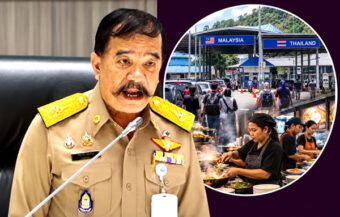
Government concerns became public on May 19. On that date, Prime Minister’s Office Minister Supamas Isaraphakdi issued a warning about the negotiations. Speaking at Government House, she acknowledged that the World Cup might not reach Thai television screens.
The comments marked the strongest official signal yet that the project faced serious difficulties. Nevertheless, Supamas stressed that Prime Minister Anutin Charnvirakul wanted Thai people to watch the tournament.
Previously, the Cabinet instructed the Public Relations Department to explore financing options. Discussions involved state agencies, private companies and the National Broadcasting and Telecommunications Commission. The regulator helped support earlier World Cup broadcasts. This time, conditions are very different.
Minister cites economic pressures and weak commercial prospects behind broadcaster reluctance
According to Supamas, several factors have weakened the commercial outlook. Ongoing conflict in the Middle East has increased uncertainty. At the same time, economic conditions have become more challenging. Corporate spending decisions have therefore become more cautious.
On another front, the tournament schedule creates additional difficulties. Many matches will be played during late-night or early-morning hours in Thailand. Those time slots are generally less attractive to advertisers. Commercial revenue projections have therefore weakened.
The timing issue extends beyond television advertising. Restaurants and entertainment venues often benefit from major football tournaments. Large crowds gather to watch key matches. Overnight kick-off times reduce those opportunities. Expected returns from public screenings have therefore diminished.
In response, corporate enthusiasm has cooled. Supamas revealed that no major private sponsors had committed support. Four years ago, broadcasters received assistance from both regulators and private companies. That funding structure has not emerged this time.
Lack of sponsorship and weaker revenue forecasts undermine the business case for broadcasters
Without substantial sponsorship, the economics become more difficult. Rights costs remain high. Revenue forecasts remain uncertain. Broadcasters therefore face a tougher business case than in previous tournaments.
The minister also raised concerns about the value of FIFA’s proposal. Although she declined to disclose the exact figure, confidentiality agreements prevented further detail. Even so, she argued that the amount sought from Thailand was difficult to justify.
Supamas pointed to international comparisons. Thailand’s population is approaching 70 million. Yet countries with populations nearing 1.5 billion were reportedly paying less overall. Furthermore, she said Thailand’s per-capita cost would be significantly higher than elsewhere.
According to the minister, Thailand was being asked to pay between 10 and 20 times more per person than some countries. That comparison has become a central issue in negotiations. Officials are increasingly focused on whether the expenditure represents fair value.
Government weighs public spending priorities as scrutiny grows over FIFA’s proposed fee
Separately, the government faces competing demands on public finances. Supamas said welfare spending remains a priority. Any rights agreement must therefore withstand public scrutiny. If the price remains excessive, officials may decide resources are better directed elsewhere.
Even so, negotiations have not collapsed. Government officials continue examining possible alternatives. One option involves increased private-sector participation. Another centres on revised pricing from FIFA.
Meanwhile, discussions are taking place regarding alternative viewing models. Reports suggest FIFA may offer pay-per-view streaming services. Limited highlights packages have also been mentioned. However, no formal details have been confirmed.
For football supporters, the uncertainty has fuelled intense speculation. Attention increased after comments from football analyst Yingrak Raksuwan. Writing on his BubbleYingrak Facebook page, he stated that Thai viewers would “definitely” be able to watch the tournament.
He attributed that confidence to information from inside sources. However, no official confirmation followed. His prediction has nevertheless attracted considerable attention among football fans.
Fans await clarity as speculation grows and the opening match draws ever closer to kick-off
Until a deal is announced, several questions remain unanswered. Free-to-air television remains possible. A subscription-based arrangement cannot be ruled out. Equally, FIFA could pursue another distribution model altogether.
What remains beyond dispute is the shrinking timetable. The opening match is only days away. Yet Thailand still lacks a completed agreement. Across Southeast Asia, neighbouring countries have already secured access to all 104 matches.
Talks over World Cup TV rights for Thailand falter as sponsors show a lack of interest and cost surges
Prime Minister promises the Thai public free access to the 2026 World Cup despite 1.3 billion baht price
As the countdown enters its final phase, Thailand stands increasingly isolated. Laos has completed its deal. Vietnam has secured coverage. So too have Malaysia, Singapore, Indonesia, Cambodia, Timor-Leste and the Philippines.
The final outcome now depends on whether negotiators can narrow a substantial pricing gap. Until that happens, Thailand’s World Cup plans remain unresolved. For millions of football supporters, the clock is ticking.
Join the Thai News forum, follow Thai Examiner on Facebook here
Receive all our stories as they come out on Telegram here
Follow Thai Examiner here
Further reading:
World Cup all set to be available on free-to-air TV in a vital boost to the foreign tourism industry
Flight connectivity dogs tourism recovery as Immigration Bureau warns travellers of delays
Travel to Thailand rebounding despite inflation and higher fares, now nearly 2 million a month
Thailand’s once mighty foreign tourism industry lastingly damaged with lower spends and numbers
Nightlife until 4 am as poll shows plans to move foreign tourism upmarket a ‘recipe for disaster’
Thai economy in an upswing with over 1 million foreign tourists in July powering higher GDP gains
Negative reaction and horror at Thailand’s plan to charge foreigners more than locals at hotels