Tourism industry battles a new visa crackdown that could make Indian tourists the biggest losers, with operators warning a ฿2,000 fee and shorter stays threaten ฿8 billion in wedding revenue and millions of visitors as hotels fight to save the booming market.
Thailand’s tourism industry is pushing back against a government visa overhaul that could reshape one of the country’s fastest-growing visitor markets, as business leaders warn that new fees and shorter stays for Indian travellers may put billions of baht in wedding and tourism revenue at risk and hand a competitive advantage to rival destinations ahead of the high season.
The kingdom’s foreign tourism industry is mounting an increasingly intense campaign against government plans to end visa-free entry for Indian tourists, warning that the move could place billions of baht in revenue at risk and damage one of the country’s fastest-growing international markets.
The government completed a comprehensive review of visa policies in May. Subsequently, the findings and recommendations were forwarded to the Cabinet for final consideration. The proposed changes would significantly alter entry arrangements for Indian nationals, who have enjoyed visa-free access to Thailand for the past two years.
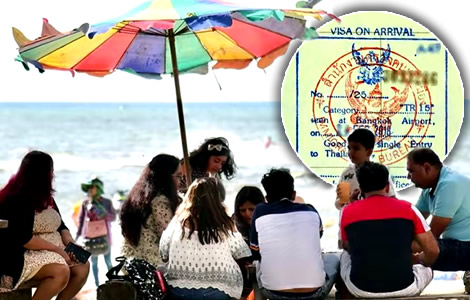
Under the revised framework, Indian tourists would return to a visa-on-arrival system. They would be required to pay a ฿2,000 fee and complete visa processing upon arrival in Thailand. At the same time, their permitted period of stay would be reduced to 15 days.
Indian visitors face shorter stays and visa fees as Thailand reviews entry rules and policies
By contrast, Chinese visitors and travellers from other countries retaining visa exemption would continue to enter Thailand without visa charges. However, their maximum stay would also be reduced from the current 60-day period to 30 days under the new regulations.
This difference in treatment has become a major concern among tourism operators, particularly in Thailand’s Andaman region. There, businesses argue that the Indian market has developed into a strategic source of income, especially through the rapidly expanding destination wedding sector.
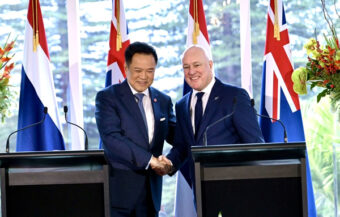
In response, private sector organisations from Phuket, Phangnga and Krabi submitted a formal petition calling for a revision of the proposed policy. The letter was received by the Minister of Tourism and Sports last week and represents a coordinated appeal from the region’s leading tourism organisations.
The petition has been backed by 13 groups, including provincial chambers of commerce, the Federation of Thai Industries, the Tourism Council and hotel associations operating across the three Andaman provinces.
Tourism groups warn the Indian wedding sector faces risks from stricter visa requirements changes
While the organisations support the government’s broader decision to shorten the previous 90-day visa exemption period for most countries, they insist that the Indian market requires separate consideration due to its substantial economic contribution.
For two years, Indian tourists have entered Thailand without visa requirements. Under the new proposal, visitors would either need to obtain an electronic visa before travelling or apply for a visa on arrival.
Notably, tourism operators have stated that the visa procedure itself is not the principal obstacle. Instead, they are concerned that the additional ฿2,000 charge could discourage large groups, particularly the high-value wedding market that has become strongly associated with Phuket, Phangnga and Krabi.
The three provinces have emerged as major destinations for Indian wedding celebrations. Their combination of luxury hotels, beaches, event facilities and supporting services has made the Andaman coast a preferred location for large-scale ceremonies.
Indian weddings generate billions of baht for Phuket, Phangnga and Krabi tourism businesses
According to industry records from 2023 to 2025, approximately 600 Indian couples held weddings in the three provinces. These events typically involved between 350 and 500 guests, who remained in Thailand for periods of five to seven days.
Consequently, the economic impact has been extensive. The weddings generated more than ฿8 billion in revenue across the three provinces during the period.
The benefits have spread well beyond hotels and resorts. In addition, event organisers, restaurants, hospitals, beauty clinics, spas and numerous related businesses have received significant income from Indian wedding visitors.
Industry representatives argue that the financial burden of a visa fee becomes much greater when applied to large groups. A wedding involving hundreds of guests could face substantial additional costs, creating a factor that organisers may consider when choosing between competing destinations.
Hotels warn delays over visa decision could affect Indian wedding bookings from October
Wichupan Phukaoluan Srisanya, president of the Thai Hotels Association’s southern chapter, said wedding events require considerable advance preparation, generally between four and six months.
Therefore, couples planning celebrations from October onwards are already monitoring Thailand’s visa decision before finalising their arrangements.
She warned that uncertainty or additional barriers could influence future bookings. “If the visa factor becomes an obstacle, they will shift to other countries that are competitors of Thailand, causing the country to permanently lose revenue from this segment,” the statement said.
For this reason, the private sector has urged the government to speed up consideration of the issue and announce a clear decision during July. Industry groups say an early announcement is essential to provide certainty before the arrival of the high tourism season.
The business community has proposed four possible solutions to reduce the impact of the planned changes.
Industry proposes visa waiver fee removal and faster processing to protect Indian market
Firstly, operators have requested that Indian travellers continue to receive visa exemption for a minimum period of 30 days. They also highlight that India provides reciprocal visa-free access to Thai citizens.
Alternatively, if maintaining visa exemption is not possible, the sector has requested the removal of the ฿2,000 visa-on-arrival fee for Indian nationals.
Furthermore, tourism businesses have called for improvements to the electronic visa system, seeking faster processing times and greater administrative efficiency.
Another proposal focuses specifically on the destination wedding market. Under this arrangement, immigration authorities would establish dedicated processing channels for wedding groups.
As part of this proposal, wedding organisers and guests would receive a group visa. This would come within three days after submitting their applications, allowing large events to be planned with greater certainty.
Tourism sector seeks long-term visa agreement with India amid concerns over demand impact
Separately, the private sector has called for diplomatic negotiations between Thailand and India. The Ministry of Foreign Affairs and the Tourism Authority of Thailand would be tasked with discussions aimed at reaching a permanent bilateral visa exemption agreement.
Industry representatives hope such an agreement could be concluded within the third quarter of this year, strengthening Thailand’s position against competing destinations seeking Indian tourists.
However, not all observers believe the policy change will significantly damage demand. Indian travel industry experts have suggested that Thailand remains a competitively priced destination despite the additional visa requirement.
Indian arrivals remain strong despite debate over new visa charges and entry restrictions
Similarly, Indian travel agents have indicated that the ฿2,000 charge is manageable for many travellers. Some have also argued that tighter entry conditions may help reduce misuse of visa privileges.
Meanwhile, the Ministry of Tourism and Sports is considering another proposal intended to maintain visitor numbers. This includes the possibility of granting Indian tourists a separate 15-day visa-free entry period.
The Indian market remains critically important for Thailand’s tourism strategy. As of June 7, Indian arrivals had reached approximately 1.1 million, making India Thailand’s third-largest source market.
Thailand targets high-value Indian tourists as direct flights and premium travel expand
The Tourism Authority of Thailand has established a target of 2.55 million Indian visitors for the year. Nevertheless, officials may revise this forecast. This would be if the revised visa rules have a significant effect on mass tour groups and large-scale travel.
The growth of the Indian market has been remarkable. In 2025, arrivals increased by more than 15% to nearly 2.49 million visitors. In short, it confirms India as one of Thailand’s most rapidly expanding tourism sources.
The strategy for 2026 is increasingly focused on value over volume. Accordingly, the Tourism Authority of Thailand is expanding campaigns aimed at luxury travellers, wellness tourists and premium spending segments.
Indian visitor behaviour has also changed in recent years. While the market traditionally included many budget-conscious travellers, increasing numbers are choosing luxury accommodation, high-end shopping, wellness retreats and exclusive travel experiences.
Direct flights strengthen Indian market as Thailand awaits final Cabinet decision on visas
In parallel, stronger air connectivity has supported this expansion. More than 18 Indian cities now have direct flight connections to Thailand, making short-haul international travel easier and more convenient.
Bangkok, Pattaya, Phuket and Koh Samui remain the most popular destinations among Indian visitors. These locations continue to benefit from regular flight services and strong tourism infrastructure.
India may be biggest loser in new get tough foreign tourism visa policy approved by cabinet on Tuesday
The debate over visa policy has therefore emerged at a sensitive period for Thailand’s tourism industry. Authorities are seeking tighter control over entry rules. At the same time, the private sector is attempting to protect a market that generates billions of baht annually.
The Cabinet’s final decision will be closely monitored across the tourism industry. Hotels, airlines, travel companies, wedding organisers and related businesses are preparing for the upcoming high season. Certainly, they are waiting for clarity on the future of Indian travel to Thailand.
Join the Thai News forum, follow Thai Examiner on Facebook here
Receive all our stories as they come out on Telegram here
Follow Thai Examiner here
Further reading:
60-day visa regime to be ended confirms Minister responding to rising industry security concerns
Tourism boss warns Thailand it is facing a Chinese blacklist if another security controversy erupts
Visa waiver scheme questioned with another China Crisis for foreign tourism driven by security fears
Tourism cryptocurrency sandbox payment plan is bound to face stiff opposition from the central bank