Thailand bids farewell to Princess Bajrakitiyabha as King and Queen lead historic royal funeral rites. The final journey from hospital to Grand Palace featured the iconic “James Bond” Volkswagen and honoured a Princess devoted to law and service.
Thailand entered a new chapter of royal mourning on June 13 as His Majesty King Maha Vajiralongkorn and Her Majesty the Queen led the first Buddhist funeral rites for Princess Bajrakitiyabha at the Grand Palace. The ceremony followed a historic procession from Chulalongkorn Hospital, where doctors, nurses and the public paid their final respects, while the Princess’s coffin was carried in the iconic Volkswagen once used by King Bhumibol Adulyadej and Queen Sirikit. The rites marked the beginning of an extensive royal funeral programme for the 47-year-old Princess, whose public life spanned law, international diplomacy and humanitarian service.
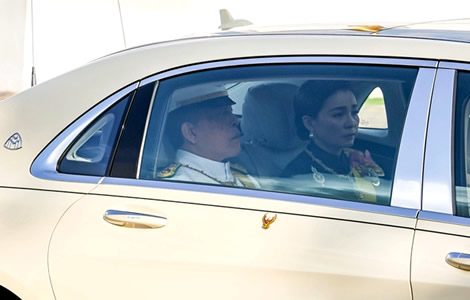
Thailand entered a period of royal mourning on Saturday as His Majesty King Maha Vajiralongkorn and Her Majesty the Queen led Buddhist funeral rites for Her Royal Highness Princess Bajrakitiyabha Narendira Debyavadi, Krom Luang Rajasarinisiripatchara Mahavajrarajathida, at the Grand Palace.
The ceremony followed the Princess’s death at Chulalongkorn Hospital, Thai Red Cross Society, on June 11. According to the Royal Household, she passed away peacefully at 7.48pm aged 47.
Following the announcement, His Majesty the King commanded that the funeral be conducted with the highest royal honours under traditional royal customs. As a result, extensive preparations began for the transfer of the Princess to the Phiman Rattaya Throne Hall.
Royal funeral preparations begin as King orders highest honours for Princess Bajrakitiyabha
On Saturday afternoon, Their Majesties the King and Queen arrived at Chulalongkorn Hospital with members of the Royal Family. At exactly 4.26pm, the funeral procession departed from the Bhumibol Adulyadej Memorial Building.
Meanwhile, doctors, nurses, hospital staff, medical students and nursing students gathered outside the hospital. Members of the public also lined the route through Bangkok.
They lowered their heads and paid respect as the royal procession passed. At the same time, the King and Queen travelled in their royal vehicles at the front of the convoy.
Behind them, members of the Royal Family followed in an organised procession towards the Grand Palace. The route entered the palace grounds through the Wiset Chai Si Gate and the Phiman Chai Si Gate.
At 5.05pm, the procession reached the Grand Palace and entered the next ceremonial stage. Subsequently, the royal coffin was escorted to the left side of the Phrom Sopha Gate.
Procession reaches Grand Palace as thousands witness the Princess’s final royal journey
Medical staff and nursing personnel then carried the coffin into the Phiman Rattaya Throne Hall. Their involvement reflected their role in caring for the Princess at Chulalongkorn Hospital.
Inside the throne hall, His Majesty the King bestowed a seven-tiered white royal umbrella over the coffin. The gesture formed part of the highest royal funeral honours.
Separately, the vehicle carrying the Princess attracted considerable attention during the procession. The grey Volkswagen T4 with blue stripes carried registration number 1D-0929.
The long-wheelbase vehicle became known publicly as the “James Bond” Volkswagen. It was used for many years by His Majesty King Bhumibol Adulyadej during official duties.
Notably, the same vehicle transported the remains of King Bhumibol Adulyadej after his death. It was also used during the funeral arrangements of Her Majesty Queen Sirikit, the Queen Mother.
Historic Volkswagen linked to King Rama IX again serves in the solemn royal funeral procession
The procession also included the vehicle of Somdej Phra Maha Veerawong, Assistant Abbot of Wat Ratchabophit Sathit Mahasimararam Ratchaworawihan. Additional royal vehicles carrying members of the Royal Family followed behind.
Later, at 6.13pm, Their Majesties the King and Queen entered the Phiman Rattaya Throne Hall to begin the Buddhist funeral rites. Members of the Royal Family joined them during the ceremony.
Their Majesties placed wreaths before the royal urn before beginning the traditional rituals. His Majesty the King then lit incense and candles at the royal gilded enamel altar.
Following this, the King lit incense and candles at the smaller gold altar. Her Majesty the Queen then performed the same ritual at the smaller altar before moving to the larger gold altar.
The King later approached the two-tiered golden altar beneath the nine-tiered white royal umbrella. He paid homage before taking his seat and presenting 11 sets of monastic robes.
King and Queen lead sacred Buddhist rites before the royal urn inside Grand Palace ceremony
In parallel, Their Majesties performed the ceremonial water pouring before the next religious stage commenced. The rites then continued with further offerings and Buddhist prayers.
Afterwards, His Majesty the King proceeded to the mother-of-pearl offering trays placed before the eastern and western altars. These altars were prepared for Buddhist monks chanting the Abhidhamma prayers on the northern side of the Dusit Maha Prasat Throne Hall.
During the ceremony, the King lit incense and candles at both offering trays before returning to his seat. The monks then continued the Abhidhamma chanting according to royal Buddhist tradition.
Thereafter, the monks completed four rounds of chanting before the next ritual stage began. Officials invited one senior monk to deliver the Adirek blessing.
At the same time, eight other monks took their places on the designated monastic seats. His Majesty the King then proceeded to offer monastic robes before returning to his position.
Ancient Abhidhamma prayers and royal rituals continue under traditional funeral customs
Following the robe presentation, Their Majesties performed the Thaksinothok ceremonial water-pouring ritual. The evening rites then moved towards their final formal stages.
Subsequently, His Majesty proceeded to the altar beneath the nine-tiered white royal umbrella. The King and Queen then approached the royal urn and bowed in respect.
They later received the respects of those attending the ceremony. Afterwards, Their Majesties departed the Dusit Maha Prasat Throne Hall.
The royal party included Her Royal Highness Princess Sirivannavari Nariratana Rajakanya. His Royal Highness Prince Dipangkorn Rasmijoti Mahavajirotthamangkul Siri Vibulyarajakumara was also present.
Chao Khun Phra Sineenat Bilaskalayani accompanied the royal departure. The royal party then returned to Amphorn Sathan Residential Hall within Dusit Palace.
Royal family concludes first day of funeral rites after solemn Grand Palace ceremonies
The funeral ceremonies marked the beginning of an extensive programme of royal rites following Princess Bajrakitiyabha’s death. The Phiman Rattaya Throne Hall became the central location for these traditional ceremonies.
Beyond the funeral events, Princess Bajrakitiyabha’s public life was defined by her work in law, diplomacy and humanitarian service. She was widely known among Thai people as Princess Bha.
She was the eldest daughter of His Majesty King Maha Vajiralongkorn and Princess Soamsawali. Moreover, she was the first grandchild of King Bhumibol Adulyadej the Great and Her Majesty Queen Sirikit the Queen Mother.
Her academic record showed a strong focus on legal studies from an early age. She graduated from the Faculty of Law at Thammasat University in 2001 with second-class honours.
Later, she continued her legal studies in the United States and obtained a Doctor of the Science of Law degree from Cornell University. The qualification shaped much of her later work in legal affairs.
Princess Bha built a distinguished career through law education and royal public service
In particular, Princess Bajrakitiyabha concentrated on criminal justice, legal development and the treatment of vulnerable groups. Her expertise influenced many of her official responsibilities.
On the international stage, she represented Thailand at the 60th Session of the United Nations General Assembly in New York. Her responsibilities covered a broad range of international legal issues.
These included crime prevention, criminal justice, migration, human rights, maritime law and counter-terrorism. In addition, she contributed to Thailand’s positions in multilateral diplomatic discussions.
Thai diplomats and officials often noted her detailed understanding of complex international issues. Her work strengthened Thailand’s engagement in international legal forums.
Separately, the Princess devoted considerable attention to humanitarian initiatives inside Thailand. She became chairperson of the Friends in Need of “PA” Volunteers Foundation.
The foundation began as a royal volunteer initiative in 1995. It provided assistance to people affected by floods and other disasters across the country.
Kamlangjai project expanded support for women prisoners, children and vulnerable inmates nationwide
Another major focus of her work involved women and children within the correctional system. This commitment later became one of her most recognised public initiatives.
On September 14, 2001, she established the Kamlangjai Project after visiting the Central Women Correctional Institution in Bangkok. The project was founded while she was still studying law.
During that visit, she became concerned about the conditions facing female prisoners and their children. Consequently, the project expanded into a wider support network.
It provided assistance to pregnant prisoners, children living with incarcerated mothers and elderly female inmates. The initiative later gained broader recognition both inside and outside Thailand.
As part of this work, Princess Bajrakitiyabha promoted international standards involving female prisoners through the Enhancing Life for Female Inmates, or ELFI, initiative.
Through ELFI, she contributed to international discussions on the treatment, welfare and rehabilitation of women prisoners. Her work connected Thai initiatives with wider global efforts in criminal justice.
International organisations recognised Princess for justice reform and humanitarian leadership
The Princess’s work in legal reform and humanitarian programmes received recognition from international organisations. Notably, the United Nations Office on Drugs and Crime awarded her a Medal of Recognition for her contributions to legal education, prison reform, anti-violence campaigns and humanitarian activities.
In addition, Princess Bajrakitiyabha served as a UNIFEM Goodwill Ambassador in campaigns against violence towards women. This international appointment reflected her long-standing involvement in legal and social issues.
Beyond her international roles, the Princess continued to undertake extensive royal duties across Thailand and abroad. Her responsibilities included official ceremonies, diplomatic representation and public service projects.
Her legal background shaped many of these responsibilities. Likewise, her doctoral training from Cornell University supported her work on complex criminal justice and international legal matters.
Throughout her public life, she remained closely involved with issues surrounding justice and rehabilitation. Her initiatives focused particularly on female prisoners, their children and vulnerable groups.
Long-term initiatives in prisons, disaster relief and diplomacy defined royal public duties
The Kamlangjai Project became one of her most enduring programmes. Over time, it developed from prison assistance into a broader initiative supporting women and children affected by incarceration.
Meanwhile, the ELFI initiative brought international attention to the treatment of female prisoners. It helped advance discussions on standards concerning women within correctional institutions.
On another front, the Friends in Need of “PA” Volunteers Foundation continued disaster assistance activities under her chairmanship. The foundation originated from a royal volunteer effort established in 1995 to provide relief during floods and other emergencies.
Her humanitarian responsibilities existed alongside a distinguished diplomatic career. Furthermore, her work at the United Nations placed Thailand within major international discussions involving law and security.
She participated in matters covering crime prevention, migration, human rights, maritime law and counter-terrorism. These areas formed a significant part of her international responsibilities.
Final royal ceremonies mark the beginning of remembrance for Princess Bajrakitiyabha at 47
Her public record combined royal responsibilities with specialised legal expertise. In turn, her work covered domestic programmes and international engagement over many years.
Following her death on June 11, the Royal Household announced the beginning of the formal royal funeral period. The ceremonies proceeded under the command of His Majesty the King.
The rites at the Phiman Rattaya Throne Hall represented the opening stage of the royal funeral programme. They followed established procedures reserved for senior members of the Thai Royal Family.
In parallel, members of the public continued gathering to pay their respects after the announcement of her passing. Many had also gathered earlier along the route from Chulalongkorn Hospital to the Grand Palace.
The June 13 procession became one of the most significant early moments of the funeral ceremonies. The route connected the medical institution where the Princess spent her final years with the historic heart of the Thai monarchy.
At the same time, the procession highlighted the role of those who cared for the Princess during her final period. Doctors, nurses, medical staff and students stood along the route and bowed as the royal convoy passed.
Historic James Bond Volkswagen remains a powerful symbol of modern Thai royal history
The grey Volkswagen T4 carrying registration number 1D-0929 also remained a notable symbol of the procession. Its association with King Bhumibol Adulyadej and Queen Sirikit linked the ceremony with recent royal history.
The vehicle, known as the “James Bond” Volkswagen, had served His Majesty King Bhumibol Adulyadej for many years during official duties. It later carried his remains and was again used during the funeral arrangements for Her Majesty Queen Sirikit, the Queen Mother.
As the funeral programme continues, the ceremonies at the Grand Palace will remain centred on the Phiman Rattaya Throne Hall. The rites combine royal traditions, Buddhist practices and formal ceremonial procedures.
15 days of mourning for Princess but entertainment events can proceed with one minutes silence says PM
Thailand plunged into mourning after the death of the King’s eldest child Princess Bajrakitiyabha at 47
Princess Bajrakitiyabha’s life encompassed legal scholarship, diplomatic representation and humanitarian work. Her education at Thammasat University and Cornell University, her role at the United Nations and her initiatives, including Kamlangjai, ELFI and the Friends in Need of “PA” Foundation, formed the central record of her decades of public service.
The events of Saturday, June 13, brought together Their Majesties the King and Queen, members of the Royal Family, senior Buddhist clergy, medical personnel, officials and the public. The ceremonies marked the first major royal farewell to Princess Bajrakitiyabha following her death at the age of 47.
Join the Thai News forum, follow Thai Examiner on Facebook here
Receive all our stories as they come out on Telegram here
Follow Thai Examiner here
Further reading:
King and Queen visit Princess Bajrakitiyabha at a Bangkok hospital after she took ill on Wednesday
New ministers take the reins in a formal audience with King Rama X & Queen Suthida at Dusit Palace
Thai King and Queen extend New Year’s wishes to the Thai people for a happy 2020 through the media
Thailand united in wishing the King a Happy Birthday with events in Bangkok and all provinces
Coronation of Rama X a new start for Thailand as King gives the country a new Queen in a surprise