Bhumjaithai blasts Thai politics into turmoil after backing the Senate’s veto power, breaking its pact with the People’s Party and triggering a fresh constitutional crisis as rivals push no-confidence threats and brace for a showdown over dissolution.
Thailand on Thursday night plunged into a fresh political crisis after a parliamentary vote that saw the Bhumjaithai Party effectively break its agreement with the People’s Party on constitutional reform, with the ruling party siding with a minority proposal from the constitutional drafting committee to preserve the Senate’s veto power — a move that immediately detonated political tensions. The 312–290 result sparked an angry backlash from People’s Party leader Nattapong Ruangpanyawut, who vowed to trigger a Section 151 no-confidence motion, while the Pheu Thai Party rushed to call an emergency meeting to reassess its position. Now all eyes are locked on the opposition and Prime Minister Anutin Charnvirakul as the countdown begins to see which comes first — a no-confidence motion or a snap dissolution of parliament.
Simmering political tensions between the government and opposition exploded on Thursday evening after the Bhumjaithai Party in effect reneged on its agreement with the People’s Party on constitutional reform. The ruling party supported a minority move with the drafting committee to retain the required 30% threshold for the Senate or upper house for the measure.
Afterwards, People’s Party leader Nattapong Ruangpanyawut indicated that a motion of no confidence under Section 251 will be forthcoming, while the Pheu Thai Party called an urgent meeting for Friday.
However, the opposition is racing against time. Any move to dissolve parliament by the Prime Minister would certainly preempt a censure motion.
Opposition races against dissolution threat as parliamentary showdown risks triggering early election
On the other hand, a no-confidence motion would stay the Prime Minister’s dissolution power until the debate is held. Certainly, his government would lose the vote heavily, prompting an early General Election.
In the meantime, Bangkok has been buzzing with rumours this week that the ongoing war with Cambodia may lead to a move by the government to extend its period in office. Certainly, Thailand has entered yet another constitutional crisis.
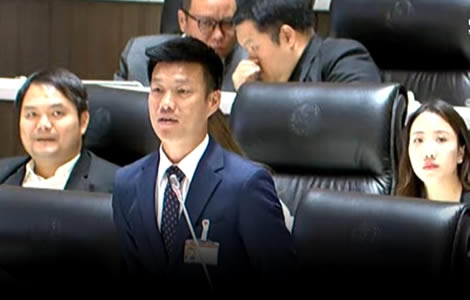
It happened after Parliament descended into sustained tension on Thursday as both houses met in an extraordinary joint session. The session aimed to settle the approval process for the Senate under the plan to reinstate powers linked to drafting a new constitution.
The issue centred on Article 256/28, which defines the vote required to endorse the draft produced by the Constitution Drafting Committee. The article presented demanded a vote of more than half of all MPs and Senators combined.
However, pressure increased after the drafting committee split. A minority had pushed to restore a rule requiring at least 30 per cent approval from Senators. Yet the committee’s final majority recommendation supported only a simple majority from the 700-member parliament. That number includes 500 MPs and 200 Senators. The clash between these standards drove the debate.
Drafting committee minority pushed a vote over Senate threshold, causing a rupture in the process
Throughout the afternoon, arguments intensified. Wiroj Lakkhanaadisorn of the People’s Party challenged several Senators during the second day of consideration. Earlier, Senator Ratchanikorn Thongthip had said she despised politicians, which triggered immediate protest from MPs. Soon after, tempers rose across the chamber. Deputy Speaker Mongkol Surasatcha repeatedly intervened to restore order.
Meanwhile, the procedural stakes were high. At 5:22 PM, the meeting resumed work on Article 256/28. The draft section sets the voting bar for approving the final constitution. It requires the support of more than half of all members of both houses. Yet many members focused instead on how much weight Senators should hold.
During the debate, Wiroj said many Senators misunderstood the proposal. He said the amendment did not abolish checks and balances. Instead, he said it aimed to distribute authority proportionally.
He noted that MPs come from more than 50 million eligible voters. However, Senators are selected from a pool of 48,000 applicants narrowed to 200 final members. He said powers should reflect those differences. He said proportional checks would strengthen proper scrutiny.
Fierce exchanges erupt as Wiroj challenges Senate legitimacy and demands people’s power
But the exchange grew personal. Wiroj criticised Senator Pisit Apiwatanapong’s claim that the Senate served as a brake. He used an analogy, saying constant braking overturns a car. He said such behaviour would stop the country from moving forward.
He also responded directly to Senator Ratchanikorn. He said Senators were also politicians under the current system. He said they should acknowledge that reality. He suggested that those rejecting political status could resign and seek positions on the Constitution Drafting Committee instead.
However, Senator Ratchanikorn defended herself. She said she never targeted anyone by name. She said her criticism focused on legal provisions. She said she recently entered politics and had not been a politician before. She asked Wiroj to be polite.
She asked him to withdraw his remarks. Yet he refused. He said he cited her name only to quote her words. He said he needed to identify speakers precisely.
Chamber descends into chaos as senators protest criticism and tensions spiral over into sharp exchanges
Soon after, Senator Pisit protested again. He said the Constitution clearly required a one-third Senate threshold. He asked why MPs did not protect the people’s voices. The atmosphere deteriorated further.
Members continued to argue loudly. The Deputy Speaker cut off microphones. He asked everyone to stop interrupting. He warned that the session could not continue under those conditions.
Despite the tension, the chamber proceeded toward the decisive evening vote. At 7:35 PM, both houses cast ballots. Turnout reached 606 members. The result was a narrow and consequential split.
The minority committee’s plan to restore a one-third Senate threshold won 312 votes. The majority committee’s simple-majority formula secured 290 votes. Six members abstained. The chamber adopted the minority proposal.
Immediately, People’s Party leader Nattapong Ruangpanyawut reacted sharply. He requested a recount because the margin was under 30 votes. Under parliamentary rules, that difference requires a roll-call vote. He said the outcome broke the agreement between the People’s Party and the Bhumjaithai Party. He said the agreement had rested on Bhumjaithai’s claim that it could persuade Senators to support a constitutional amendment.
Shock vote shatters coalition trust as narrow senate threshold win triggers call for recount
Moreover, Nattapong said Bhumjaithai’s vote at this “turning point” lacked credibility. He questioned whether the party could achieve the votes required for the third reading. He said Bhumjaithai would likely support the one-third threshold again. He said that the position contradicted its commitments to the People’s Party.
Earlier in the debate, Nattapong had warned that the coalition faced structural risk. He said that if the People’s Party and Pheu Thai refused to accept Senate voting powers in the new constitution, the legislative process would stall.
He said the government whip could lose control. He said this reversal could make the government a minority inside parliament. He said that, in such circumstances, the Prime Minister could dissolve parliament.
After the vote, Nattapong said a no-confidence motion would follow under Section 151 of the constitution. He said the filing was imminent. He said the timing depended on whether the Prime Minister acted first.
If a dissolution order comes before the motion is filed, the motion cannot proceed. However, once the motion is filed, the Prime Minister loses the power to dissolve parliament. This created an urgent race between two legal procedures.
Coalition fractures deepen as no-confidence threat collides with dissolution risk in constitutional deadlock
Meanwhile, the Pheu Thai Party announced an urgent meeting scheduled for the next day. It said it would address the issue in detail. The timeline created immediate pressure. Political observers noted that Prime Minister Anutin Charnvirakul could dissolve the House before facing a no-confidence motion. The decision could shape the next phase of Thai politics.
Furthermore, conflict deepened across the coalition. The People’s Party said Bhumjaithai had reneged on a core commitment. It said the People’s Party supported Anutin as Prime Minister based on a clear condition.
That condition was the creation of an elected Constitutional Drafting Assembly. According to People’s Party figures, the new vote removed that guarantee. They said the result gave Senators expanded authority again. They described the change as a breach of the original agreement.
The vote also triggered outside reactions. Pol. Lt. Col. Chavalit Lauhaudomphan, known as Inspector Piew and a former Move Forward Party MP, posted a sharp response online. He said voters were “100% deceived.”
He said electing Anutin as Prime Minister in exchange for an elected Constitutional Drafting Assembly had failed. He said the final result — “20 votes chosen by 1,” with Senators involved — matched earlier political patterns. He compared it to past events involving previous governments. He wrote that the only secure path would require winning more than 350 seats in the next election. He said winning only a majority in the House would not be enough. He said the combined numbers of both houses demanded far greater totals.
Outrage spreads as critics accuse government of betrayal. Only a 350-seat victory can break Senate power
He said failure to reach 350 seats could lead to a constitution worse than the previous one. He linked the situation to the 2017 referendum. He said voters had then approved questions allowing Senators to elect the Prime Minister.
He said many voters had not realised the future consequences. He said this pattern now repeated itself. He said the current setback could still motivate stronger campaigning. He said parties might now aim for 350 seats or more. He questioned whether such optimism was realistic.
Throughout the day, the joint session displayed sharp divisions. Exchanges between MPs and Senators highlighted deep disagreement over constitutional authority. Procedural disputes slowed progress repeatedly.
Several disputes forced interventions from the Deputy Speaker. He instructed members to remain calm. He said the meeting could not continue under constant protest.
Yet the voting result carried immediate consequences. The one-third Senate threshold now stands as the adopted mechanism. It raises the standard for constitutional amendment. It strengthens the Senate’s blocking power. It weakens the committee’s original majority recommendation. It raises the probability of future legislative gridlock.
Senate threshold victory ends People’s Party support as deep institutional divide ends future reform
As the night ended, political momentum shifted rapidly. The People’s Party is prepared to file a no-confidence motion. The Prime Minister weighs whether to dissolve parliament. Pheu Thai prepared its emergency meeting. Coalition trust deteriorated further. Senior MPs reviewed the timeline, counting days and hours. The situation moved toward confrontation.
Events on Thursday also exposed underlying tensions between elected and unelected representatives. MPs argued for proportional authority. Senators defended the existing framework. Clashes between Wiroj and the Senators illustrated this divide.
Protests, microphone cuts, and repeated orders for silence showed the strain inside the chamber. No agreement on institutional balance emerged.
Prime Minister Anutin’s best laid political plans sunk by Hat Yai unfolding disaster as failures emerge
Fears the Bhumjaithai Party has ensnared the People’s Party and any hope of real Constitutional reform
The vote outcome on Thursday suddenly reshaped the political landscape. The minority government is now threatened. The coming hours will produce further escalation. The political environment now shifts with each statement, each meeting, and each procedural move.
The developments on Thursday probably signal an end at this time to Thailand’s constitutional reform efforts. The result created a new political crisis from which drastic developments are expected.
These moves will likely now come within hours, not days, as the battle for power in Bangkok is waged as Thailand enters its fifth day of all-out war on its border with Cambodia. Inside sources believe that both battlefields are linked to the country’s never-ending power struggle between conservative forces and pro-democracy groups.
Join the Thai News forum, follow Thai Examiner on Facebook here
Receive all our stories as they come out on Telegram here
Follow Thai Examiner here
Further reading:
People’s Party on campaign but on guard against potential legal complaints to oversight agencies
Wealthy young People’s Party leader aims to create a technology-driven and efficient welfare state
Inward immigration may ultimately be the only thing that can halt Thailand’s fated economic decline