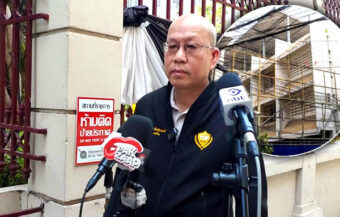
Central Bank lowers borrowing costs as Thailand’s battered economy limps toward year-end, hit by weak growth, tourism slump, floods, war costs, trade uncertainty with the US, tightening credit, rising debt, and warnings that 2026 may bring the weakest expansion in decades.
Thailand’s central bank cut interest rates by 25 basis points to 1.25%, an expected move as growth weakens. The economy is now grappling with fears that GDP growth in 2025 will fall below 2%. Meanwhile, economists warn the outlook is deteriorating, with deep-seated structural problems colliding with fresh shocks to leave the already strained economy facing even tougher headwinds in 2026. Thailand also suffered an unexpected slump in foreign tourism in 2025, while uncertainty over trade persists after the government failed to finalise a deal with the United States.
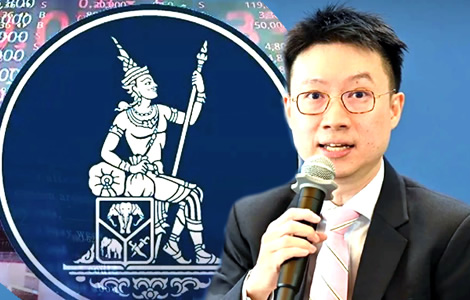
The Monetary Policy Committee of the Bank of Thailand reduced the policy interest rate by 25 basis points on Wednesday. As a result, the rate fell from 1.50% to 1.25% per year. The decision was unanimous and took immediate effect. Notably, it marked the first policy move under Governor Vitai Ratanakorn. The cut followed mounting evidence of economic slowdown across several sectors.
Overall, Thailand continues to struggle to reach 2–2.5% GDP growth in 2025. Certainly, growth weakened during the second half of the year. In particular, manufacturing activity slowed, while domestic demand softened. At the same time, investment recovery remained narrow and uneven. Consequently, economic momentum deteriorated.
Moreover, severe flooding in southern Thailand compounded the slowdown. In late November, floods hit key provinces, including Songkhla.
Flooding in the South disrupts Hat Yai’s economy and causes ฿100 billion infrastructure losses
Notably, Hat Yai experienced significant disruption. As a result, transport, retail, and services were interrupted. According to official estimates, losses to regional economic infrastructure reached ฿100 billion. Therefore, economic activity in the south is expected to remain weak into early next year.
Meanwhile, tourism performance continued to disappoint. Foreign visitor numbers declined further. At the same time, arrivals remained far below pre-pandemic levels. In 2019, Thailand recorded nearly 40 million visitors. By contrast, current arrivals remain substantially lower. Moreover, competition among regional destinations intensified, limiting recovery.
In addition, the Thai-Cambodian war further undermined tourism. Specifically, security concerns reduced foreign arrivals. Consequently, border provinces suffered disruptions to trade and services. As a result, local economic activity weakened further in these areas.
On Wednesday, the cabinet approved additional military funding. In particular, it earmarked ฿2.44 billion from the central fund. The allocation was intended to cover the increased costs of prosecuting the war. Therefore, fiscal pressures increased alongside economic strain.
Political uncertainty deepens as parliament dissolves and election timing clouds policy continuity
At the same time, political uncertainty intensified. Last week, parliament was dissolved. Subsequently, a general election was scheduled for February 2026. As a result, policy continuity became uncertain. According to analysts, the formation of a new government could take around five months. Consequently, confidence remains sensitive to delays.
Meanwhile, domestic demand indicators weakened further. For instance, the Department of Energy Business confirmed a decline in oil consumption. Specifically, consumption fell by 0.6% during the first ten months of the year. As a result, the data underlined stalled economic momentum.
Household consumption remained fragile. Incomes stagnated or declined across sectors. Meanwhile, employment conditions softened. Job vacancies decreased, with new graduates particularly affected. At the same time, household debt remained elevated. Therefore, deleveraging continued gradually, keeping spending restrained.
Credit contraction deepens as banks tighten lending. Households and small firms face liquidity crunch
Credit conditions also tightened. Total credit continued to contract. Moreover, loan quality deteriorated among vulnerable borrowers. Consequently, financial institutions remained cautious. Lending to SMEs and low-income households stayed limited, intensifying liquidity pressures.
In addition, SMEs faced further strain from currency movements. The Thai baht strengthened against the US dollar. Moreover, it outperformed other regional currencies. This followed revised expectations for US Federal Reserve policy and domestic factors. As a result, exporters and small firms faced added pressure.
According to MPC Secretary Sakkapop Panyanukul, the committee observed clear signs of economic slowdown. Moreover, downside risks had increased. Therefore, the committee judged that monetary policy could be further eased. Specifically, the aim was to support financial conditions and reduce debt burdens. In addition, the cut was intended to reinforce other policy measures.
Inflation dynamics also supported the decision. Headline inflation was revised downward. For 2025, it is projected at -0.1%. For 2026, it is forecast at 0.3%. By 2027, it is expected to reach 1.0%. Accordingly, inflation is only expected to return to target in early 2027.
Inflation outlook lower as weak demand, energy prices and subsidies delay return to target range
The low inflation outlook reflects several factors. Global energy prices have declined. Fresh food prices have remained subdued. Moreover, government subsidies reduced living costs. Despite this, the committee assessed deflation risks as low, as prices have not fallen broadly.
Core inflation remains stable. It is projected at 0.8% in both 2025 and 2026. By 2027, it is expected to rise to 1.0%. Importantly, medium-term inflation expectations remain anchored within the target range.
Previously, interest rate cuts reduced financing costs. As a result, debt servicing pressures eased slightly. However, credit contraction persisted. Private sector spending and investment remained weak amid uncertainty. Therefore, the committee stressed the need to monitor credit conditions closely.
Within its policy framework, the committee reaffirmed an accommodative stance. Monetary policy will continue to support recovery. At the same time, it aims to preserve financial system stability. The government also stated it would monitor risks and adjust policy if needed, while recognising policy limitations.
Growth outlook weakens further as exports, consumption and investment remain under pressure
Looking ahead, growth prospects remain subdued. The Bank of Thailand still projects GDP growth of 2.2% in 2025. In 2026, growth is forecast to slow to 1.5%. In 2027, it is expected to recover modestly to 2.3%. However, output is expected to remain below potential.
Growth in 2026 is expected to weaken further. Private consumption is likely to slow as incomes decline. Meanwhile, merchandise exports face pressure from US tariffs. Competition in global markets remains intense, weighing on manufacturing.
Although tourism is expected to recover gradually, the pace remains slow. Service sector recovery is expected to support growth in 2027. However, manufacturing and exports are likely to remain constrained.
Risks to the outlook remain elevated. Additional US tariffs remain a concern. Delays in the 2027 budget process pose further risks. Business adjustment challenges persist, particularly for SMEs facing credit constraints.
Economists warn Thailand faces weakest growth in decades as trade tensions and tourism slump persist
Concerns over low growth have been echoed by Siam Commercial Bank. Chief economist Yunyong Thaicharoen said growth below 2% is abnormal for Thailand. He described it as the weakest expansion in three decades outside major crises.
SCB forecasts GDP growth of 1.5% in 2026, down from an expected 2% in 2025. Exports are forecast to contract by 1.5% next year, following expected growth of 10.8% this year. This reflects US tariffs and intensified global competition.
Tourism numbers contracted unexpectedly this year. Some estimates suggest a fall of 9.8%. This would leave the kingdom on track for 32 million arrivals, in contrast to 35.5 million in 2024. In 2026, arrivals are forecast to rise by 6.5%. That would lift numbers to 34.1 million. Still, that remains far below 2019 levels.
Globally, economic growth is forecast to slow to 2.5% next year from 2.7% this year. US trade tariffs remain a key factor. There is mounting apprehension in Bangkok that the 19% tariff deal with the United States may fail to materialise following the suspension of trade talks by Washington. This occurred after Thailand withdrew from the Thai-Cambodian peace plan signed in Kuala Lumpur on October 26, 2025.
Investment falters as trade uncertainty and weak demand weigh on property, consumption and confidence
Investment growth remains limited. It is expected to grow 1.6% this year and slow to 1% next year. Foreign investment remains concentrated in digital industries, electric vehicles and electronics. However, high import content limits near-term benefits.
Rising fears that Thailand’s trade deal with the United States may be scrapped over the Cambodian war
Top tourist body expresses concern about the Thai Cambodian war’s impact on foreign tourism industry
Real estate investment is expected to contract again next year. Weak purchasing power remains a constraint. Household consumption growth is expected to slow to 1.9% in 2026 from 2.5% in 2025.
SCB expects further monetary easing. It projects two additional rate cuts by mid-2026, which could bring the policy rate to 0.75%. The objective is to support the economy amid persistent risks and limited fiscal space.
Certainly, public debt is approaching the 70% ceiling under the State Fiscal and Financial Disciplines Act 2018. In addition, tax revenue has begun to tighten, while a number of credit rating agencies have downgraded Thailand’s sovereign rating outlook to negative.
Of course, the country’s debt is still of investment-grade status. However, nothing can be taken for granted given the volatility of circumstances and the array of problems that now beset the country’s faltering economy.
Join the Thai News forum, follow Thai Examiner on Facebook here
Receive all our stories as they come out on Telegram here
Follow Thai Examiner here
Further reading:
Ex Energy Minister supports oil and arms supplies blockade against Cambodia in the Gulf of Thailand
War to continue says PM Anutin. Dismisses President Trump’s ceasefire talk as a ‘misunderstanding’
Confusion after Trump’s 20 minute phone call with PM Anutin. US side claimed a ceasefire was agreed