Cambodia formally requests a ceasefire as Thailand-Cambodia GBC talks open in Chanathaburi amid border clashes, rising casualties and diplomatic pressure. Four-day talks aim to resolve troop positions, civilian safety and ongoing cross-border tensions effectively.
Talks between Thailand and Cambodia at the General Border Committee (GBC) meeting in Chanathaburi went ahead on Wednesday. The talks started positively with Cambodia formally requesting a ceasefire. Thai military negotiators are expected to engage with their Cambodian counterparts to forge a viable peace plan which can later be recommended to the Thai Minister of Defence General Nattapol Nakpanit before both ministers are due to meet on Saturday.
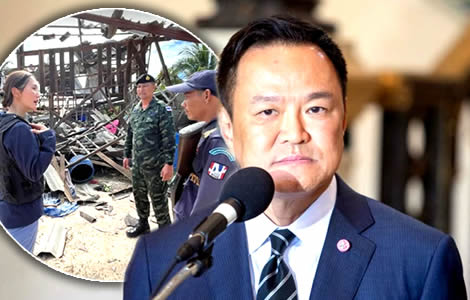
Talks between Thailand and Cambodia were held at the General Border Committee in Chachoengsao at 4 p.m. on Wednesday. Cambodia requested a last-minute venue change to Malaysia. However, Thailand rejected the proposal. The four-day talks are scheduled to conclude with a meeting of the defence ministers on Saturday.
Significantly, reports on Wednesday suggested that Cambodia has formally requested a ceasefire. The request comes in a letter from the Cambodian Ministry of Defence. The General Border Committee (GBC) meeting began with this.
Thailand shifted its approach after Foreign Minister Sihasak Phuangketkeow attended the ASEAN Summit in Kuala Lumpur on Monday. Meanwhile, the United States and Secretary of State Marco Rubio are pressing both sides for a ceasefire. Consequently, the Thai government is assessing the potential damage of prolonged fighting.
Cambodian attacks in Sa Kaeo and Surin have caused deaths and major infrastructure damage
Despite diplomatic efforts, Cambodian forces launched BM-21 Grad missiles into Sa Kaeo Province and Surin on Monday and Tuesday. The attacks notably came as both countries’ foreign ministers met in Kuala Lumpur. At least 75 people have died since December 7, including 22 Thai soldiers and 53 civilians on both sides.
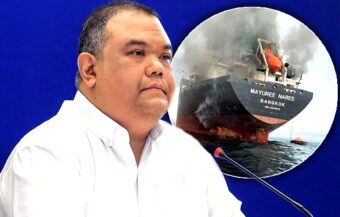
On Wednesday, Christmas Eve, the Second Army released details and accounts from locals in the lower northeast of Thailand. In particular, the army reported that 695 missiles were fired into Surin Province. Cambodia appears to have decreased firing on Wednesday in advance of the talks. The missiles in Surin struck 98 sites and destroyed 81 buildings.
Investor confidence is being affected in both Thailand and Cambodia. In addition, foreign tourist arrivals have fallen by 7 to 10 per cent. Local economies along the border remain disrupted. Thailand’s cabinet approved ฿5.05 billion ($160 million) for additional military operations. An extra ฿206 million ($6.6 million) was allocated for army equipment procurement.
Thailand’s Ministry of Defence outlined key demands ahead of the GBC talks. Officials said no agreement will be signed unless secretariat-level discussions resolve technical issues, including troop deployments. The talks mark the first bilateral dialogue since clashes erupted on December 7. Five days of clashes in July ended with a Malaysia-mediated ceasefire.
Thailand and Cambodia discuss military positions and civilian protection during ongoing border talks
The Thai military intends to address the use of civilian buildings for military positions or weapons storage. Both sides deny targeting civilians, claiming they strike only military objectives. Separately, Cambodia’s Mine Action and Victim Assistance Authority condemned what it called Thai military aggression and a campaign of misinformation.
Thailand insisted on hosting the talks in Chanthaburi province, which borders Cambodia. Defence Ministry spokesman Rear Admiral Surasant Kongsiri said Cambodia’s request to hold the meetings in Kuala Lumpur was rejected. Normally, the two countries alternate hosting GBC meetings. The last session was held in September in Cambodia’s Koh Kong province.
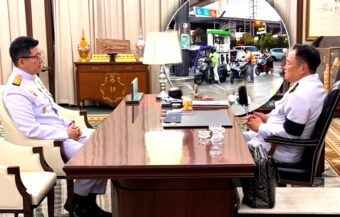
Prime Minister Anutin Charnvirakul met with the Chinese Ambassador, also Special Representative for Asian Affairs, to discuss the border situation. Anutin stated China remains neutral but desires peace. He added that China did not require Thailand to enter into any agreement. The Prime Minister stressed that Thailand continues to defend sovereignty while participating in talks.
China has mediated the conflict since December to reduce tensions and encourage dialogue
China has actively mediated the conflict since last Thursday, December 18. Its Special Envoy for Asian Affairs has travelled to Cambodia and Thailand to promote dialogue. In addition, the Chinese Foreign Minister spoke directly with the Thai and Cambodian foreign ministers. Beijing is pushing for technical clarity and a reduction of tensions along the border.
The border conflict has lasted more than two weeks. Heavy weapon attacks have forced thousands to evacuate their homes. Infrastructure has been damaged, and local economies remain disrupted. Thailand’s military continues defensive operations while engaging in diplomacy.
Humanitarian concerns remain high. Evacuations are ongoing, and emergency services are stretched. Authorities say civilian safety is a top priority. Relief agencies are providing medical aid and shelter.
Thailand’s cabinet emphasised military readiness alongside diplomacy. The ฿5.05 billion allocation supports the army, navy and air force. The additional procurement of ฿206 million strengthens troop capabilities. Details of the spending remain strictly classified.
United States and China press for a ceasefire as Thailand maintains defensive and diplomatic readiness
The United States continues to push for a ceasefire. Meanwhile, China’s mediation focuses on technical and operational agreements. Thailand maintains defensive readiness while engaging in diplomatic talks. Both sides face international scrutiny.
The border region is strategically sensitive. Both countries maintain a military presence along the 800-kilometre frontier. The area contains critical infrastructure and economic zones. Prolonged fighting could further disrupt trade and investor confidence.
Thailand insists the GBC talks address technical and operational issues. Troop deployments, logistics, and civilian protection are central. Cambodia has indicated willingness to negotiate, but mistrust remains high. Thailand requires clarity before signing any agreement.
Political stakes are high. Nationalist factions in Thailand view border defence as a domestic leverage point. Prime Minister Anutin and senior military leaders balance operational needs with strategic positioning. Military readiness operates alongside diplomacy.
Four-day talks aim to clarify troop positions and operational procedures before a formal agreement
The four-day talks are decisive. Technical clarity on troop positions, operational procedures, and civilian protection will determine the outcome. Thailand emphasises strict adherence to protocols before formal agreements proceed.
Economic pressures intensify urgency. Tourism has dropped 7–10 per cent. Investor confidence is fragile. Border economies remain disrupted. Military spending adds strain to the national budget.
Casualties further and painfully underline the human stakes. Evacuations continue and civilians remain at risk. Humanitarian organisations provide support but conditions remain volatile. Officials warn renewed attacks could worsen the situation.
China’s mediation is central to progress. Special envoys and ministerial engagement encourage compromise. Beijing pushes for technical clarity and orderly cessation of hostilities.
Neither Thailand nor Cambodia has shown willingness to cede strategic advantage. Thailand emphasises sovereignty and operational readiness, while Cambodia maintains positions along the border. Both countries face domestic and international pressure.
Thailand focuses on operational readiness and military logistics while diplomacy continues
Operational readiness remains Thailand’s focus. Cabinet-approved funding ensures the armed forces remain equipped to defend the border. Strategic and logistical planning continues while diplomacy proceeds.
The coming days are critical. GBC talks must clarify troop movements, operational procedures, and civilian protection. Indeed, no one is quite certain as to the origin of this conflict. Thai military sources suggest Cambodia attacked to create a smokescreen to avoid tackling its state-supported CAM centres.
Certainly, in Thailand, the nationalist right sees the war as good politics. That supposition, however, may not hold water, as recent opinion polls show declining support for Prime Minister Anutin Charnvirakul and his Bhumjaithai Party.
Casualties and displacement highlight the human cost. Local authorities report continued evacuations and medical strain. Relief agencies are assisting, but the situation remains unstable.
Diplomacy and military operations continue simultaneously. Thailand’s armed forces maintain defensive positions, while GBC talks will attempt to establish operational and technical clarity. Both sides face pressure to demonstrate seriousness.
International actors observe as Thailand and Cambodia negotiate to resolve border issues
The conflict has drawn international attention. The United States and China are actively engaged. ASEAN partners are monitoring developments closely. How the four-day talks proceed will affect bilateral relations and regional stability.
Thailand has set firm conditions: operational and procedural clarity must be achieved before any formal agreement is signed. Both countries face intense domestic pressures and international scrutiny.
Ceasefire prospects still there but there is scepticism if a deal can be forged between military chiefs
The GBC talks aim to resolve operational and technical issues. Both sides face a choice: negotiate effectively or risk renewed conflict. Thailand insists that no agreement proceeds without strict operational clarity.
Casualties and displacement highlight ongoing risks. Evacuations continue, and medical services are stretched. Humanitarian support remains critical, though the situation is volatile.
The next four days of negotiations are decisive. Operational clarity, troop deployment protocols, and civilian protection measures will determine the success of the ceasefire. Thailand and Cambodia face pressure to restore stability quickly. However, at the end of the day, the key question remains sincerity and whether both parties are committed to peace.
Join the Thai News forum, follow Thai Examiner on Facebook here
Receive all our stories as they come out on Telegram here
Follow Thai Examiner here
Further reading:
War to continue says PM Anutin. Dismisses President Trump’s ceasefire talk as a ‘misunderstanding’
Confusion after Trump’s 20 minute phone call with PM Anutin. US side claimed a ceasefire was agreed