Bangkok police smashed a condo-based romance scam hub after a Thai woman lost ฿2m, arresting 13 foreign suspects. Raids exposed Telegram-run fraud, fake profiles, illegal entry routes and crypto cash flows tied to a wider regional network.
Police in Bangkok on Wednesday smashed a large romance scam network run by African operatives, most of whom had entered Thailand illegally. The scam centre was uncovered in Muang Thong Thani on the city’s outskirts, a major conference and exhibition hub, after police led by Immigration Bureau Division 3 sealed off the complex and raided eleven locations. Thirteen Africans were arrested for immigration offences, including eleven Nigerians and two suspects from Côte d’Ivoire, with the operation sharply exposing how gang operatives appeared able to enter and leave Thailand freely, without any official record.

Police this week raided a dense cluster of rented rooms in the Muang Thong Thani area of Pak Kret district, Nonthaburi province, near Bangkok. The location consists of multiple condominium buildings with high resident turnover. According to police, the area functioned as an operational base for an organised romance scam network.
The operation followed a complaint filed in late 2025 with Nong Khai City Police Station. The complainant was a Thai woman. She reported losing more than 2 million baht through online deception. As a result, local police began tracing financial transactions linked to the case.
According to investigators, the scam was conducted through Facebook and Line. The accounts used the name “Bingwen Fu.” The profile displayed an image of a Chinese engineer. Consequently, the profile appeared credible to the victim.
How scammers built trust through daily chats, fake professional images and gradual romantic engagement
Initially, the suspect engaged the woman in regular conversation. Messages were exchanged daily. Photos were shared frequently. In particular, the images showed supposed construction work and professional activity.
Subsequently, the communication became more personal. A romantic relationship was implied. The suspect maintained constant contact. Meanwhile, trust was gradually established.
Later, in early 2026, the conversation shifted direction. The suspect claimed involvement in a large construction project. However, he said payment could not be received. He cited administrative and technical delays.
As a result, the suspect requested financial assistance. He asked the victim to transfer funds temporarily. He promised repayment once payment was released. Therefore, the request appeared reasonable.
Victim transferred funds to third-party accounts as investigators uncovered a criminal network
Consequently, the victim transferred money four times. Each transfer went to a third-party bank account. In total, the amount exceeded 2 million baht. Later, the account was confirmed as fraudulent.
Following the transfers, communication declined. At that point, the victim filed a formal complaint. Nong Khai City Police initiated a financial investigation. Bank records were examined.
As the investigation progressed, police identified suspicious transaction patterns. The account holder was traced. Charges were filed accordingly. However, investigators continued probing.
Further examination revealed the scam was not isolated. Instead, police uncovered a coordinated criminal group. The group consisted of foreign nationals of African descent. Each member held a defined role.
According to police findings, some members handled online deception. Others withdrew funds. Additional members sourced bank accounts. Therefore, the operation functioned as a structured team.
Telegram coordination and rented condominium bases prompted surveillance and multi agency raid
Meanwhile, investigators discovered extensive use of the Telegram application. The platform enabled coordination and task allocation. It also allowed internal warnings. Communication remained constant.
At the same time, police traced the group’s physical base. Activity was concentrated in Muang Thong Thani. Multiple rooms were rented across several buildings. Consequently, the group avoided attention.
Therefore, police initiated surveillance. Officers observed frequent interaction among the suspects. Foreign men were seen moving between units. The pattern suggested organised residency.
On January 21, 2026, senior officers held a coordination meeting. Immigration Division 3 attended. Nonthaburi Provincial Police were also present. Subsequently, operational orders were issued.
Following the meeting, a joint task force was formed. Investigators from Immigration Division 3 joined Pak Kret Police Station officers. The plan involved simultaneous entry across locations.
Simultaneous police entry triggered escape attempts before thirteen foreign suspects were arrested
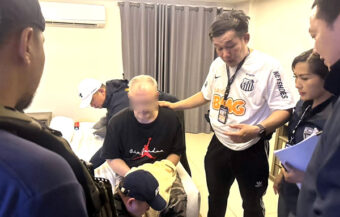
Before entry, police conducted final monitoring. Officers confirmed active online scamming. Suspects were observed using phones and computers. Chats were ongoing. At the scheduled time, police surrounded 11 locations. All sites were within the same condominium complex. Entry teams moved simultaneously. Exits were sealed.
When officers entered, several suspects were actively chatting with victims. Some noticed police presence. Immediately, escape attempts followed.
Several suspects ran down stairwells. Some were barefoot. Others scattered in different directions. However, none escaped.
Ultimately, police arrested 13 suspects. The group included 11 Nigerian nationals. Two suspects were from Côte d’Ivoire. All were taken into custody.
One suspect was identified as Mr. Chimoabo Okafor, aged 37. He is a Nigerian national. Police identified him as the coordinator. He allegedly directed operations. Following the arrests, immigration checks were conducted. Eight suspects had overstayed their visas. Five Nigerians had no entry or exit records. Therefore, illegal entry was established.
Illegal Laos entry routes, senior command oversight and seizure of dozens of digital devices during raid
During questioning, suspects admitted entering via the Laos border. The route bypassed official checkpoints. Meanwhile, police referenced earlier intelligence. Similar routes had been documented.
Previously, investigators found evidence of movement from Malaysia. Border crossings were repeated. Consequently, police noted ongoing vulnerabilities.
The raid was overseen by senior officials. The Immigration Bureau Commissioner attended. The Provincial Police Region 1 Commissioner was present. Several commanders participated. Deputy commissioners and superintendents supervised the operation. Investigation officers executed searches. Coordination was handled on-site.
During searches, police seized 34 electronic devices. These included four computers. Twenty-nine mobile phones were recovered. All devices were functional.
Seized chats exposed scripted romance fraud, linked Nong Khai cases and use of Thai intermediaries
Initial examination revealed extensive coordination. Group chats showed assigned duties. Messages warned of police presence. Some messages were active during the raid.
Furthermore, investigators found numerous romance scam conversations. Suspects posed as wealthy foreigners. Profiles claimed European or Asian identities. Targets included Thai and foreign women.
The conversations followed consistent patterns. Trust was built gradually. Personal stories were exchanged. Financial requests followed later. Additionally, police linked the group to a prior Nong Khai case. That case involved similar methods. Losses also reached millions of baht. Evidence overlapped significantly.
Investigators also discovered domestic involvement. Some suspects lived with Thai girlfriends. These women were used as intermediaries. Their bank accounts received funds. In several cases, women were instructed to withdraw cash. The explanation involved money from friends. Consequently, suspicion was reduced.
Cryptocurrency transfers, luxury images and border failures highlighted scale of organised network
After cash collection, funds were transferred abroad. Cryptocurrency was used. The destination was Nigeria. Processing fees were deducted. Police stated this method reduced traceability. Digital currency complicates tracking. Nevertheless, transaction records remain under review.
Moreover, investigators reviewed stored images. Photos showed suspects on yachts. Locations appeared near Malaysia or Thailand. No dates were confirmed. Authorities described the group as highly organised. Members worked daily. Roles were fixed. Communication was constant.
Police noted most suspects resided illegally. Immigration records had expired or were absent. As a result, enforcement gaps were highlighted. On Wednesday, police acknowledged Laos as an entry route. Officials cited intelligence findings. Malaysia was also referenced previously.
Additionally, police linked similar networks to narcotics cases. Past investigations involved cocaine importation. No drugs were seized during this raid.
Longstanding Nigerian mafia control of regional romance scams and links to narcotics trafficking
Currently, charges relate to immigration offences. These include overstaying and illegal entry. Further charges may follow. Meanwhile, seized devices will be sent for forensic analysis. The Cyber Crime Investigation Bureau will handle the examination. Data extraction is underway.
Investigators expect the process to be lengthy. Digital evidence is extensive. Cross-border elements complicate analysis.
Police confirmed the investigation is expanding. Additional suspects may be identified. Financial networks remain under scrutiny. Authorities noted the use of multiple rented units. This allowed flexibility. It also reduced detection risk.
Ultimately, police concluded the condominium complex served as a central hub. The location offered anonymity. High density masked activity. The case remains active. No timeline was provided. Evidence gathering continues across agencies and jurisdictions.
It is known that the Nigerian mafia, headquartered in Nigeria, controls vast scam networks operating in both Malaysia and Thailand for decades. Moreover, these gangs particularly specialise in romance scamming, preying on the vulnerable seeking love.
Highly organised Nigerian-led scam networks operate under codes while drug trafficking links persist
Furthermore, the network is highly organised and appears to operate under a strict and deadly code. Additionally, the gangs are also extensively linked to narcotics trafficking, especially in Bangkok and on Thailand’s southern islands.
At the same time, drugs are smuggled in by plane and across the kingdom’s borders, just as its operatives appear able to breach Thailand’s borders at will.
Thais and a Nigerian arrested in ฿114 million romance scam online fraud ring in Chonburi and Bangkok
Thai women arrested on Monday linked with biggest romance scam ever netting Nigerians ฿6.2 billion
Prolific Nigerian romance scammer boss arrested by the CSD police twice in just over two years
Previously, now-dismissed National Police Chief General Surachate Hakparn called for special restrictions on Africans entering Thailand. However, his calls were met by howls of protest from Thai human rights groups and agencies.
Notably, among the digital gleanings by police from devices seized on Wednesday were pictures of the African scammers holidaying on yachts off Thai or Malaysian waters. No doubt they enjoyed rest and relaxation paid for by the heartbreak of scammed victims online.
Join the Thai News forum, follow Thai Examiner on Facebook here
Receive all our stories as they come out on Telegram here
Follow Thai Examiner here
Further reading:
Thais and a Nigerian arrested in ฿114 million romance scam online fraud ring in Chonburi and Bangkok
Blind, old German cries out to wife in Chacheongsao following suicide discovery
Swiss man Uli Fehr’s hellish Thai nightmare as he is detained and branded as a threat to society