
Thailand braces for economic shock as the US–Israel war with Iran escalates. Oil routes face disruption, flights are cut and markets tense. Bangkok is pushing for a new government while boosting fuel reserves and preparing emergency energy measures.
Thailand’s Bhumjaithai Party is moving quickly to form a government as the war between the United States, Israel and Iran, which erupted on February 28th, escalates. This week’s priority has been evacuating Thai nationals from Iran and securing oil reserves for up to three months. The Ministry of Foreign Affairs confirmed the move on Friday through spokesman Panidol Patchimsawat. Beyond these measures, there is little the government or analysts in Bangkok can do except watch the fallout from the conflict. Despite denials from Washington DC, the campaign is widely seen as aimed at removing the long-standing threat to Middle East stability posed by the Iranian regime. Any outcome falling short of that would leave Thailand facing a more uncertain aftermath.
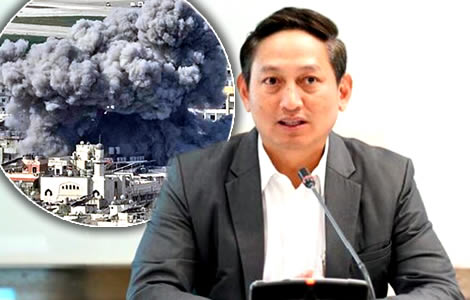
On Sunday, reports in Bangkok indicate that the Bhumjaithai Party is moving to formalise the country’s new government. Meanwhile, in Tehran, the world is watching for news of a new Supreme Leader.
In the last 48 hours, there are signs that the Iranian regime is rattled and destabilised after eight days of unprecedented pounding from the air by Israeli and US air forces, in addition to covert operations on the ground.
In Bangkok, the government and most analysts talk about a rules-based international order. However, that analysis takes no account of the dangerous nature of the Iranian regime, which for 47 years has destabilised and damaged the Middle East and tyrannised its own population. At this time, it is estimated that 80–85% of Iranians want to see the despotic theocracy in Tehran overthrown.
Thailand watches war impact as government forms, while energy security fears grow in Bangkok
Thailand is closely monitoring the escalating conflict between the United States, Israel, and Iran as fighting intensifies across the Middle East. In Bangkok, the focus is on economics.
The threat is disruption to the world economy and the prospect that, if reserves are used up, a spike in energy costs could filter into production costs and consumption underlying economic activity.
In the last 48 hours, the Thai Ministry of Energy, through the Ministry of Foreign Affairs, has confirmed that the kingdom has 95 days of supply. Certainly, this followed earlier reports of only 38 days. Mr. Panidol Patchimsawat, Acting Director-General of the Department of Information and Deputy Spokesperson of the Ministry of Foreign Affairs, confirmed this on Friday.
In short, it would be a shock to the system with both immediate negative results and possibly unseen outcomes. This week, Bank of Thailand Governor Vitai Ratanakorn warned that such crises can trigger financial shocks by exposing weak links in the global financial system.
Oil supplies dominate debate as Thailand watches outcome of US Israeli military campaign in Iran
For now, Bangkok pundits are focusing on oil supplies and costs. However, the real risk lies in the outcome of this US-Israeli mission.
The collapse of the Iranian regime, if it could be achieved while maintaining stability, would represent a major boost to security in the Middle East. Indeed, given the efforts now unleashed by the United States and Israel, anything but that outcome would represent both failure and heightened risk going forward.
The confrontation has already disrupted global transport routes. Most significantly, the Strait of Hormuz has effectively closed to shipping traffic. Consequently, one of the world’s most important oil transit corridors is under severe disruption. The narrow waterway carries a large share of global crude exports. Therefore, any interruption immediately raises concerns about global energy supply.
At present, Thailand has little direct influence over events. Instead, the kingdom must observe developments while preparing defensive economic measures. Meanwhile, government agencies are assessing potential supply disruptions and market volatility.
Analysts warn war may trigger a global economic shock as energy supplies face severe disruption
Analysts warn that the global fallout could spread rapidly. In particular, China and other major economies rely heavily on Middle Eastern oil shipments. As a result, economic shockwaves could appear within three to four weeks. However, this assumes the conflict continues without rapid resolution.
Meanwhile, military exchanges between Israel, the United States, and Iran continue to escalate. Reports of strikes and retaliatory attacks are emerging regularly. Consequently, tensions across the region remain extremely high.
In addition, the fighting has spread beyond the original battle zones. Several neighbouring countries are now affected by the widening conflict. Therefore, regional stability is deteriorating quickly.
At the same time, aviation routes across the Middle East face widespread disruption. Several governments have closed their national airspace as a precaution. Consequently, airlines are rerouting or suspending flights throughout the region.
Airspace closures across Gulf states disrupt flights, while Thailand urges citizens to leave danger zones
Currently, airspace remains closed in the United Arab Emirates, Israel, Syria, Iran, Bahrain, Kuwait and Qatar. As a result, commercial aviation networks are under strain. However, some countries remain open to international flights. Saudi Arabia, Oman, and Jordan continue operating their airspace. Nevertheless, aviation authorities warn that the situation may change quickly.
Thailand’s Ministry of Foreign Affairs says the Middle East situation remains volatile. Therefore, officials are monitoring developments continuously. Meanwhile, diplomatic missions are focusing on Thai citizens living in the region.
According to the ministry, there are currently no reports of Thai casualties. However, authorities are urging Thai nationals to leave high-risk areas immediately. In addition, citizens are advised to register their location with Thai embassies and consulates. Consequently, consular officials can maintain contact and provide assistance if necessary.
While the conflict unfolds abroad, Thailand is preparing for possible energy disruption at home. The government has moved to secure additional fuel supplies. As a result, domestic reserves have increased in recent days.
Thailand boosts fuel reserves and prepares energy security measures as regional war expands
The Ministry of Energy confirmed that Thailand currently holds fuel reserves for approximately 95 days. Previously, national reserves were estimated at roughly 60 days. Therefore, the country’s supply buffer has improved significantly.
Officials say the increase reflects additional procurement by domestic oil traders. Importers have secured extra shipments from international suppliers. Moreover, confirmation has already been received for several deliveries.
Consequently, energy authorities believe the supply outlook remains stable for now. However, officials stress that procurement will continue. Negotiations with suppliers are ongoing. Therefore, reserve levels could increase further in the coming weeks.
Meanwhile, the government has introduced new directives aimed at strengthening energy security. A prime ministerial order requires oil traders to expand their legally mandated reserves. Under the directive, reserves will gradually rise from one per cent to three per cent. Officials describe this policy as a long-term safeguard against international disruption. Consequently, Thailand’s energy buffer will increase during future crises.
Government restricts oil exports and orders inspections to prevent hoarding during crisis
At the same time, the government has imposed temporary limits on oil exports. Exports will be reduced during the crisis period. However, shipments to Laos and Myanmar will continue. Authorities say these two countries rely heavily on Thai energy supplies. Therefore, maintaining exports to them preserves regional economic interdependence.
Meanwhile, the Ministry of Energy has also addressed reports of localised shortages. Officials have ordered inspections across the country. Provincial energy offices and the Department of Energy Business are monitoring supply conditions.
Their teams are checking for hoarding and supply manipulation. Consequently, enforcement operations are underway nationwide.
In addition, fuel retailers have received instructions to accelerate deliveries. Shipments are being redirected to areas experiencing shortages. Therefore, supply imbalances should ease in the short term. Authorities say these measures aim to prevent panic buying. Moreover, they are intended to maintain stable distribution networks across the country.
Thailand considers alternative fuels and LNG imports if war disrupts global energy markets
However, contingency planning continues in case the conflict lasts longer than expected. Officials warn that prolonged disruption could tighten global fuel markets. Therefore, alternative energy options are being considered.
One option involves expanding the use of diesel and biodiesel fuels. Authorities are also preparing for increased use of B100 biodiesel. Consequently, Thailand could reduce its reliance on imported petroleum products.
In addition, the government is considering importing cheaper Euro 4 fuel if necessary. Officials say this would help control energy costs during supply shortages. Meanwhile, electricity security is also under review.
The Ministry of Energy is accelerating the procurement of liquefied natural gas. LNG imports are essential for power generation during fuel disruptions.
Domestic gas production rises as Thailand prepares wider energy contingency measures
At the same time, domestic gas production in the Gulf of Thailand is being increased. Authorities are working with energy producers to raise output levels. Consequently, domestic supply diversification is expanding.
Furthermore, additional power sources are being prepared. Biomass generation and hydropower will supplement electricity production. Therefore, authorities aim to prevent electricity shortages for households and industries.
Economic researchers are also evaluating the broader consequences of the conflict. The Thailand Development Research Institute warns that violence in the Middle East presents a new risk to the global economy. According to the institute, rising tensions will likely push energy prices higher. Consequently, production and transport costs could increase worldwide.
Furthermore, global trade could slow as shipping disruptions intensify. Export-oriented economies would face additional pressure under such conditions. Meanwhile, tourism could also weaken. Travellers often avoid destinations perceived as unstable. As a result, international travel confidence may decline.
While flights cancelled to Suvarnabhumi Airport at this point may appear limited, this does not take into account the higher airfares imposed by airlines. Neither does it recognise that Middle Eastern airlines have cut back on flights.
War uncertainty grows as global oil supply balances demand, but risks remain if conflict spreads
Researchers also warn that the duration of the conflict remains uncertain. Some reports suggest the war could last several weeks. However, analysts say longer-term risks remain significant. Even if fighting subsides quickly, geopolitical tensions could persist.
Meanwhile, the broader strategic objective of the conflict remains unclear. Observers say the United States and Israel appear to be pushing for regime change in Iran. Both governments publicly deny such intentions. Nevertheless, military pressure on Iran continues. Consequently, uncertainty surrounding the conflict remains high.
Despite the escalating crisis, global oil supply currently exceeds demand. Production stands at approximately 108 million barrels per day. Meanwhile, global demand is estimated at about 104 million barrels daily. Therefore, markets remain adequately supplied for the moment.
This supply balance has prevented oil prices from rising sharply so far. However, analysts warn that the situation could change quickly. If infrastructure is damaged or shipments remain blocked, supply could tighten rapidly. Consequently, oil prices could surge.
Thai economic planners assess growth risks as energy prices and trade face pressure from war
Thailand’s economic planners are preparing for multiple scenarios. The National Economic and Social Development Council has analysed two possible outcomes. The first scenario assumes the conflict ends within about one month. This timeline reflects earlier statements by United States President Donald Trump. Under that scenario, oil prices could remain near 100 dollars per barrel.
However, even a short conflict would affect Thailand’s economic outlook. Economic growth could decline from the projected two per cent. Officials estimate growth could slow to approximately 1.6 per cent under that scenario.
The second scenario assumes a prolonged conflict. In that case, oil prices could rise to around 125 dollars per barrel. Consequently, Thailand’s economic growth would weaken further. Officials estimate expansion could fall to about 1.3 per cent.
Higher energy costs would affect transport, manufacturing, and logistics sectors. Moreover, trade volumes could decline. Tourism would also face additional pressure.
Meanwhile, the government has introduced short-term fuel price controls. Diesel prices have been frozen for fifteen days. The current retail price stands at 29.94 baht per litre. Officials say the measure will be reviewed after the initial period. Therefore, authorities will reassess conditions based on global developments.
Limited oil fund balance restricts subsidies as Thailand seeks new supply deals and conservation
Financial support for fuel subsidies remains limited. The national oil fund currently holds about 40 billion baht. However, the LPG fund remains heavily in deficit. The deficit stands at approximately 37 billion baht. Consequently, only about two billion baht remains available for further intervention.
Analysts therefore recommend cautious price stabilisation. Excessive subsidies could strain government finances. Meanwhile, energy conservation measures are gaining attention. Authorities are preparing policies to reduce fuel consumption nationwide.
At the same time, government agencies are negotiating additional oil supply agreements. Energy companies are seeking increased shipments from trading partners. Consequently, Thailand hopes to strengthen its supply buffer further.
According to officials, Thailand could survive for about ninety days without additional oil imports. Existing reserves would cover essential domestic demand during that period. However, maintaining supply inflows remains critical.
Asia watches strait of Hormuz as conflict threatens global energy flows and economic stability
Current projections suggest reserves will last until at least April. However, future supply levels depend on successful procurement efforts. Therefore, negotiations with international suppliers remain ongoing.
Across Asia, governments are watching the Strait of Hormuz closely. The corridor remains a critical artery for global energy trade. Any prolonged closure would disrupt oil flows across multiple continents.
Naval war in focus Thursday as US Iranian war widens further leaving Thailand’s tourism sector reeling
US Ambassador Seán O’ Neill briefed Prime Minister Anutin Charnvirakul at Government House on War
Prime Minister Anutin urges calm as real fears grow over a volatile and dangerous war in the Middle East
Analysts urge the government to prepare for higher oil prices as top bank predicts 33 baht to dollar rate
For Thailand, the conflict represents a serious external shock. The kingdom must prepare for supply disruption and economic volatility.
Global markets on edge as Iran war widens, raising risk of severe economic shock like the Covid era
Meanwhile, global markets remain on edge as the war continues. If the conflict expands or drags on, economic consequences could intensify rapidly. In that case, the global economy could face its most severe disruption since the COVID-19 emergency.
In effect, the attack on Iran still underway, is a massive gamble by the United States and US President Donald Trump. Thailand’s interests certainly lie in those attacks meeting with success, as opposed to ongoing instability and the threat that the Iranian regime represents.
This is a hideous and barbaric regime that, through ‘the international rules-based order’, has for decades been treated as legitimate. That should raise serious questions about that order and, indeed, other tyrannical regimes that hide behind its facade.
That our first reaction to the war launched by the United States and Israel is to reduce the discussion to economic and oil equations also tells us something about the world today.
Join the Thai News forum, follow Thai Examiner on Facebook here
Receive all our stories as they come out on Telegram here
Follow Thai Examiner here
Further reading:
US Ambassador Seán O’ Neill briefed Prime Minister Anutin Charnvirakul at Government House on War
Visa waivers, discounted hotel stays and 2,000 baht a person per day for stranded tourists announced
Liquidity crisis or shortage of cash on the ground is shrinking Thailand’s economic growth prospects