A BBC investigation has exposed Thailand as the main source of cannabis flooding Britain’s black market, with organised crime gangs producing fake “Cali weed” for smuggling into the UK through airports, freight and the post, catering for a booming market.
Thailand has emerged as the dominant overseas source feeding Britain’s illegal cannabis market, with a major BBC investigation exposing how organised crime gangs mass-produce fake “Cali weed” in the kingdom before smuggling it into the UK through airports, the post and commercial freight. British investigators say four out of every five cannabis seizures at UK airports now originate from Thailand, while the investigation also examines growing concern among psychiatrists over increasingly potent cannabis products being sold on Britain’s streets and their links to serious mental health problems.
A major BBC investigation has identified Thailand as a key source in a rapidly expanding cannabis smuggling network supplying Britain’s illegal drug market.
Organised crime groups are exploiting cannabis production in the kingdom to flood UK streets with high-potency marijuana disguised as premium Californian products. The findings come as Thailand continues grappling with the consequences of cannabis liberalisation and repeated efforts to tighten regulation.
At the centre of the investigation is the emergence of an international supply chain stretching from Thailand to Britain’s largest cities. British investigators say organised crime groups have established industrial-scale production in countries where cannabis cultivation laws have been relaxed. Thailand has become one of the principal production hubs alongside Canada and parts of the United States.
Thailand emerges as a key source for Britain’s booming cannabis black market and organised crime networks
According to the UK’s National Crime Agency (NCA), four out of every five cannabis seizures at British airports now originate from Thailand. The agency says organised crime groups have exploited changes in cannabis production to establish profitable export routes into Britain. The BBC found those networks continue adapting despite tighter enforcement.
Instead of importing genuine Californian cannabis, traffickers imitate it. Cannabis is grown cheaply in Thailand before being marketed as premium “Cali weed”.
The term refers to highly sought-after strains originally cultivated and legally sold through licensed dispensaries in California. Consumers often believe they are buying imported American cannabis. In reality, investigators say much of it never came from California.
According to Home Office figures obtained by the BBC, UK Border Force officers seized more than 167,000 kilograms of herbal cannabis last year. The drugs carried an estimated street value exceeding £2 billion.
Notably, the total represented a 52% increase on 2024 and the largest annual seizure ever recorded. The quantity equalled roughly two fully loaded passenger aircraft. Included within the total were 28 tonnes carried inside suitcases by about 800 couriers arrested by the NCA.
Record UK cannabis seizures expose Thailand’s growing role in supplying organised crime across Britain
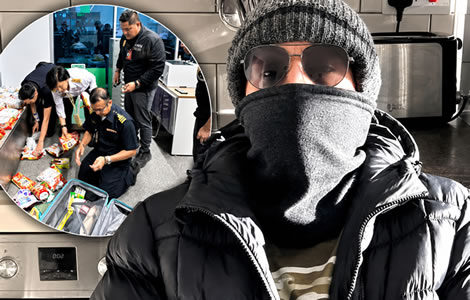
Police say traffickers use multiple smuggling methods. Some couriers carry heavily loaded suitcases through airports. Others send vacuum-packed cannabis through the post. On another front, larger consignments are concealed inside commercial freight.
The shipments are then distributed to middle-level dealers across Britain. Dealers later advertise the cannabis through encrypted messaging applications and social media platforms using glossy branding and premium product names.
The BBC interviewed a British trafficker using the pseudonym “Zee”. He claimed to operate cannabis farms in Thailand before shipping consignments into Manchester, Liverpool and parts of Yorkshire.
According to Zee, Vietnamese farmers are recruited to cultivate cannabis on Thai islands before the finished product is packaged under famous Californian strain names. He also claimed to source cannabis seeds from California before growing them in Thailand. There is no suggestion the Californian dispensary identified by the BBC acted improperly.
British trafficker reveals Thai cannabis farms producing fake Cali weed for the lucrative UK drugs market
Zee admitted the cannabis was never grown in California. Instead, he said customers were persuaded they were buying authentic imported products. Production costs averaged about £350 per kilogramme, he claimed. British buyers paid up to £3,500 per kilogramme.
As a result, each kilogramme generated around a tenfold return. He also claimed individual consignments reaching Britain could generate profits approaching £250,000. The BBC reported the cannabis was triple vacuum-sealed before shipment.
Perhaps the investigation’s most striking revelation concerned the couriers themselves. Zee openly acknowledged he expected most would eventually be arrested. “If I send 10 through and nine get caught, I’ll still make a profit,” he told the BBC.
The statement illustrates the extraordinary economics driving international cannabis trafficking. NCA threat lead Paul Pantry said such figures sounded realistic. In response, he said organised crime groups simply absorbed courier losses because profits remained exceptionally high. He described the networks as brazen and ruthless. “They don’t care about the couriers,” he said.
Drug gangs sacrifice couriers because enormous profits outweigh repeated arrests and shipment losses
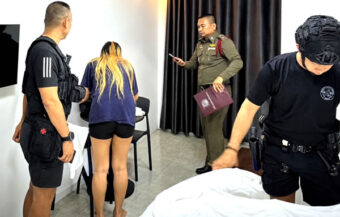
The investigation also exposed how vulnerable travellers are recruited. According to Zee, couriers are flown to Thailand before being taken to Pattaya.
There, he claimed, they receive alcohol, cocaine, mushrooms and prostitutes before being handed cannabis-filled luggage. After several days of partying, they are instructed to carry the bags home. If successful, Zee claimed they receive £10,000. British investigators say financially vulnerable people are repeatedly targeted using similar methods.
One 59-year-old courier interviewed by the BBC said he agreed to transport cannabis after accumulating heroin and crack cocaine debts worth thousands of pounds.
He completed six trips from Thailand, he said, because he was desperate to escape those debts. Separately, the BBC found traffickers also sought “fresh faces”, particularly backpackers who attracted less suspicion. Women have also featured prominently in recent cannabis smuggling cases linked to Thailand.
The report referred to the case of 19-year-old Bella Culley from Teesside. She was arrested in Georgia carrying 12 kilograms of marijuana and two kilograms of hashish destined for Britain. She was later released after accepting a plea agreement.
Vulnerable couriers, backpackers and young travellers are prime targets for international cannabis traffickers.
She claimed she had been coerced into smuggling the drugs. Meanwhile, Heathrow accounted for 19 tonnes of cannabis seized by the NCA, where officers arrested 530 couriers. Manchester Airport accounted for another five tonnes and 145 suspected couriers.
British authorities say traffickers routinely mislead recruits about the penalties awaiting them if they are caught. Couriers are often told they face only fines or suspended prison sentences.
However, Ministry of Justice figures present a different picture. During the year to June 2025, 80% of the 840 people sentenced for importing Class B drugs received prison sentences. By comparison, only 209 people were sentenced during the previous year.
As airport security tightened, traffickers changed tactics. Postal deliveries became increasingly attractive before British and Thai authorities strengthened enforcement there as well. Consequently, criminal groups increasingly shifted towards commercial shipping.
Zee claimed he concealed cannabis inside popcorn tins before sending them to Britain. Once there, dealers divided the cannabis into 3.5-gram packages known as “eighths”. The drugs were then placed inside colourful, branded pouches purchased cheaply online.
Tougher airport security forces traffickers towards postal deliveries and commercial freight to reach Britain
The BBC found dozens of websites selling imitation packaging for as little as 25 pence each. Former Liverpool cannabis grower Rob told the broadcaster today’s market had changed dramatically. He spends about £600 each month on high-end cannabis.
The pot addict believes much of the product marketed as Californian is actually grown cheaply in Thailand before being falsely branded. He also claimed some cannabis may have been treated with synthetic plant growth regulators to increase yield, weight and appearance.
According to a study published in the Journal of Toxicology, chemical residues from some plant growth regulators can transfer into cannabis smoke. Researchers at Liverpool John Moores University say the long-term health consequences remain uncertain.
Even so, British health specialists are becoming increasingly concerned about the potency of cannabis reaching users.
Psychiatrist Dr Marta Di Forti led Britain’s largest study into cannabis and psychosis. She warned THC concentrations had reached dangerous levels. Some herbal cannabis now exceeds 20% THC.
Stronger cannabis and fake premium branding raise growing concerns over psychosis and health risks
Certain cannabis concentrates approach 90%. She said she had treated patients suffering severe paranoid delusions after prolonged use. Some believed relatives were poisoning them. Others believed they were under constant surveillance. Taken together, the findings point to growing concern over cannabis-related psychosis linked to increasingly potent products.
Official statistics show males aged between 16 and 24 remain Britain’s most frequent cannabis users. Health specialists say sophisticated branding increasingly attracts younger consumers seeking stronger products.
The BBC also interviewed Stacey Llewellyn, now a peer mentor at Britain’s first cannabis clinic supporting patients with psychosis. She described developing severe mental health problems after years of consuming strong cannabis. Eventually, she suffered repeated psychotic episodes requiring hospital treatment. She said modern cannabis was stronger than ever.
The BBC findings are also likely to resonate strongly in Thailand. Cannabis liberalisation in 2022 transformed the domestic market almost overnight. Thousands of cannabis outlets opened nationwide.
Thailand’s cannabis liberalisation creates opportunities exploited by organised crime in the UK
Legal imports included high-potency cannabis genetics originating in California. Although licensed imports operate within Thai law, British investigators say organised crime groups have exploited the broader production environment to establish illegal export operations.
Thailand has since attempted to tighten regulation by restricting cannabis largely to medical use. Nevertheless, British investigators told the BBC that organised crime groups continue adapting to changing rules.
In parallel, Thailand has experienced repeated airport enforcement operations targeting cannabis smugglers after pressure from overseas partners, particularly the United Kingdom. British and Thai agencies have expanded intelligence sharing, while airport screening has become significantly more intensive.
Airport crackdowns and international cooperation intensify as traffickers adapt to tighter enforcement
Separately, cannabis has become the focus of growing public debate in Thailand. Police have responded to numerous incidents involving intoxicated individuals in tourist centres and urban areas.
Authorities have also investigated cases involving mental health crises and violent behaviour where cannabis use formed part of wider police inquiries. Those concerns mirror Britain’s debate over increasingly potent cannabis products and their impact on users.
Smuggled cannabis exports activity grows rapidly with thousands of tourist cases to the UK intercepted
UK man ends up behind bars in Ireland after being duped by Thai drug traffickers into smuggling pot
Miracle in Tbilisi as Bella Culley walks free with her mother after pleading guilty to importing cannabis
Finally, a UK Home Office spokesman described the BBC findings as concerning. He said record drug seizures had removed massive quantities of illegal cannabis from British streets.
He added the government was working closely with police and overseas partners to prevent organised crime groups exploiting international supply routes, including those linked to Thailand.
Join the Thai News forum, follow Thai Examiner on Facebook here
Receive all our stories as they come out on Telegram here
Follow Thai Examiner here
Further reading:
Top Bhumjaithai Party figure defends the party’s position on cannabis. Only supported medical use