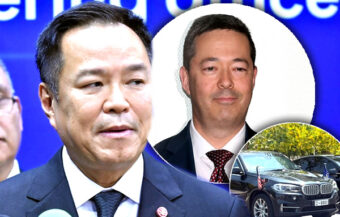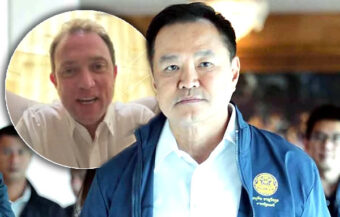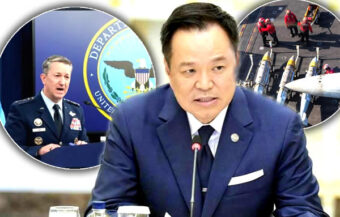
Uncertainty after Trump’s 20-minute call with Thai PM Anutin, as the US claims a ceasefire, Thailand denies. Thailand is facing diplomatic turmoil over the border conflict. Clashing accounts over landmine blasts, sovereignty concerns and stalled US-Thai trade talks.
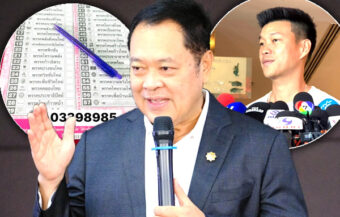
Confusion reigned in Bangkok on Friday night after a 20-minute call between U.S. President Donald J. Trump and Thai Prime Minister Anutin Charnvirakul. Anutin stood with Foreign Affairs Minister Sihasak Phuangketkeow and Commerce Minister Suphajee Suthumpun. The trio briefed reporters downstairs at Government House after 10 p.m. However, soon afterwards, President Trump issued a statement that sharply contradicted the Thai account. He said Thailand had agreed to a ceasefire in the “reignited” conflict with Cambodia. Moments earlier, Anutin had insisted he told Trump the opposite, urging him to direct any ceasefire requests to Cambodia instead.

Confusion deepened on Friday night as Bangkok and Washington released contradictory accounts of talks on the Thai-Cambodian border crisis. The statements appeared only minutes apart. However, they described sharply different positions. The divergence created uncertainty about the conflict, the ceasefire, and US-Thai trade talks.
Prime Minister Anutin Charnvirakul spoke first at Government House. His remarks focused on continued fighting, obligations under the October 26th Kuala Lumpur Peace Declaration and Thailand’s military response.
He said Thailand remained committed to peace. Yet he also said Cambodia must act first. He insisted Cambodia had violated the agreement and escalated the conflict. Moreover, he claimed he told President Donald Trump to direct all ceasefire demands to Cambodia. He added that Thailand would not halt operations until Cambodia withdrew troops and cleared newly planted landmines.
Conflicting claims emerge as Trump asserts ceasefire while Thailand insists Cambodia must act first
Shortly afterwards, President Trump posted a message on his social media platform Truth Social. He asserted that both Thailand and Cambodia had agreed to put in place a ceasefire. He claimed both sides would revert to the earlier Malaysia-brokered peace arrangements.
He also linked the discussion to trade and praised cooperation with Thai and Cambodian leaders. His message conflicted directly with the Thai Prime Minister’s account.
The perplexing conflict in the statements quickly spread across several issues. It included the landmine blast that killed and injured Thai soldiers. Trump said the explosion was an accident. Yet Thailand disputed that claim.
It said the mines were newly planted. Additionally, Thailand said ASEAN Observer Team members witnessed the clearance efforts. Thai officials said their military had warned that such clashes would occur because Cambodia blocked access during clearance operations.
Thai officials reject claims of overreaction as both sides dispute landmine incident and sovereignty
Tensions rose further when Trump said Thailand reacted strongly. Anutin rejected the suggestion of overreaction. He said Thailand was protecting its sovereignty. He repeatedly said Thailand was not the aggressor. He said Thailand never interfered in Cambodia’s affairs. However, he warned that Thailand must defend its people and territory.
Landmine clearance operations had previously continued with ASEAN observers present. Afterwards, newly planted explosives were found, according to Thai officials. Thailand insisted it was acting only defensively. It said all actions complied with law and treaty obligations. It denied allegations of aggression. It said Cambodia must rectify the violations.
Earlier that evening, Trump said he held a “very good conversation” with Anutin and Cambodian Prime Minister Hun Manet. He said both sides agreed to cease fire by evening. He described the conflict as a “tragic re-ignition” of a long-running war. He thanked Malaysia’s prime minister for assistance. His statement again contradicted the Thai account.
In contrast, Anutin later outlined the call from Bangkok. He said Trump wanted a ceasefire, but he insisted that the United States must address Cambodia first.
Thailand presses Cambodia to declare halt to hostilities as Trump pushes for rapid return to old terms
He said Cambodia must publicly declare a halt to hostilities, withdraw forces, and remove unexploded ordnance. He said Thailand was “standing by.” He said Thailand had never sought conflict but would not allow violations of sovereignty. He emphasised that Thailand must act when lives are at risk.
At 10:00 PM on Friday, Anutin spoke alongside Foreign Minister Sihasak Phuangketkaew and Commerce Minister Supajee Suthamphan. The call with Trump had lasted almost 20 minutes, he revealed.
He said the discussion involved all three Thai ministers. He said Trump wanted a return to the Joint Declaration’s original terms. Anutin insisted Thailand had always complied. He said Cambodia breached the terms by refusing to withdraw troops. He said violations that caused death or injury required a Thai response. He said any misunderstanding abroad needed correction.
Furthermore, Anutin described concerns about global perceptions. He said foreign governments should not rely on one-sided information. He said Thailand must ensure its position is understood. He said Thailand was the wronged party. He said other states must examine the facts carefully.
Anutin sidelines election questions and says US advised continued contact while insisting Cambodia stop
Reporters asked about Thailand’s elections. Anutin dismissed the question. He said elections had no connection to sovereignty or national defence. He said protecting soldiers and civilians mattered more than politics. He insisted that safeguarding border communities took priority over domestic political issues.
He added that Trump understood his explanation. He said Trump advised Thailand to contact the US Secretary of State if problems arose. He said he did not believe matters would escalate. He said Mr. Sihasak communicated with US officials frequently. He emphasised continued diplomatic contact.
A question followed about Washington pressuring Thailand to cease fire. Anutin said the United States wanted a halt. However, he again told them to speak to Cambodia first. He said Cambodia must stop.
He said Thailand could not end defensive operations while Cambodia continued fighting. He repeated that newly planted landmines had been confirmed in writing. He said Cambodia’s actions were documented by witnesses.
Thailand denies crossing border and outlines tariff talks as ministers highlight legal clearance operations
Next, reporters asked whether Thailand had entered Cambodian territory. Anutin replied that humanitarian landmine clearance was allowed under the Joint Declaration, even in areas claimed by Cambodia.
Sihasak said joint clearance operations were required. The ministers said the military handled the field operations. They said the government team focused on policy.
Anutin said none of the officials wanted further clashes. He said nobody wanted deaths on either side. Yet he again stressed sovereignty. He said Thailand would not accept persecution or attacks on its people. He explained that Thailand must respond if its rights were violated.
The issue then shifted back to trade. Anutin said Trump promised tariff cuts that would benefit Thailand. He said Trump admitted forgetting to issue instructions earlier due to his workload. He said this was the second time they discussed the tariff matter.
He said the US president brought it up unprompted. He said US-Thai negotiations were waiting for these new directions. He said Trump offered favourable terms. He said Supajee would push the matter in negotiations.
Trade negotiations face delays as caretaker government limits commitments and tensions complicate diplomacy
However, Supajee later said the caretaker government might not be able to commit to agreements. She said she would consult the Council of State. She said Thailand might not be in a position to engage fully in US trade talks for now.
Her remarks signalled delays. The business sector had urged quick progress on the deal. It sees that the United States is Thailand’s largest export destination. Earlier this week, the minister again noted that security issues could not be tied to trade.
Anutin described the conflict as a matter between two countries. He said both the US president and Malaysia’s prime minister wanted to prevent deaths. He said the Thai military operated within legal timeframes. He said Thailand would not reveal operational details. He said all actions followed Thai and international law. He said Thailand had never violated agreements or encroached on Cambodia.
Asked if Thailand still had time to secure contested areas, Anutin said he had met with armed forces commanders and defence officials. He said they were confident and unified. He ended the session by wishing reporters a good weekend.
Anutin says Cambodia must be addressed first, as reporters press on ceasefire readiness and call outcome
Reporters continued pressing questions. They asked if Trump planned talks with Cambodia. Anutin said he told Trump to inform Cambodia because Cambodia was violating the agreement.
They asked whether Cambodia seemed ready for a ceasefire. He said Cambodia had not stopped fighting. He asked what “success” could mean if fighting continued. Sihasak added that ceasefire decisions involved strategy.
Other questions followed about Trump’s call order. Reporters asked if Trump spoke to Thailand first. Anutin said he believed Trump spoke to Cambodia before talking to Thailand. He said inaccurate reports claimed Thailand was the aggressor. He said the use of air power created misunderstandings. However, he said Thailand acted in retaliation, not aggression.
Questions then addressed whether the United States trusted Thailand’s account. Anutin said Thailand was a sovereign state whose statements must be credible. He said the government must maintain trust internationally. He said credibility was essential for Thailand’s global standing. He left Government House at 10:20 PM.
Confusion intensifies as both sides differ on ceasefire claims while trade and conflict remain unresolved
Meanwhile, the conflicting narratives continued. Trump said a ceasefire had been agreed. Thailand said fighting continued. Trump said the landmine blast was an accident. Thailand said mines were newly planted. Trump linked peace talks and trade discussions.
Thailand stressed separation of the issues but acknowledged tariff negotiations. The two sides also disagreed on the scope of military operations and compliance with the Joint Declaration.
Even so, the United States remains central to both issues. The tariff plan announced on August 1st under the Pheu Thai government had been provisional. Anutin said the United States now appeared ready to offer better terms.
He said he told Trump that Thailand had “not gone anywhere” and was waiting for the new directions. Trump apologised for the delay in delivering instructions. He said he would “take care of it.” Anutin said the discussions showed a positive sign.
However, the suspension of US-Thai trade talks on November 14th created new complications. The suspension came just before Anutin said the Kuala Lumpur accord was “over.” Thailand then suspended mandated military moves required by that pact. This sequence added another layer to the disagreement. It presently leaves exporters without clarity and has prompted concerns from business groups.
Intense fighting continues as trade talks remain frozen and both sides issue contradictory final positions
The border war, meanwhile, rages on. Ten Thai soldiers have now been killed. Thai forces continue expanded operations in a fight that is growing more aggressive. Cambodia has not withdrawn troops, according to the Thai account. Indeed, the Cambodian military has been defending tenaciously in the last 48 hours.
Additionally, the crisis raises questions about international communication. These inconsistent accounts from Washington and Bangkok highlight serious gaps in understanding. Each side appears to believe its version was correct. Trump said cooperation was strong. Anutin said misunderstandings persisted. Both positioned themselves as acting for peace. However, they described different paths toward it.
In effect, the Thai government says there will be no ceasefire. President Trump says it was agreed and was to be implemented immediately.
The confusing situation remained unresolved late Friday night. Fighting continued, according to Thai officials. No joint announcement confirmed a ceasefire. Significantly, there has also been no confirmation that suspended trade talks between the United States and Thailand have resumed after being formally suspended in mid-November.
Disagreements persist on every issue as crisis enters weekend and Thailand faces election uncertainty
Both governments claimed diplomatic progress. Yet both offered contradicting accounts of Friday night’s call. The conflicting details and confusion over landmines, troop positions, treaty terms, and trade are concerning. Further discussions appear likely.
However, the timeline remains unclear. The crisis moved into the weekend without a unified account from any side.
Thailand moves to election mode after King approves dissolution of parliament decree request by Anutin
As pressure from Trump mounts Thailand implores the United States not to link sovereignty with trade
Fears for US Thai trade deal as hostilities flared on Monday with Thai sources ruling out intervention
In the meantime, war rages on Thailand’s eastern border, while the kingdom has also, in the last 24 hours, seen parliament dissolved. An election is scheduled tentatively for February 8th, according to Election Commission sources. Nonetheless, there was also open speculation in Bangkok on Friday that the election could be postponed because of the emergency situation caused by the war.
Join the Thai News forum, follow Thai Examiner on Facebook here
Receive all our stories as they come out on Telegram here
Follow Thai Examiner here
Further reading:
People’s Party on campaign but on guard against potential legal complaints to oversight agencies
Wealthy young People’s Party leader aims to create a technology-driven and efficient welfare state