War will continue, Prime Minister Anutin says, rejecting any ceasefire and dismissing President Trump’s claims as a “misunderstanding”, as Thai forces press on by land, air and sea despite ASEAN-backed efforts to halt fighting along the Cambodian border.
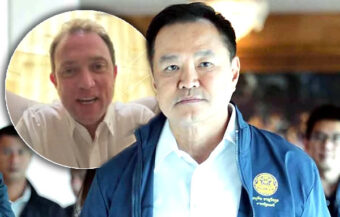
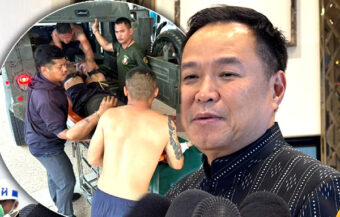
Thai Prime Minister Anutin Charnvirakul again ruled out any prospect of a ceasefire on Saturday in Bangkok, rejecting even preliminary talks. He dismissed questions over inconsistencies between his Friday night briefing and comments by US President Donald Trump after a 20-minute call as a “misunderstanding”. Meanwhile, full-scale fighting raged throughout the day, with Thai forces engaged by air, land and sea. This came despite an effort by Malaysian Prime Minister Anwar Ibrahim to secure a ceasefire by 10pm on Saturday. The appeal failed, with military operations and clashes continuing into the early hours of Sunday.

Prime Minister Anutin Charnvirakul again rejected any prospect of a ceasefire on Saturday evening as fighting continued along the Thai-Cambodian border. Instead, he said no agreement existed and no conditions justified halting operations. His remarks came as regional leaders publicly claimed a ceasefire had already been arranged.
Earlier on Saturday evening, Mr Anutin arrived at Don Mueang Military Airport in Bangkok. He travelled with the Chief of Staff of the Army, General Chaiyapruk Duangprapat. The arrival coincided with rising diplomatic pressure for an immediate pause in hostilities.
At 6.30pm, Mr Anutin spoke to reporters at Military Airport 2, Wing 6. He directly contradicted statements made by Malaysian Prime Minister Anwar Ibrahim. Specifically, he denied any plan to begin a ceasefire at 10pm.
Anutin denies any ceasefire deal and tells public to rely only on military briefings and official channels
According to Mr Anutin, there had been no discussions leading to such an agreement. Moreover, he said the Thai government had issued no ceasefire order to the armed forces. Therefore, he urged the public to disregard unofficial announcements.
Instead, he directed attention to official military briefings. He noted that the armed forces provide two briefings each day. Accordingly, he said these briefings were the only authoritative source of information.
Meanwhile, Mr Anutin acknowledged ongoing contact with Mr Anwar. However, he stressed that no ceasefire proposal had ever been finalised. At no point, he said, was Thailand asked to accept a binding halt.
When questioned about the battlefield situation, Mr Anutin cited his own movements. Earlier, he had spent the entire afternoon with the Army Chief of Staff. During that time, he said operations proceeded according to plan.
Malaysian Prime Minister cites talks with Trump and urges halt to fighting from 10pm under Aasean framework
Earlier on Saturday, Mr Anwar had released a Facebook post in his capacity as ASEAN Chairman. In that statement, he said he had spoken with US President Donald Trump. Subsequently, he said he contacted both Mr Anutin and Cambodian Prime Minister Hun Manet.
During those calls, Mr Anwar said he urged restraint on both sides. He called for all hostilities to cease from 10pm on December 13. Additionally, he said this should include halting the forward movement of armed units.
At the same time, Mr Anwar proposed deploying an ASEAN Observer Team. He said the Malaysian Minister of Defence would lead the mission. According to him, the team would monitor developments on the ground.
Furthermore, Mr Anwar said the effort would be supported by US satellite monitoring. He said American intelligence capabilities would complement field observations. He added that findings would be presented at an ASEAN foreign ministers’ meeting on Tuesday.
Cambodia accepts ceasefire proposal but offers no details as Thailand rejects third-party declarations
Shortly after, Cambodian Prime Minister Hun Manet issued a statement. He said Cambodia accepted Mr Anwar’s proposal. However, he did not outline how Cambodian forces would disengage.
In response, Mr Anutin rejected claims that Cambodia’s acceptance created a ceasefire. Instead, he said any halt must be formally proposed to Thailand. He stressed that third-party declarations carried no operational force.
According to Mr Anutin, a ceasefire required visible action. Specifically, he said weapons must be lowered and readiness withdrawn. He added that it was unacceptable to stop firing while guns remained aimed at Thailand.
Moreover, he said Thailand was responding to direct attacks. He stated that Thai sovereignty was under threat. Therefore, he said operations were defensive and necessary.
Mr Anutin also cited earlier ceasefire claims as evidence of bad faith. For example, he referred to December 12. On that day, he said Cambodia claimed restraint while firing continued.
Thai leader cites civilian attacks and rejects partial measures or social media diplomacy on ceasefire
According to him, attacks struck civilian targets throughout the day. He said Thai communities suffered damage. Consequently, he said such actions undermined ceasefire credibility.
He further argued that any real ceasefire must be complete. He said partial measures were meaningless. Therefore, he insisted Thailand alone would decide when talks could begin.
He also rejected diplomacy conducted through social media. Instead, he said national security matters required formal channels. He described the issue as one of national importance.
Mr Anutin also addressed border access for civilians. He said Cambodia had refused to open crossings for Thai citizens. He stressed that Thai citizens had the right to return home at any time.
When asked if this would affect negotiations, he said civilians should not be used as leverage. He added that contingency plans existed for all scenarios. However, he did not provide details.
Military leadership emphasises casualties and confirms conditions do not exist for any ceasefire
Later, Mr Anutin invited General Chaiyapruk Duangprapat to speak. The general referenced the families of fallen soldiers. He named casualties from Sergeant Major Satthawat Sujarit to Private Krittikorn Soiraya.
Subsequently, the Thai military released a detailed statement. It said conditions were not appropriate for a ceasefire. Therefore, it confirmed that operations would continue.
Defence Minister General Nattaphon Narkphanit reinforced that position. He said no ceasefire order had been issued. Moreover, he said operations would continue until Cambodia clearly ceased hostilities.
Despite diplomatic statements, fighting continued after 10pm on Saturday. Shelling was reported from Thailand into Cambodia. Reports described sustained exchanges across several sectors.
Earlier in the day, fighting expanded across land, air, and naval domains. Thai authorities confirmed air force and navy operations. These actions were limited to the Thai side.
Border clashes intensify with soldier deaths, civilian injuries and contested positions across Eastern provinces
In Ubon Ratchathani, Thai forces reported fresh Cambodian attacks. Four Thai soldiers were killed during operations to retake Hill 677. Officials described the position as strategic.
Meanwhile, in Si Sa Ket province, Cambodian forces launched rockets into residential areas. The attacks hit Kantharalak district. Six civilians were injured and two houses were damaged.
As a result, the provincial governor banned displaced residents from returning home. He cited ongoing clashes and safety risks. Fighting remained active in the area.
In Sa Kaeo province, heavy artillery fire was reported from 6 am. Explosions were heard in Ban Nong Chan, also known as Chok Chey. Smoke plumes rose as Thai forces advanced.
According to the Burapha Task Force, control of Ban Chok Chey was not yet secured. However, Thai forces later regained Ban Nong Ya Kaeo, also known as Prey Chan. Sporadic fighting continued nearby.
Anutin challenges ceasefire claims as rockets hit civilians and battlefield events contradict diplomacy
Against this backdrop, Mr Anutin questioned ceasefire claims. The PM pointed to heavy BM-21 rocket attacks that morning. He said rockets landed in civilian areas.
In addition, he cited severe civilian injuries, including loss of limbs. Therefore, he asked whether a ceasefire truly existed. He said battlefield realities contradicted public statements.
Earlier, on Friday night, US President Donald Trump said leaders had agreed to “cease all shooting.” However, neither Mr Anutin nor Mr Hun Manet confirmed such an agreement afterwards.
Later, Mr Anutin described the discrepancy as a misunderstanding. He said communication channels were crowded. Nevertheless, he said it was not yet time for ceasefire talks.
Separately, Mr Hun Manet disclosed further contacts with Mr Anwar and Mr Trump. He proposed using US and Malaysian satellite imagery. He said this would identify who fired first during the December 7 clashes.
Cambodia proposes satellite verification as Thailand reports casualties fighting and no halt in operations
The Cambodian Prime Minister described the method as transparent. He said Cambodia was ready to cooperate fully. He linked the proposal to commitments under the Kuala Lumpur Joint Declaration.
Despite these exchanges, Thai officials said the situation remained volatile. Fighting continued on multiple fronts. No ceasefire was implemented.
By Saturday night, the Thai armed forces released casualty figures. They reported 15 soldiers killed to date. They also reported 270 wounded.
Meanwhile, a small protest took place in Bangkok. Socialist Workers Thailand demonstrated outside the Bangkok Art and Culture Centre. Seven people attended.
As of late Saturday, no ceasefire agreement had been reached. Thai military operations continued along the border. Diplomatic efforts remained unresolved. In short, the Thai government and military have signalled that they are determined to prosecute this war against Cambodia until the eastern kingdom capitulates and meets Thai conditions for a viable and permanent ceasefire.
Conflicting accounts emerge after Trump Anutin call as PM dismisses ceasefire claims as a misunderstanding
In the meantime, there is speculation over how two divergent narratives emerged from Friday night’s call between US President Donald Trump and Thai Prime Minister Anutin Charnvirakul. Both the Prime Minister and the US President briefed the media with two contradictory accounts of that call.
Confusion after Trump’s 20 minute phone call with PM Anutin. US side claimed a ceasefire was agreed
Thailand moves to election mode after King approves dissolution of parliament decree request by Anutin
As pressure from Trump mounts Thailand implores the United States not to link sovereignty with trade
On Saturday, of course, Prime Minister Anutin insisted this was a “misunderstanding”. Furthermore, he encouraged the public to heed statements only from the Thai military.
“It is likely a misunderstanding,” Mr Anutin said. “Currently, there is a lot of communication going on. It would be best to listen to the statements from the military. At this time, there are no ceasefire negotiations, and it is not yet the time for that.”
Join the Thai News forum, follow Thai Examiner on Facebook here
Receive all our stories as they come out on Telegram here
Follow Thai Examiner here
Further reading:
Confusion after Trump’s 20 minute phone call with PM Anutin. US side claimed a ceasefire was agreed
People’s Party on campaign but on guard against potential legal complaints to oversight agencies
Wealthy young People’s Party leader aims to create a technology-driven and efficient welfare state