Toppled Hindu statue at Thai-Cambodian border sparks India boycott calls, Thai officials express regret, Prime Minister stresses soldier safety, while ceasefire holds and tourism industry watches closely amid ongoing tensions.
Indian Ministry of External Affairs spokesman Randhir Jaiswal in New Delhi this week expressed concern over the demolition of a Hindu statue by the Thai military in a disputed zone of the Thai-Cambodian border in Ubon Ratchathani Province. A strong online campaign quickly emerged, driven by Hindu zealots calling for Indian tourists to boycott Thailand, especially Pattaya. Thai officials sought to calm concern by expressing regret, while Prime Minister Anutin Charnvirakul stressed that the sacrifice of Thai military personnel remained his top priority. As a ceasefire on the border took hold over the weekend, Thai officials hope the formal note from New Delhi will ease tensions, and so far, the boycott shows little impact on Thailand’s fast-growing tourism market in India.
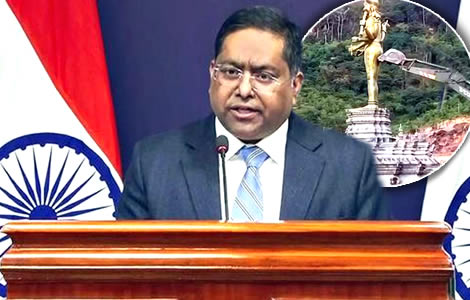
On Sunday, it was reported that the Thai-Cambodian ceasefire was holding. The truce covered the same frontline that previously saw fierce and deadly fighting. The clashes lasted nearly three weeks between December 7th and 27th. However, a separate incident has driven a strong reaction far beyond the border.
The Thai military demolished a Hindu statue previously erected by Cambodian forces. The demolition took place on Monday, December 22nd. It occurred at Chong An Ma Pass in Ubon Ratchathani Province. Presently, the ceasefire and the demolition now sit together in the same tense context.
The statue represented a Hindu deity. It stood near the frontier in a disputed area. It was built by Cambodian forces during 2013–2014. However, Thai authorities said the structure was unregistered. They also said it was being used to reinforce a territorial claim. Therefore, the Thai military moved in heavy machinery. The statue was bulldozed and dismantled. Video recorded the removal. The footage spread rapidly online.
Viral video of Hindu statue demolition spreads across India and triggers social media boycott calls
Soon, reaction emerged across social media in India. The video appeared widely on X and Instagram. The images showed the statue being damaged and removed. Consequently, public anger increased. Hashtags such as “Boycott Thailand” began trending.
“Boycott Pattaya” also spread. Posts urged Indian tourists to cancel travel plans. Some posts called for economic pressure through tourism cancellations. The calls for boycotts focused strongly on Pattaya. However, they also covered wider Thai destinations.
Meanwhile, the Indian Ministry of External Affairs spokesman Randhir Jaiswal issued a formal response. Mr. Jaiswal confirmed concern over the demolition. He noted that Hindu and Buddhist deities are deeply revered across the region.
The ministry spokesman made it clear that such acts hurt the sentiments of followers worldwide. At the same time, India urged both Thailand and Cambodia to return to dialogue. It also urged the protection of property and heritage. The ministry confirmed that the statue stood in a disputed area affected by the border conflict. However, it also stressed the need for diplomacy.
Thai and Cambodian authorities issue statements on statue removal amid growing border tensions
At the same time, Thai authorities issued their own clarification. A statement came from the Joint Press Centre on the Thailand–Cambodia Border Situation. The statement said the statue was unregistered and unofficial. It also stated that the removal was not motivated by religion. In particular, Thai officials framed the demolition as part of border security.
They said the operation followed the restoration of Thai sovereignty claims. They added that the intention was to reduce misunderstanding. The joint press centre also expressed regret for the discomfort caused by the images. However, it insisted that Thailand respects all religions, including Hinduism.
Cambodian authorities rejected the Thai explanation. A spokesman for Preah Vihear province said the statue stood inside Cambodian territory. He stated that the structure was revered by both Buddhists and Hindus. Of course, Cambodia condemned the demolition. The spokesman said Cambodia condemns the destruction of temples and statues worshipped by both faiths.
Reports also noted that a Google Maps search placed the statue several hundred metres inside Cambodia. However, the location remains disputed between the two neighbouring countries.
Meanwhile, the broader conflict on the border forms the critical backdrop. Fighting reignited earlier this month. Official reports stated that 26 soldiers were killed in Thailand, with a similar number of civilians. The final death toll for Thai soldiers and civilians on both sides of the border is thought to be over 80.
Thai and Cambodian military losses remain disputed while ceasefire brings temporary calm
Significantly, this does not include Cambodian military losses. The Thai military claims substantial losses, while Cambodia refuses to disclose official data. For instance, Thailand claims 505 Cambodian soldiers were killed in December and over 2,500 during the July clashes.
Undoubtedly, the hostilities caused significant casualties. But later, this weekend, the situation shifted. Peace emerged. A provisional pact was signed on the border on Saturday morning.
The agreement announced a ceasefire. It also created a 72-hour monitoring period. On Sunday, the ceasefire was reported to be holding. Certainly, the frontline appeared to have fallen quiet after weeks of combat.
Additionally, military talks and permanent contact resumed between the two countries. Cambodian and Thai military delegations met at a checkpoint in Chanthaburi province on Wednesday. This followed the ASEAN summit in Kuala Lumpur on Monday.
Progress at the talks was substantial, in particular after Cambodia presented a formal letter from its Ministry of Defence seeking a ceasefire. Officials, after that, hammered out careful and measured steps toward a stable ceasefire. In brief, the current truce emerged following intense military contact and negotiation.
Statue demolition keeps border tensions in focus while tourism faces public criticism from India
However, the demolition ensured that tensions did not fully ease. The viral video kept attention fixed on the frontier. The campaign urging boycotts of Thailand continued online. Tourism became part of the dispute. Indian travellers were urged to cancel trips. Pattaya remained a major target of those messages. Significantly, Thailand’s tourism sector faced a challenge, at least on social media.
Meanwhile, Indian coverage highlighted the demolition as part of the ongoing border conflict.
The External Affairs Ministry repeated its appeal for dialogue and diplomacy. It confirmed again that the statue had been built in recent times. Furthermore, it noted that the structure was located within a disputed zone. However, the demolition has now become linked to the conflict among some Indian online audiences.
Notably, it is questionable who these audiences are and whether they will impact tourist arrivals to Thailand. India has its own problems with extremist elements linked to Hinduism. Indeed, this week, Hindu mobs attacked Christians and Christmas celebrations across the vast subcontinent.
Thailand’s Prime Minister Anutin Charnvirakul also commented. Firstly, he made it clear that no disrespect was intended. Furthermore, he added that he was more concerned about the danger from landmines along the frontier. He referred to Thai soldiers losing limbs in the area. In turn, the Thai leadership positioned the demolition inside a broader security narrative.
The Thai joint press centre repeated that the statue had not been officially registered as a religious site. It also said the removal was undertaken to ensure effective area control.
The aim, according to the statement, was to prevent any use of religious symbols in territorial claims. Meanwhile, Thai officials insisted that the removal served a border-management purpose. However, they again expressed regret for any misunderstanding caused by the circulation of images.
Ongoing controversy keeps Thai-Cambodian border issue under scrutiny despite ceasefire
Cambodian officials remained firm. Significantly, they insisted the statue was in Cambodia’s An Ses area. They placed the site roughly 100 metres from the border. In addition, they claimed the statue was revered across communities.
Meanwhile, regional background remained relevant. The Thai-Cambodian conflict earlier reignited in July. Both sides agreed to a ceasefire that month. Significantly, it was brokered by U.S. President Donald Trump. However, the fighting resumed this month. The latest ceasefire now appears to be holding after the border pact. Presently, the situation remains tense but currently calm.
Indian social media continued to show a strong reaction. Users shared the demolition footage repeatedly. Many posts urged travellers to cancel holidays. Some urged group cancellations to exert pressure. Pattaya remained the symbolic focus. However, travel to Thailand in general was also targeted. Thai tourism officials have not commented on any potential impact. At this time, the economic effect, if any, remains unknown.
Demolished Hindu statue had practical and symbolic impact amid ongoing border ceasefire monitoring
The statue itself had been about nine metres tall. Cambodian forces erected it near the Preah Vihear temple area. The temple region has long been disputed. The statue was visible close to Thai positions.
The ceasefire details remained straightforward. Hostilities ceased on Saturday morning after a provisional agreement. The pact included a 72-hour monitoring window. On Sunday, reports confirmed that the ceasefire held across the border line. Afterwards, the fighting subsided despite previous heavy exchanges.
However, the demolition continues to echo. It triggered a notably measured and calm diplomatic response in India. It also drew condemnation in Cambodia.
Afterwards, Thailand issued explanations and expressed regret. Nonetheless, Thai Prime Minister Anutin Charnvirakul insisted that the fallen statue cannot be more important than fallen Thai soldiers or those who had risked body and limb in the last few weeks defending Thai sovereignty.
In truth, the statue incident has emerged from the wider crisis as a minor disruption on a weekend which has seen peace restored on the border.
Thai officials reiterate respect for Hinduism as India stresses diplomacy and monitors casualties
Meanwhile, Thai officials continued to underline the kingdom’s respect for Hinduism. They referred to shared cultural and historical connections across Southeast Asia. They also emphasised regret for any discomfort arising from misunderstanding. However, they maintained the legal and security justification for the removal.
The Cambodian side highlighted the religious and cultural role of the statue. It tied the demolition to respect for both Hindu and Buddhist worship. At length, the act was condemned repeatedly at provincial level.
India’s position remained measured but firm. The External Affairs Ministry confirmed that Hindu and Buddhist deities are revered across the region. It added that actions affecting such symbols hurt followers’ sentiments. India urged peace, diplomacy and dialogue between Thailand and Cambodia.
Peace remains fragile as ceasefire holds. Tourism impact from statue demolition still uncertain
Now the border is quiet, at least for the moment. Military talks continue. The ceasefire holds. But the demolition of the Hindu statue remains unresolved in public and diplomatic arenas. In the meantime, the frontier peace remains fragile.
The images remain online. The boycott calls continue. And the disputed border land remains the subject of a process which, hopefully, under the Thai-Cambodian peace deal signed in October, will lead to proper border demarcations between the two kingdoms.
Ceasefire signed Saturday sees hostilities wind down for 72 hour monitoring period in wider peace deal
Crisis for Thailand as baht rockets in value putting exports and foreign tourism under further pressure
Top tourist body expresses concern about the Thai Cambodian war’s impact on foreign tourism industry
In Thailand, tourism officials are hoping that the online backlash was driven by extremist elements in India. Certainly, Thailand has expressed some regret for the incident. So far, the Indian government, for instance, has taken no formal actions. At the same time, travel agency sources are not indicating a serious impact beyond the spurious online campaign.
In the last two years, India has emerged as a rapidly growing market for Thailand’s tourism industry. Indeed, were it not for this expanding market in 2025, Thailand’s industry would have landed in extreme crisis.
Last year, it was the third most important market, delivering 2.1 million arrivals. This year, despite a 7.2% downturn in arrivals overall, the final projected figure is expected to be 2.5 million. Certainly, arrivals in December are up significantly by 6.59% on 2024.
Join the Thai News forum, follow Thai Examiner on Facebook here
Receive all our stories as they come out on Telegram here
Follow Thai Examiner here
Further reading:
Top tourist body expresses concern about the Thai Cambodian war’s impact on foreign tourism industry
Confusion after Trump’s 20 minute phone call with PM Anutin. US side claimed a ceasefire was agreed