Thailand’s election enters its final week as vote-buying claims swirl, billions allegedly circulate and Pheu Thai surges behind Dr Yotsanan Wongsawat, hailed by supporters as a new Thaksin figure with the maestro’s touch ahead of the February 8 vote.
As the final week of the election campaign ahead of February 8th comes into view, analysts describe a two-horse race between the Bhumjaithai Party and the People’s Party. Questions are mounting over the impact of large-scale vote buying, even as younger voters push for change and a People’s Party government. At the same time, another narrative has emerged, the revival of the Pheu Thai Party. That recovery is being driven by Dr Yotsanan Wongsawat, now seen as the second leading choice for prime minister. The engineer and academic campaigned effectively and drew praise for his leadership. Even within Pheu Thai’s traditional base, many say he carries the Thaksin touch. The nephew of Thai politics’ maestro has mounted a strong campaign. Certainly, Sunday, February 8th, will decide his future.

Emerging during the campaign amid allegations of vote buying and a contest between Bhumjaithai’s local-level influence and the People’s Party’s national polling lead, Dr Yotsanan Wongsawat has become central to Thailand’s February 8 general election. As a result, his success and that of the Pheu Thai Party are increasingly seen as decisive.
At the same time, Pheu Thai’s own polling shows the party rising. Consequently, admiration for Dr Yotsanan has grown. Many supporters now describe him as a new Thaksin, or at least as having the maestro’s touch.
As Thailand enters the final week of polling, voter focus has narrowed. Meanwhile, campaign activity has intensified nationwide. At the same time, concerns over election integrity have come sharply into view. As a result, allegations of large-scale vote buying now dominate late-stage discussion.
Vote buying allegations intensify nationwide as the final week of campaigning exposes the scale
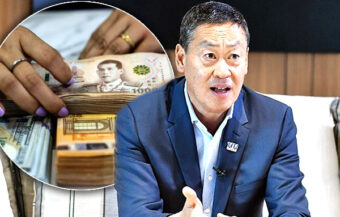
On Friday, General Rangsi Kittiyanasop of the Economics Party publicly detailed those allegations. According to him, at least 12 billion baht is circulating among vote-buying agents. Moreover, he said the funds may originate from illicit sources. In addition, he described the practice as widespread across the country.
Specifically, General Rangsi said the going rate is 5,000 baht per vote. First, 2,000 baht is paid upfront. Then, voters are required to surrender their national identification cards. According to him, the cards are held as security. After the election, a further 3,000 baht is paid.
Meanwhile, he said reports have emerged from the North, the Northeast, the South, and Bangkok. In addition, he described an instalment-based payment system. Furthermore, he linked the funding to grey-market businesses and scam networks. Notably, he said such networks circulate more than 200 billion baht nationwide.
In explaining the scale, General Rangsi referred to parliamentary arithmetic. Specifically, he cited the need for 250 MPs to form a government. Therefore, he estimated that more than 12.5 billion baht could be involved. These remarks were made during the final stretch of campaigning.
Election Commission and Bank of Thailand aware of suspicious withdrawals amid scrutiny
Following these claims, authorities acknowledged the issue. On Friday, Election Commission Secretary-General Sawaeng Boonme confirmed that investigations are underway. According to him, the commission is pursuing unusually large financial transactions. In particular, these include cash withdrawals worth hundreds of millions of baht.
Earlier in the week, the Bank of Thailand disclosed those transactions. On Wednesday, Governor Vitai Ratanakorn reported the withdrawals publicly. Moreover, he described their scale as irregular. Consequently, the Election Commission said coordination with relevant agencies has begun.
Despite the scrutiny, campaigning has continued without interruption. Meanwhile, parties have maintained rallies and regional visits. At the same time, media appearances have increased. As a result, messaging has sharpened in the final days.
In response to the allegations, both the Pheu Thai Party and the People’s Party have addressed the issue publicly. Party figures urged voters to make independent choices. Meanwhile, campaign schedules proceeded unchanged. These remarks were delivered at rallies and in interviews.
People’s Party warns of grey capital as polling shows fragmented support and uneven local dynamics
On Friday, People’s Party leader Nattapong Ruangpanyawut spoke after polls showed his party ahead. At that point, he warned that Thailand could face another government influenced by grey capital. Specifically, he said this would occur without the People’s Party in power. However, he did not cite specific cases.
Polling data continues to show mixed signals. For example, reputable national surveys indicate that the People’s Party’s support ranges between 32 and 47 per cent. However, analysts note wide variation between polls. Therefore, direct comparisons remain limited.
Nevertheless, some analysts continue to point to the Bhumjaithai Party. They say it could still emerge as the largest party. In particular, they cite strong constituency-level networks. Meanwhile, party-list preferences for the ruling party have declined by 5 percentage points in some areas. However, local influence may offset those losses.
At the same time, voter surveys show shifting priorities. According to polling, more than 71 per cent of voters cite policy as their main consideration. Meanwhile, party loyalty ranks lower. Likewise, candidate identity ranks below policy concerns.
Focus returns to Pheu Thai as undecided voters and leadership polling reshape voting intentions
Against this backdrop, attention has increasingly returned to Pheu Thai. Consequently, its performance is viewed as a key variable. Meanwhile, the number of undecided voters remains significant. Therefore, final seat counts remain uncertain.
Pheu Thai has entered this phase with a new prime ministerial candidate. Dr Yotsanan Wongsawat has emerged as the party’s front-runner. Since then, his campaign visibility has increased. Accordingly, polling trends reflect growing momentum.
In preferred prime minister surveys, Dr Yotsanan has edged ahead of the incumbent. Specifically, he recorded 15.9 per cent support. By comparison, Prime Minister Anutin Charnvirakul recorded 15.2 per cent. However, both trail the People’s Party leader by a wide margin.
Meanwhile, Nattapong Ruangpanyawut continues to lead that measure. He recorded 39.2 per cent support. Notably, this margin has remained consistent. As a result, leadership rankings have shown limited volatility.
In a Suan Dusit poll published Friday, the People’s Party has 35.99 per cent in party list preferences, followed by the Pheu Thai Party on 22.13 per cent, with the Bhumjaithai Party trailing at 18.92 per cent.
Pheu Thai pushes ‘9 millionaires a day’ policy as economic pitch targeting grey-area concerns
Alongside leadership polling, Pheu Thai has promoted a flagship economic policy. The party calls it the “9 millionaires a day” initiative. According to party officials, the policy targets grey-area businesses. Specifically, it aims to move them into the regulated economy.
Notably, by Pheu Thai estimates, the policy would cost 3.285 billion baht annually. However, the party projects more than 100 billion baht in new tax revenue. These figures are based on internal modelling. No independent assessment has been released.
On January 27, Dr Yotsanan addressed the policy publicly. He appeared on the “Workers’ News Talk Off-Screen” program. The show is hosted by Sorayuth Suthasanajinda. During the interview, he clarified the policy’s intent.
He said the initiative is not a handout. Instead, he described it as a revenue-generating mechanism. Moreover, he said it would expand the tax base. In addition, he said the program would be evaluated annually.
Yotsanan reveals internal polling and outlines possible seat range. Keeping coalition options open
During the same interview, Dr Yotsanan acknowledged internal polling by the party. He said polling is used to guide communication. Meanwhile, he confirmed regular tracking of voter sentiment. However, he did not disclose methodologies.
When asked about seat projections, he cited figures of around 150 MPs. Moreover, he said some constituencies remain closely contested. Asked again about reaching 200 seats, he did not dismiss the possibility. Instead, he pointed to undecided voters and remaining campaign time.
He said he campaigns daily. As a result, he expressed confidence in voter engagement. Consequently, he estimated a range between 150 and 200 seats. He stressed that the estimate was not biased.
Dr Yotsanan was also asked about coalition preferences. He said the decision would depend on timing. Moreover, he said policy alignment would be decisive. Therefore, he said he would not object to working with any party.
Family lineage and political upheaval frame Yotsanan’s rise after setbacks for the Shinawatra camp
Dr Yotsanan is 46 years old. He is the nephew of former Prime Minister Thaksin Shinawatra. In addition, he is the son of former Prime Minister Somchai Wongsawat. These family ties are widely noted.
His candidacy followed major upheaval within Pheu Thai. On August 29, 2025, Prime Minister Paetongtarn Shinawatra was removed from office. The Constitutional Court issued the ruling. The case involved an improper conversation with Hun Sen, later revealed in a leaked audio recording.
One week later, Thaksin Shinawatra returned to prison following a separate court verdict. At that time, many observers viewed Pheu Thai as severely weakened. Some suggested the party faced long-term decline.
However, the nomination of Dr Yotsanan altered that course. Since then, Pheu Thai has regained momentum. Consequently, campaign events have drawn renewed attention. Polling trends have improved.
Academic background and innovation focus shape campaign narrative around Yotsanan’s credentials
Dr Yotsanan was trained as a biomedical engineer. He has an academic background in science and innovation. Moreover, he has worked in applied research. Notably, he has not previously held elected office.
Supporters describe him as a departure from traditional political figures. They cite his technical background and academic career. Meanwhile, party figures highlight his involvement in innovation projects. These claims feature prominently in campaign messaging.
Former Secretary-General to the Prime Minister, Prommin Lertsuridej, has commented publicly. He described Dr Yotsanan as highly educated. Furthermore, he called him a potential game-changer. He cited strengths in science and technology.
Campaign endorsements and unresolved vote-buying probes shape final days before poll
Similarly, party-list candidate Umesh Pandey has spoken about Dr Yotsanan’s background. He cited academic work and innovation initiatives. In addition, he referenced projects aimed at assisting people with disabilities. He also noted leadership within a university innovation department.
As the campaign enters its final days, allegations of vote-buying remain unresolved. Investigations by the Election Commission continue. At the same time, campaigning proceeds nationwide.
Bank of Thailand boss acts to thwart illicit activity in the banking system which could be vote buying
Poll shows a boost for Pheu Thai and popular support for Yotsanan Wongsawat as he begins campaigning
As election day approaches, several factors remain decisive. These include turnout, undecided voters, and constituency results. Within that context, Pheu Thai’s performance remains central.
Whether Dr Yotsanan Wongsawat emerges as a new Thaksin, or simply carries an inherent and winning Thaksin touch, will be determined at the ballot box on February 8.
Join the Thai News forum, follow Thai Examiner on Facebook here
Receive all our stories as they come out on Telegram here
Follow Thai Examiner here
Further reading:
Bank of Thailand Governor orders monitoring of cash withdrawals amid widespread vote buying fears
High powered, secretive meeting chaired by PM agrees robust action against Cambodian networks
Thailand and Cambodia face danger from ‘Dragon Head’ the Chinese mafia leader behind the scams
Cyber police and Money Laundering agency seek UK and US co-operation targeting Cambodian networks
United States, South Korea and United Kingdom act against Cambodian scam industry with Thai tie-ins
Ben Smith affair & allegations of links to Cambodian scam centres continues to rage in parliament