Tourist arrivals plunge 7.5% as Thailand’s caretaker government moves to slash 60-day visas to 30. Phuket booms yet rebels against property-linked residency. The tourism industry across is divided. Meanwhile, infrastructure on the holiday island is strained and a 2026 trend bucking recovery now hangs in the balance.
The caretaker government is being pressed by foreign tourism industry groups to scrap two initiatives introduced by former Pheu Thai governments to revive the sector and the kingdom’s stalling property market. One is the 60-day visa on arrival, which a government committee last week proposed cutting back to 30 days. The other is a one-year visa incentive tied to property purchases of ฿3 million or more by foreigners. That measure was introduced quietly in October 2025. The dispute exposes a clear divide between the wider tourism and property sector and Phuket, which has surged ahead in the post-COVID-19 era, and the rest of Thailand.
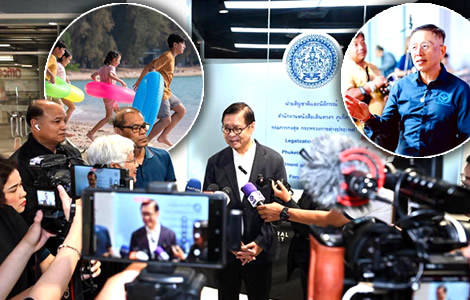
It is too early to declare 2026 another failed year for Thailand’s foreign tourism industry. However, the first six weeks show a contraction. From January 1 to February 15, international arrivals fell 7.53% to 5.07 million.
Nevertheless, the comparison is against a relatively high base. At the same time last year, foreign tourism dropped sharply amid security concerns. Therefore, the decline must be read against that earlier disruption. Even so, the fall in arrivals is clear.
Against this backdrop, the caretaker government led by Prime Minister Anutin Charnvirakul is advancing two visa measures that have divided the industry. Indeed, they are related to initiatives introduced by the Pheu Thai-led government of Prime Minister Srettha Thavisin in 2024. Pressure is mounting in the industry to have them rescinded.
Visa measures from 2024 are now under pressure as arrivals fall and industry demands change
Consequently, policy debate has intensified. On one side, officials argue adjustments are necessary. On the other hand, operators warn of economic and social effects. As a result, immigration rules are now central to the tourism discussion.
First, authorities are reviewing the 60-day visa-free stay granted to nationals of 93 countries. Currently, eligible visitors may enter Thailand without a visa for up to 60 days. The programme began in mid-2024 under former prime minister Srettha Thavisin.
At that time, the measure was designed to stimulate tourism recovery. However, conditions have changed. Therefore, the duration of stay is being reassessed.
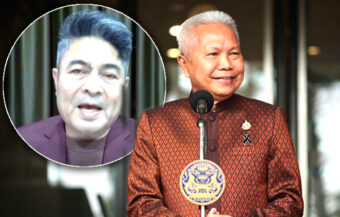
Minister of Foreign Affairs Sihasak Phuangketkeow has publicly supported reducing the permitted period. He made his position clear during a visit to Phuket. According to Mr Sihasak, the 60-day allowance may be too long.
Foreign minister supports shortening 60-day visa-free stay amid complaints and security fears
In contrast, most visitors remain in the country for only 15 to 30 days. Therefore, he said, shortening the period would better reflect actual travel patterns.
Moreover, Mr Sihasak cited mounting complaints about abuse of the system. In some instances, foreigners allegedly used visa-free entry to engage in illegal activities. In other cases, residents reported exploitation.
Consequently, he said, the government must review the appropriateness of the measure. Furthermore, amid concerns about transnational crime, he stressed the need for comprehensive safeguards. Otherwise, he warned, individuals with malicious intent could use Thailand as a base.
At the same time, the Ministry of Tourism and Sports confirmed that operators proposed a rule change last year. Subsequently, the ministry agreed that shortening the stay would not damage overall tourism.
Committee backs visa cut in principle as caretaker government retains authority to decide
In addition, a top-level committee composed of tourism officials and the Immigration Bureau supported the proposal in principle. However, a final decision has not yet been announced. Notably, the Bhumjaithai Party won the February 8 election. Nevertheless, a new cabinet has not yet been formed. Therefore, the caretaker administration retains authority to act.
While the visa-free scheme is under review, a second measure has triggered sharper resistance, particularly in Phuket. Since October 1, 2025, foreigners who purchase a condominium worth at least 3 million baht may apply for a one-year long-stay visa.
Alternatively, foreigners renting housing for at least 85,000 baht per month are eligible. In addition, family members or dependents may apply to remain with the principal applicant. Consequently, the scheme links extended residency directly to property.
However, tourism operators in Phuket argue the 3-million-baht threshold is too low. They warn that the policy could attract what they describe as “non-quality” visitors. Moreover, they fear it could create space for illegal conduct. In addition, they predict upward pressure on property prices and living costs. As a result, opposition on the island has been vocal and sustained.
Phuket tourism leaders warn property-linked visa risks crime and rising housing costs
Thaneth Tantipiriyakij, president of the Phuket Tourist Association, has led that opposition. He said the minimum investment of 3 million baht is far too low compared with the benefits offered. In return, buyers gain eligibility for long-term residency.
Therefore, he argues, the balance is inappropriate. Furthermore, he said the policy contradicts Phuket’s strategy of prioritising high-spending visitors over sheer numbers.
For example, Mr Thaneth warned that foreigners could exploit the scheme to work or operate businesses without proper permits. Similarly, he said buyers might acquire multiple condominium units. Those units could then be rented to short-stay tourists. Consequently, enforcement would become more complex. Moreover, he cautioned against imbalanced foreign ownership in the condominium sector.
Accordingly, he said broader housing prices could rise. In turn, living costs for local residents could increase. He described the potential impact as severe.
Calls grow for stricter thresholds as fears mount over market imbalance and local impact
Therefore, he called for stricter conditions. Specifically, he proposed raising the minimum property purchase requirement. Additionally, he suggested requiring buyers to invest in Thai savings or local funds. This condition, he said, should apply to each dependent applicant.
By contrast, Thailand Longstay Management supports the measure. The company screens application documents for the Immigration Bureau. It said the scheme aims to stimulate the property sector through foreign investment. Furthermore, it insisted that applicants with criminal backgrounds will be denied long-stay visas.
Under existing rules, foreigners may buy or rent property only from Thai developers or owners. Moreover, they must comply with national ownership laws. Notably, foreigners cannot exceed 49% of the ownership quota in any condominium project. Therefore, officials argue that safeguards are embedded in the framework.
At the same time, the country’s property market, particularly for condominiums, is struggling with a glut of unsold units. However, this is not the case for Phuket. Indeed, in contrast to Phuket, the kingdom’s foreign tourism industry has failed to recover from the disastrous COVID-19 shutdown of 2020.
Phuket exceeds pre-pandemic levels as infrastructure strain intensifies across the island
Nevertheless, concerns in Phuket extend beyond the property-linked visa. The island is the only area in Thailand to exceed pre-pandemic tourism levels. Before the country closed in 2020 due to COVID-19, Phuket was already a major hub. Now, both visitor numbers and per-capita spending have moved beyond those benchmarks. Consequently, pressure on infrastructure has intensified.
According to Mr Thaneth, Phuket was designed to support a population of about 400,000. However, the actual number of people present is far higher. In addition to the base population, more than 400,000 people come to the island to support the economy.
Moreover, about 130,000 registered migrant workers reside there. During peak periods, tourist numbers can approach one million. Therefore, the total headcount significantly exceeds planned capacity.
He said the strain was already visible during the Phuket Sandbox period. At that time, reopening pressures exposed structural limits. Consequently, the association is urging urgent action on stalled projects. However, several major infrastructure initiatives remain delayed.
Delayed tunnel and water projects compound congestion and supply pressures in Phuket
For instance, the Kathu–Patong tunnel project previously showed signs of progress. However, after changes in government, momentum slowed. As a result, congestion issues remain unresolved. Similarly, long-discussed water supply projects have not advanced.
One proposal would bring water from Cheow Lan Dam. According to Mr Thaneth, that plan has been under discussion for 20 to 30 years. Initially, costs were estimated in the billions of baht. Now, he said, the required investment would run into tens of billions. Consequently, delays have increased both complexity and expense.
At the same time, Phuket is repositioning itself as a higher-end destination. According to Mr Thaneth, average per-capita spending now exceeds 50,000 baht. That figure is higher than before COVID-19. Therefore, the island is emphasising quality and longer stays.
Additionally, he proposed “city pairing” packages. Phuket would act as a hub linking visitors to nearby destinations such as Phang Nga and Ranong. Consequently, travel flows could be distributed more widely.
National recovery lags as visa reforms and property debate shape uncertain year ahead
In contrast, other parts of Thailand remain below 2019 levels. Bangkok, Pattaya, Chiang Mai and Surat Thani province are still recovering. This includes Koh Samui and Koh Phangan. Both visitor numbers and revenue lag behind pre-pandemic benchmarks. Therefore, Phuket’s performance stands apart from the broader national picture.
Meanwhile, the visa-free review continues in parallel with the property visa debate. The 93-country programme remains in force for now. However, the foreign minister has signalled clear support for reducing the permitted stay. According to the Ministry of Tourism and Sports, such a reduction would not harm overall tourism. Nevertheless, divisions within the industry remain evident.
Early in 2026, therefore, presents a somewhat confusing and troubled vista for Thailand. After a controversial General Election, which may well be invalidated, a caretaker government is considering quashing two initiatives designed to boost economic activity in tourism and the property sector.
Certainly, with tourism arrivals already down 7.53% in the opening weeks, the visa adjustment may be the wrong medicine. Moreover, opposingproperty-linked residency may see the government turn its bank on a much-needed support for the property sector and indeed the wider economy.
Political uncertainty deepens the divide as tourism slows and visa reforms face resistance
Successive Thai governments have spoken of trying to attract high-spending foreigners to live in Thailand and contribute. However, every initiative has produced an instinctive negative reaction from the country’s grassroots.
Now this simple but effective proposal is facing resistance in Phuket. Certainly, these decisions, if taken during the caretaker period, will be consequential for Thailand’s tourism and property sector.
The battle for 2026’s economy has begun. Thailand needs political stability and more foreign tourists
Visa entry period to go from 60 to 30 days. Agreement in principle as foreign tourism numbers fall by 10%
Indeed, the one lesson that should have been learned from the COVID-19 crisis is that there is a link between foreign residents and the country’s foreign tourism industry. The further lesson is that it is a positive one.
The Phuket stereotype of Russian or foreign gangsters undermining the country’s prospects is misplaced. It undoubtedly does not represent the majority of foreign property purchasers and could lead to bad policy. Furthermore, what may be good policy for Phuket may not be true for the rest of Thailand.
Join the Thai News forum, follow Thai Examiner on Facebook here
Receive all our stories as they come out on Telegram here
Follow Thai Examiner here
Further reading:
Incoming government must tackle the country’s rising public debt level and keep foreign funding open
Commerce Minister meets US trade boss Jamieson Greer in Korea. Paul Chambers case still dogs talks