Thailand’s February 8 election spirals deeper into crisis: 387,396 vote gap, 324,000 ‘staggered’ ballots flagged, website data pulled, redesign row erupts and legal threats mount. With recounts underway, fears grow of a voided poll and looming constitutional chaos.
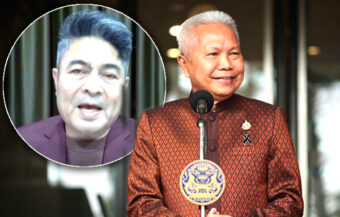
Following the removal of published data by the Election Commission on Friday after just two days online, former Justice Minister Thawee Sodsong warned that time is running out to prevent Thailand from sliding into a constitutional crisis over failures in the February 8 General Election. He said failure would brand the poll the “most fraudulent” in Thailand’s history. He spoke on Sunday as the polling agency pressed ahead with recounts and revotes amid mounting complaints. At the same time, People’s Party leader Nattapong Ruangpanyawut again demanded full publication of poll data in forms 5.11 and 5.18 from polling stations involved in the February 8 vote.
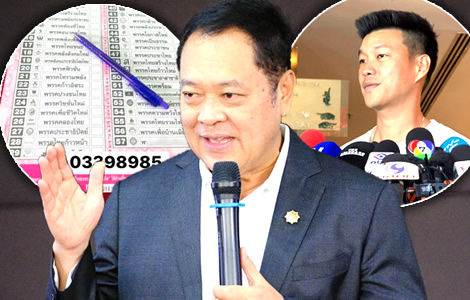
Thailand’s February 8 general election remains under scrutiny as the Election Commission proceeds with nationwide recounts and fresh voting in selected polling stations. So far, thousands of complaints have been lodged. Meanwhile, the commission continues to process them.
In particular, questions focus on the administration of the poll. There is now a growing consensus that the election was poorly executed. Across the country, there are instances where votes cast exceeded the number of eligible voters. Additionally, discrepancies have also emerged between party list and constituency tallies.
According to official figures, 387,396 more votes were cast in the constituency election than in the party list vote. Notably, each voter received two ballots at the same time. Specifically, a pink ballot was issued for the party list. At the same time, a green ballot was issued for the constituency race. Both ballots were to be marked and deposited together.
Poll discrepancies deepen scrutiny as complaints mount and recounts continue nationwide
The scale of the discrepancy has drawn attention. In fact, before the election, 76 per cent of respondents in a National Institute of Development Administration poll said they would vote according to party preference.
After the election, 57 per cent of respondents in a later survey said they were unhappy with the nationwide result. However, 67 per cent said they were satisfied with the constituency outcome in their own area.
Meanwhile, political leaders have publicly criticised the Election Commission. On Sunday, People’s Party leader Nattapong Ruangpanyawut addressed reporters about changes to ballot papers. In particular, he cited polling station 9 in constituency 15 in Kannayao district, Bangkok. There, new party list ballots were found without stub numbers.
Previously, the pink party list ballots used on February 8 carried stub numbers and barcodes. According to Mr Nattapong, the absence of stub numbers on new ballots showed the commission had changed the printing design. He also noted that millions of original ballots remained unused. Therefore, he said the redesign amounted to an admission that the February 8 ballots were problematic.
Ballot redesign sparks fresh row as Nattapong questions secrecy and printing changes confirmed on Sunday
The Election Commission has ordered new voting in certain areas as part of complaint resolution procedures. According to Mr Nattapong, redesigned ballots were used for these new votes. He said the agency could have used the remaining old booklets. Instead, it chose to print new ones.
Furthermore, he linked the redesign to concerns about ballot secrecy. On February 21, the Election Commission issued a written statement. In that statement, it stated that photographing election ballots is illegal. However, Mr Nattapong responded that the law prohibits photographing ballots that have already been marked. He said photographing a ballot before tearing it from the stub is permissible.
In addition, he added that even without photography, a voter who remembers their stub number could potentially trace the sequence of ballots. He said the commission was aware of this issue. Therefore, he questioned why the commission changed the ballot format if it maintained that the process was secret. Ultimately, he described the redesign as an inappropriate interpretation of the law.
Legal threats emerge as People’s Party leader presses for transparency and full disclosure of data
Mr Nattapong said all ballots from February 8 are stored in sealed boxes. If secrecy is paramount, he asked why officials would be permitted to open ballot boxes and know how votes were cast. He urged relevant agencies to act transparently.
He referred to bodies, including the Ombudsman. The Ombudsman may refer matters to the Constitutional Court and the Administrative Court. Mr Nattapong said evidence should be presented openly. He said the People’s Party is preparing legal action under Section 157 of the Criminal Code. That section concerns malfeasance by public officials.
Civil society groups have also sought other legal avenues. Mr Nattapong said discussions have been held within the party to prepare contingency plans. These plans address scenarios, including the possibility that the election could be declared invalid. He stressed that any decision rests with the courts and relevant agencies.
The People’s Party has acknowledged that it lost the February 8 poll. However, it has demanded a full account of irregularities. On Sunday, Mr Nattapong again called for the publication of forms 5/11 and 5/18. These forms record vote counts at each polling station. More than 99,000 polling stations were involved nationwide.
Thawee warns that discrepancies threaten election integrity and coalition stability if the election is voided
The party requested that the forms be released in spreadsheet format to allow detailed analysis. With access to that data, it intends to compare official figures with images and records collected by volunteers who monitored the count. According to Mr Nattapong, however, this information has not been furnished.
At the same time, parallel criticism came from Pol. Col. Thawee Sodsong, leader of the Prachachart Party and a former minister of justice in the previous Pheu Thai-led government. He posted a statement on Facebook addressing discrepancies in ballot counts, arguing that the issue is not a simple numerical mismatch. Instead, he described it as a sign that the sanctity of elections is being challenged.
Notably, Pol. Col. Thawee is the only Prachachart Party MP who has not joined the proposed government led by Prime Minister Anutin Charnvirakul. The new coalition was informally announced this week, with four Prachachart MPs set to support it alongside the Pheu Thai Party. For now, Pol. Col. Thawee has withheld his participation.
His position is linked to his support for an investigation into the 2014 Senate elections while he was in office. That probe remains ongoing. It implicates executives of the ruling Bhumjaithai Party. He has stated that the investigation remains unresolved.
Calls grow for proactive investigation as ballot secrecy and counts are increasingly questioned
In a recent statement, Pol. Col. Thawee questioned whether hundreds of thousands of so-called “staggered” ballots could be dismissed as technical errors. He urged the Election Commission to act proactively, stressing that it has the authority to investigate, suspend results or order new elections to protect vote integrity.
Additionally, he referred to three specific areas of concern. One relates to ballot secrecy, noting that green constituency ballots carried QR codes while pink party list ballots carried barcodes. According to him, this undermines the secrecy of the vote. Complaints on the matter have been filed with the Supreme Administrative Court and the Ombudsman.
Another issue involves ballot counts exceeding the number of voters who signed to receive ballots. In his view, this cannot be treated as a minor error. Under election law, such discrepancies may constitute reasonable grounds to believe an election was not fair. Consequently, he urged immediate investigation and full disclosure.
The third issue concerns discrepancies between the two types of ballots. Each voter receives and casts two ballots simultaneously. However, counting revealed a large difference between totals for green and pink ballots. He described this as an anomaly requiring thorough investigation.
Website shutdown fuels suspicion after academics flag hundreds of thousands of ballots as suspicious
Attention has also focused on the Election Commission’s online reporting platform. On February 18, the commission released vote counts for constituency and party list MPs through its website, Ect Report 69. Two academics conducted a statistical analysis using the published data. They were Professor Sarinee Achavanuntakul and Professor Loy Chupongthong.
An analysis identified approximately 324,000 ballots described as “staggered” or “manipulated.” The findings quickly circulated widely. On February 20, two days after the data release, the Election Commission shut down the Ect Report 69 website, making further independent verification more difficult.
Pol. Col. Thawee criticised the decision to remove the data, arguing that society requires answers, not explanations. He called on the Election Commission to restore public trust and urged the formation of a working group to investigate and use legal mechanisms to reveal facts.
In addition, he proposed establishing a joint audit team composed of public representatives, computer system experts and forensic scientists. Such a team, he said, should verify original ballot stubs and compare them with signatures or fingerprints on voter lists. Finally, he stressed that procedures should be fully disclosed as public information.
Political uncertainty deepens as certification deadline approaches amid crisis fears for any government formed
Pol. Col. Thawee insisted that his remarks were not accusations. Instead, he described them as an exercise of legal rights to protect the sovereignty of the people. He argued that revealing the truth is the only way to restore public trust and added that no organisation is above scrutiny.
To date, the Election Commission has not publicly provided all the requested documentation. Specifically, Forms 5/11 and 5/18 have not been released in full spreadsheet format. Moreover, ballot redesign decisions have not been explained in detail beyond written statements about ballot secrecy and photography.
Meanwhile, recounts are continuing in multiple provinces. In several locations, fresh voting has been ordered following complaints lodged by candidates, parties and citizens. Throughout this process, the commission maintains statutory authority over these procedures.
The controversy has unfolded against a backdrop of coalition negotiations. Prime Minister Anutin Charnvirakul’s proposed government includes support from several parties. The Prachachart Party has split in its participation. The People’s Party has moved into opposition.
Analysts warn of a constitutional crisis if the election is later annulled after a new government is formed
Public opinion surveys reflect divided sentiment. A majority of respondents in one post-election poll expressed dissatisfaction with the national result. However, a larger share reported satisfaction with local constituency outcomes. The contrast underscores the divergence between party list and constituency results.
At the administrative level, concerns remain focused on documentation and transparency. Requests centre on detailed polling station data. Parties seek to reconcile official totals with their own records. Academics have called attention to statistical irregularities. The commission has responded with recounts and selective re-votes.
Legal processes may follow. The Ombudsman has the authority to refer matters to the Constitutional Court and the Administrative Court. Section 157 complaints could lead to criminal proceedings if accepted. Any annulment of the election would require judicial determination.
For now, ballots from February 8 remain sealed in boxes. New ballots without stub numbers have been used in limited re-voting. The commission has reiterated that photographing marked ballots is illegal. Debate continues over whether unmarked ballot photography is permitted.
Certification deadline looms as calls grow for full validation or a court-ordered revote under conditions
The removal of online data has added to scrutiny. Analysts and political actors have cited the timing of the shutdown. The commission has not provided a detailed public explanation for the website’s closure.
The February 8 election was intended to produce a clear parliamentary mandate. Instead, it has triggered legal and procedural challenges. Official investigations are ongoing. Political leaders continue to press for documentation and clarification.
The final outcome will depend on decisions by the Election Commission and, if petitions proceed, by the courts. Until then, questions about ballot design, vote discrepancies, and data transparency remain central to the national political agenda.
Analysts are now suggesting that Thailand is entering a parallel world in terms of politics and governance. The key thing to watch for now is whether the Election Commission eventually certifies the General Election before the April 6, 2026, deadline as required by law (60 days). After that, it may well be that a government may be elected and sworn in. In turn, this will see a newly elected government working under the threat of a constitutional crisis should the February 8 General Election be ultimately quashed.
Risk of caretaker rule returning if court voids February 8 general election result and cancels new House
This would make that government illegal and technically suggest that the caretaker government remain in office. In short, it would prompt a complete breakdown of democratic governance and law. The new House of Representatives would in effect be also declared invalid.
Kla Tham leader warns of ‘nightmares’ for political enemies as his party is excluded from new cabinet
Underfire People’s Party battles Election Commission over February 8 poll as it suffers blow after blow
Rising chance Feb 8th General Election will be voided as Ombudsman writes to the Election Commission
Therefore, it is essential that the February 2026 General Election be fully validated as soon as possible or a new vote be ordered by the Constitutional Court. On Sunday, former Minister of Justice and Prachachart Party leader Mr Thawee urged the Election Commission to move quickly to avoid Thailand falling into abuse because of what has happened.
“I urge the Election Commission to fully utilise legal mechanisms and reveal the truth to the public so that the 2026 election will be remembered as a turning point in transparency, not as a symbol of silence and the ‘most fraudulent’ election since its inception in Thailand,” Pol. Col. Thawee concluded.
Join the Thai News forum, follow Thai Examiner on Facebook here
Receive all our stories as they come out on Telegram here
Follow Thai Examiner here
Further reading:
Rising chance Feb 8th General Election will be voided as Ombudsman writes to the Election Commission
People’s Party and Pheu Thai Party call for Election Commission to back up Sunday’s election outcome
Outcry as anomalies and errors detected in Sunday’s General Election. Spontaneous protests break out
Trade expert warns the government on barter deals with China being pursued by the Commerce Ministry
Top Commerce Ministry official warns that any US trade deal must wait for new parliament and cabinet
Asean Summit on Monday and Tuesday seen by United States as pivotal to restoring border peace
War to continue says PM Anutin. Dismisses President Trump’s ceasefire talk as a ‘misunderstanding’
;