Thailand’s parliament overwhelmingly elects Sophon Zaram of the Bhumjaithai Party as House Speaker, reinforcing expectations that Prime Minister Anutin will likely secure reelection on March 19, despite ongoing legal and electoral controversies.
Following the election of Thailand’s new House Speaker and parliament president on Sunday, Bhumjaithai stalwart and former deputy prime minister Sophon Zaram has taken office. The House is now expected to re-elect Prime Minister Anutin Charnvirakul for his first full term on Thursday, March 19. However, on Monday, a former Democrat Party MP warned the move could be premature. He cited possible court proceedings that could yet invalidate the current parliament. Furthermore, Mr Thepthai questioned the quality of constituency MPs returned to the chamber, claiming about 80% of seats were bought in the February 8 general election.
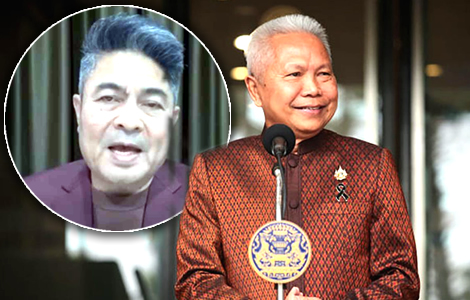
Thailand’s House of Representatives on Sunday elected Bhumjaithai Party stalwart Sophon Zaram as Speaker of the House and president of parliament. The vote came during the chamber’s first sitting after the formal opening of parliament on March 14.
Immediately afterwards, lawmakers began selecting the new parliamentary leadership. Consequently, the speakership vote became the first political test in the newly convened chamber.
Mr Sophon, 66, stood as the candidate of the governing Bhumjaithai Party. Meanwhile, the opposition People’s Party nominated list MP Parit Wacharasindhu. Both candidates were allowed ten minutes to present their visions before voting began.
Sophon and Parit outline visions for parliament before decisive speakership vote in newly convened house
First, Mr Sophon addressed the chamber and outlined his priorities for the role. He pledged to modernise Thailand’s legislative framework. Furthermore, he said outdated and unenforceable laws should be reviewed and removed swiftly.
In addition, Mr Sophon stressed that legislation must remain relevant to current conditions. According to him, new laws must reflect both national priorities and global developments. Moreover, he promised to maintain order and decorum during parliamentary debate.
At the same time, he pledged to carry out his duties impartially. He said his work would serve the nation, religion, the monarchy and the people.
Next, Mr Parit delivered his remarks to the House. However, he acknowledged the government coalition held a strong numerical advantage. Therefore, he said he did not expect to win the contest.
Nevertheless, he used his time to urge reforms in parliamentary conduct. In particular, he called on the next speaker to restore public trust in the institution. Furthermore, he urged the chamber to apply consistent standards to legislation. According to Mr Parit, every bill should face equal scrutiny regardless of the sponsoring party.
Sophon wins speakership with 289 votes as coalition strength dominates the first ballot in new parliament
After both speeches concluded, the chamber moved to the ballot. The result confirmed the governing coalition’s advantage. Mr Sophon secured 289 votes from lawmakers present in the chamber.
In contrast, Mr Parit received 123 votes. Meanwhile, 80 MPs abstained from voting in the contest. In addition, five ballots were ruled invalid during the count.
The House currently contains 498 members of parliament. However, 497 MPs attended Sunday’s session and participated in the proceedings. Therefore, nearly the entire chamber was present for the vote.
The outcome gave Mr Sophon a decisive margin. Consequently, he was formally declared Speaker of the House of Representatives.
As speaker, Mr Sophon will preside over legislative sessions and manage parliamentary procedures. In addition, the position carries the title of president of parliament. Therefore, the office holds significant influence over the legislative agenda and debate.
Following the speakership vote, the chamber moved quickly to select two deputy speakers. First, the Bhumjaithai Party nominated Mallika Jirapunvanit as the first deputy speaker. Ms Mallika represents Lop Buri in parliament. In addition, she currently serves as deputy transport minister in the government.
House quickly installs two deputy speakers as coalition parties divide key parliamentary leadership posts
Meanwhile, coalition partner Pheu Thai nominated Lertsak Pattanachaikul for the second deputy speakership. Mr Lertsak is a member of parliament representing Loei province. No other candidates were nominated for either post.
Therefore, both nominees delivered brief remarks outlining their plans for the role. Afterwards, the chamber formally approved both appointments. Consequently, the leadership structure of the House was completed during the same sitting.
Political observers watched the proceedings closely. Indeed, the speakership vote was widely viewed as a preview of the next political step.
That step will occur on Thursday, March 19. On that day, parliament is scheduled to vote to elect the prime minister. The vote is widely expected to confirm the incumbent leader.
Prime Minister Anutin Charnvirakul currently heads the governing coalition led by the Bhumjaithai Party. Therefore, analysts closely examined the vote totals from Sunday’s session.
In particular, attention focused on the 289 votes received by Mr Sophon. Observers noted that the figure closely matches the coalition’s estimated strength in parliament.
Coalition numbers in speakership vote point to a likely victory for Anutin in March 19 prime minister ballot
The governing alliance includes Bhumjaithai, Pheu Thai and several smaller parties. Together, these parties are believed to command roughly 291 votes in the chamber.
Therefore, the coalition appears to hold a clear majority. Consequently, the numbers suggest that Mr Anutin is likely to secure a similar level of support in the prime ministerial vote.
At the same time, the abstentions recorded during the ballot also drew attention. Eighty MPs chose not to vote in the speakership contest. Therefore, analysts believe a similar pattern could emerge during the vote for prime minister.
Former Democrat Party MP Thepthai Senpong commented on the outcome on Monday. Mr Thepthai previously represented Nakhon Si Thammarat in parliament.
He posted a video clip and a written message on his Facebook page titled “Thepthai Talks Politics.” In the message, he analysed the result of the speakership election.
Former Democrat MP Thepthai says speakership vote signals likely support for Anutin in PM ballot
According to Mr Thepthai, the vote reflects the likely outcome of the upcoming prime ministerial ballot. Specifically, he said the numbers indicate strong coalition support for Mr Anutin.
He estimated the prime minister could receive between 289 and 292 votes. Therefore, he argued the speakership vote closely mirrors the expected result on March 19.
Mr Thepthai also discussed the abstentions seen during the ballot. He suggested that some political parties may repeat the same approach in the next vote.
In particular, he mentioned the Kla Tham Party and the Democrat Party. According to him, those parties could again abstain during the prime ministerial selection.
However, Mr Thepthai strongly criticised the presence of invalid ballots. Five ballots were ruled spoiled during the speakership vote.
He questioned how members of parliament could invalidate their own ballots. According to Mr Thepthai, such errors reflect poorly on the chamber. He said lawmakers should be able to cast their votes correctly in a formal parliamentary procedure.
Mr Thepthai also linked the issue to broader concerns about the quality of the legislature. He argued that mistakes of this nature show declining standards among members of parliament.
Thepthai claims most constituency MPs bought seats in the election he says was plagued by anomalies
Indeed, in a swipe at the February 8th poll, the former MP said that it is likely that 80% of the constituency MPs bought their seats in what is widely seen at this time as an election fraught with anomalies and controversy.
His comments came as debate continues about the speed of political developments following the election. Recently, the Election Commission certified the results of 499 parliamentary seats. Consequently, the certification allowed the new parliament to convene.
However, some critics argue that the political process has moved too quickly. Mr Thepthai referred to survey findings from the National Institute of Development Administration, known as NIDA Poll.
According to the poll, many respondents favour a slower approach to forming a government. Specifically, 44.81 per cent said the formation of a new administration should not be rushed.
Instead, they said authorities should wait for a ruling from the Constitutional Court. The issue concerns the printing of QR codes or barcodes on ballots used in the February 8 general election.
Barcode ballot dispute may trigger court challenge even as parliament pushes ahead with transition
Questions have been raised about the legality of those codes. Therefore, the matter could become the subject of legal proceedings before the Constitutional Court.
Consequently, some commentators warn that parliament could still face legal challenges connected to the election. Despite those concerns, parliamentary procedures have continued.
Sunday’s sitting marked the first full legislative session after the election results were certified. As a result, the election of the speaker became the first major parliamentary decision of the new term.
Now attention shifts to the prime ministerial vote scheduled for March 19. Supporters of the coalition have urged Prime Minister Anutin to proceed with forming a new administration.
They argue that political stability is necessary during a period of global economic pressure. Thailand is currently facing economic challenges linked to developments overseas.
In particular, the conflict between the United States and Iran has affected global markets. As a result, oil prices have risen significantly.
Rising oil prices and global uncertainty add pressure as Thailand prepares for a new government
Higher energy costs are now affecting many economies worldwide. Thailand has also felt the pressure. In addition, the conflict has disrupted international tourism flows.
Tourism remains one of Thailand’s key economic sectors. Therefore, any disruption to global travel has direct consequences for the country. Furthermore, uncertainty in the global economy has increased financial volatility.
Former Justice Minister urges Election agency to act swiftly or risk February 8th poll being seen as fraud
Poll could be voided if court cases underway succeed. Public however has faith in Election Commission
Against this backdrop, Thailand’s political transition is moving quickly. Sunday’s vote established the leadership of the House of Representatives. Consequently, the next step in the process now approaches rapidly.
On March 19, lawmakers will again gather in parliament. During that sitting, they will vote to select the next prime minister. If current expectations hold, the vote will confirm Mr Anutin for his first full term as Prime Minister.
After that, a new cabinet is expected to be sworn in by the end of April, with a policy speech being brought before parliament in May.
Join the Thai News forum, follow Thai Examiner on Facebook here
Receive all our stories as they come out on Telegram here
Follow Thai Examiner here
Further reading:
People’s Party and Pheu Thai Party call for Election Commission to back up Sunday’s election outcome
Outcry as anomalies and errors detected in Sunday’s General Election. Spontaneous protests break out
Trade expert warns the government on barter deals with China being pursued by the Commerce Ministry
Top Commerce Ministry official warns that any US trade deal must wait for new parliament and cabinet
Asean Summit on Monday and Tuesday seen by United States as pivotal to restoring border peace
War to continue says PM Anutin. Dismisses President Trump’s ceasefire talk as a ‘misunderstanding’