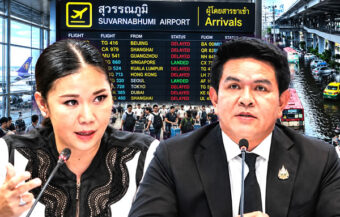
AirAsia boss Tony Fernandes urges Thailand to delay a 53% airport fee hike, warning airlines are under strain from soaring fuel costs, volatile oil prices and geopolitical risk, as carriers raise fares, cut capacity and warn tourism demand could weaken sharply.
Thailand’s aviation industry is under mounting pressure as airlines warn a new wave of cost shocks could hit just as demand remains fragile. AirAsia chief Tony Fernandes is urging the government to delay a 53.4 per cent airport charge hike, saying carriers are still reeling from soaring fuel prices and global instability that could worsen if Middle East tensions escalate and push oil higher again. With fuel now making up around 60 per cent of airline costs, carriers are already raising fares, cutting capacity, and scaling back routes, while regulators tighten fare controls and demand stays highly price-sensitive.
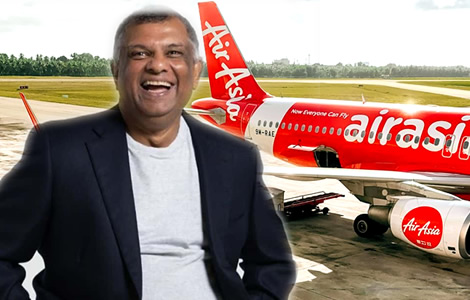
AirAsia chief executive officer Tony Fernandes has urged the Thai government to postpone a planned increase in airport charges. He suggested that the hike in charges be deferred for a further 12 months. He said the move comes during a period of sustained cost pressure across global aviation. Moreover, he warned airlines are already under strain from rising fuel costs and geopolitical instability.
His remarks target a proposal by Airports of Thailand. The authority plans to raise the international passenger service charge from 730 baht to 1,120 baht. The increase is scheduled to take effect on June 20. In total, the adjustment represents an increase of about 53.4 per cent.
Furthermore, Fernandes said the timing is inappropriate given current industry conditions. He stressed that airlines are still recovering from cost shocks. Consequently, he called for a delay of at least one year before implementation.
AirAsia chief urges Thailand to delay airport charge hike amid airline fuel cost pressure concerns rise
At the same time, global energy markets remain highly volatile. Prime Minister Anutin Charnvirakul and Finance Minister Ekniti Nitithanprapas received a briefing in Paris. International Energy Agency experts delivered the assessment on Saturday. They warned oil prices could surge further in July.
However, that scenario depends on escalation in the Middle East conflict. It also depends on whether the Strait of Hormuz remains closed into June. Therefore, the risk outlook remains unstable and fluid.
Meanwhile, crude oil prices have already risen sharply. West Texas Intermediate closed at 96.60 US dollars per barrel this week. That level represents a 53 per cent increase since February 28. Notably, that date marks the start of the conflict.
Still, price increases have been partially contained so far. A ceasefire and ongoing negotiations have slowed escalation. In addition, extra supply from the United States and other producers has helped stabilise markets. Nevertheless, analysts continue to expect further volatility.
IEA warns oil prices could surge as Middle East conflict threatens Strait of Hormuz supply risk rises
Against this backdrop, Fernandes said airlines face direct pressure on operating costs. He noted that global carriers are already increasing fares. Moreover, AirAsia has also raised ticket prices in response.
Importantly, he said, protecting demand must remain the priority. He emphasised that budget travellers are critical to Thailand’s economy. As a result, he warned that higher costs could reduce travel demand.
Furthermore, he said low-cost passengers generate broad economic activity. Therefore, he argued that weakening this segment would impact tourism recovery. He also said demand sensitivity is already visible in current booking patterns.
In addition, Fernandes criticised the existing airport pricing structure. He said low-cost carriers pay the same passenger service charges as full-service airlines. However, their operating models differ significantly. Consequently, he described the system as unfair and inefficient.
AirAsia says rising costs threaten demand as airports charge system seen as unfair to low cost carriers
He further proposed a more flexible pricing framework. He suggested charges should vary by airline type and airport category. Moreover, he said such reform would improve Thailand’s aviation competitiveness.
At the same time, he urged Thailand to expand aviation infrastructure investment. He highlighted logistics systems, cargo facilities, and maintenance capacity. In particular, he pointed to maintenance, repair and overhaul operations. He said these sectors could generate alternative revenue streams.
Furthermore, he said such development would reduce dependence on passenger charges. He added that diversification is essential for long-term resilience. Therefore, he called for accelerated infrastructure expansion planning.
He also stated that airlines must adjust to sustained fuel volatility. He said energy markets remain unpredictable and fast-moving. Consequently, efficiency and cost control have become essential across the sector.
Fernandes urges flexible airport pricing and stronger aviation investment to boost competitiveness
In parallel, Thailand’s Ministry of Transport issued new instructions. It ordered airlines to keep fare increases within legal price caps. The directive followed rising fuel costs across domestic and international operations. Thus, fare regulation remains tightly enforced.
Meanwhile, jet fuel costs have become a dominant expense. Industry data show that fuel now accounts for about 60 per cent of operating costs, whereas previously, the share ranged between 30 and 35 per cent. That shift has occurred rapidly during May.
As a result, airlines have struggled to absorb rising costs. Peak travel demand has intensified financial pressure further. Therefore, carriers have adjusted capacity and routes across networks.
For example, Bangkok Airways has reduced multiple services. Senior vice-president Anawat Leelawatwatana confirmed several schedule cuts. Bangkok–Phnom Penh flights were reduced from three to one daily. Moreover, smaller ATR72-600 aircraft replaced larger capacity planning.
Thailand orders fare controls as fuel costs jump to sixty per cent, forcing airlines to cut capacity
Similarly, Bangkok–Phuket services were cut from six to five daily flights. In addition, Bangkok–Krabi services were reduced from three to two flights per day. These adjustments reflect weak demand and profitability constraints.
At the same time, Bangkok Airways expanded fuel hedging activity. It covered around 25 to 26 per cent of the required fuel volume. It also locked in prices near 80 US dollars per barrel. That level was close to pre-conflict conditions.
However, current market expectations have shifted significantly higher. Forecasts now range between 50 and 170 US dollars per barrel. Consequently, hedging only provides limited protection against volatility.
Furthermore, fuel surcharges cannot fully offset rising input costs. Management confirmed a persistent gap between costs and recovery. Therefore, operational restructuring continues across routes and fleets.
Bangkok Airways cuts routes while fuel hedging limits protection amid volatile oil price forecasts
In response, Bangkok Airways is adjusting its fleet strategy. It plans to add two ATR72-600 aircraft by year’s end. Additionally, it may acquire one or two Airbus A319 or A320 aircraft depending on lease negotiations and demand conditions.
As a result, the fleet could expand to between 22 and 26 aircraft. The airline said smaller aircraft improve fuel efficiency. Therefore, capacity planning is shifting toward lower consumption models.
Meanwhile, Thai AirAsia has raised average fares significantly. New booking prices increased to 2,700 baht from April. Earlier averages of 1,836 baht were insufficient to cover fuel costs. Therefore, pricing adjustments were required.
In addition, May fuel pricing was set at 200 US dollars per barrel. That reflects hedging agreements made during peak pricing in April. Consequently, cost volatility continues to feed into fare structures.
Bangkok Airways expands fleet as Thai AirAsia raises fares amid high fuel price volatility pressure rises
At the same time, Thai AirAsia reduced seat capacity by 12 per cent. The adjustment was made to align with second-quarter demand expectations. Moreover, further reductions remain possible if conditions worsen.
The airline also expanded hedging coverage for fuel costs. It secured about 15 per cent of the required volume at around 50 US dollars per barrel. However, most exposure remains tied to market fluctuations.
Together with industry partners, it has requested excise tax relief. The Airlines Association of Thailand supported the proposal. Consequently, fiscal policy discussions have intensified alongside operational pressures.
Additionally, fuel forecasts remain highly unstable. Estimates range between 50 and 170 US dollars per barrel. That range depends heavily on geopolitical developments and supply disruptions.
Thai AirAsia cuts capacity and delays aircraft deliveries as demand weakens and costs remain volatile
Moreover, Thai AirAsia linked weaker demand directly to rising costs. It said tourism demand is highly price sensitive. Therefore, travel has been classified as non-essential spending.
Meanwhile, the airline postponed delivery of new aircraft. Originally scheduled deliveries were pushed from year end to early next year. That decision reflects surplus capacity in its current fleet.
Thai Airports to become far more expensive after government jacks up service charge by 50% from June
Hardline foreign tourism confirmed by new minster. More charges, shorter visas and mandatory insurance
At present, Thai AirAsia operates 62 aircraft. Of those, 55 were active in the first quarter. Therefore, utilisation remains a key operational concern. Looking ahead, the airline expects recovery during the high season. It anticipates improved demand if fuel prices stabilise. However, profitability remains dependent on fares, costs, and demand recovery.
Join the Thai News forum, follow Thai Examiner on Facebook here
Receive all our stories as they come out on Telegram here
Follow Thai Examiner here
Further reading:
Thai Airports to become far more expensive after government jacks up service charge by 50% from June
Another false dawn? Minister announces delayed tourism levy will be instituted under his watch
Tourism Levy will take at least six months to implement even after a cabinet decision to approve it
New Electronic Travel Authorisation (ETA) system coming soon with a ฿300 tourist levy and insurance
Tragic death of a Taiwanese tourist is another wake-up call for the government on insurance cover
66-year-old Thai woman highlights Thailand’s official tiered pricing in hospitals for foreigners
Negative reaction and horror at Thailand’s plan to charge foreigners more than locals at hotels