Thailand is racing to tap a 23.8 billion baht UN climate fund after Minister Suchart Chomklin secured Cabinet approval for a new climate agency and faster funding approvals. The move comes as El Niño threatens droughts, floods and extreme weather across the region.
Thailand is reshaping its climate funding strategy after Natural Resources and Environment Minister Suchart Chomklin won Cabinet approval for reforms aimed at unlocking access to a new UN-backed fund with more than US$731 million pledged by developed nations. The overhaul creates a dedicated climate agency, streamlines approval procedures and positions Thailand to compete for disaster recovery and adaptation funding as forecasters warn that a strengthening El Niño could raise the risk of droughts, heatwaves and severe weather across the region later this year.
Thailand is positioning itself to tap a new stream of international climate finance after the Cabinet approved sweeping changes to how the country accesses United Nations funding.
The move places a newly empowered climate agency at the centre of efforts to secure money for disaster recovery, adaptation programmes and climate resilience projects.
On June 2, the Cabinet approved proposals from the Ministry of Natural Resources and Environment to strengthen Thailand’s participation in the Fund for Responding to Loss and Damage (FRLD). The mechanism operates under the United Nations Framework Convention on Climate Change (UNFCCC). Officials believe the changes will improve Thailand’s ability to compete for international funding as climate-related risks intensify.
Thailand creates a dedicated climate agency to spearhead access to new UN loss and damage funding
At the heart of the decision is the establishment of the Department of Climate Change Mitigation as the main agency driving Thailand’s engagement with the fund.
At the same time, the Department of Climate Change and Environment was formally appointed as Thailand’s National Authority and National Focal Point for the FRLD. The designation gives the department responsibility for coordinating projects, managing applications and acting as the country’s official channel to the fund.
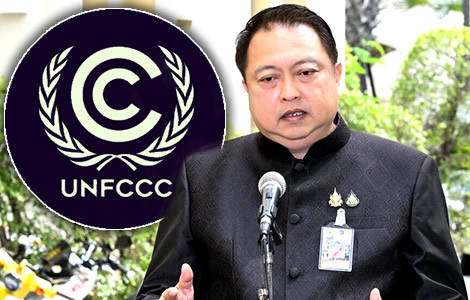
Natural Resources and Environment Minister Suchart Chomklin said the new structure would strengthen Thailand’s access to climate finance. He said the department had been instructed to accelerate preparations and maximise funding opportunities.
“I have instructed the Department of Climate Change and Environment to expedite all efforts to ensure Thailand can access more funding from international funds to prevent and mitigate the impacts of natural disasters on people’s livelihoods, especially vulnerable groups directly affected by the climate crisis,” Mr Suchart said.
Minister says new funding access will strengthen disaster preparedness and climate resilience efforts
The minister said the objective was not only to secure funding but also to strengthen disaster preparedness. He said greater financial support would help reduce the impact of climate-related events on communities and livelihoods. In particular, the government is seeking resources to improve resilience against increasingly severe natural disasters.
As part of this, the Cabinet approved changes to Thailand’s internal approval procedures for climate finance projects. Officials said existing processes were often complex and time-consuming. The revised framework is designed to reduce delays and improve administrative efficiency.
Notably, the reforms extend beyond the FRLD. They also cover the Adaptation Fund and the Green Climate Fund, two major international financing mechanisms supporting climate-related projects in developing countries. Together, the funds support adaptation programmes, resilience projects and environmental initiatives across multiple sectors.
Cabinet transfers climate fund authority to streamline approvals and accelerate project submissions
Deputy government spokeswoman Lalida Persvivatana said the Cabinet had also approved the official Thai name of the FRLD. In parallel, the director-general of the Department of Climate Change and Environment was designated as the authorised signatory for funding applications. That authority covers submissions to the FRLD and other international climate finance mechanisms operating under the UN framework.
Previously, signing authority rested with the permanent secretary of the Ministry of Natural Resources and Environment. Under the new arrangement, that responsibility shifts directly to the department’s director-general. Officials said the change would streamline administration and ensure compliance with international funding requirements.
In response, ministries and agencies seeking climate funding are expected to benefit from faster processing times. Government officials believe a simpler approval structure will improve Thailand’s competitiveness when seeking support from global funding pools.
Mr Suchart said reducing domestic procedures was essential. He argued that shorter review periods would allow Thailand to utilise available funding more effectively.
Suchart says faster reviews will help Thailand attract funding and respond more quickly to disasters
“Reducing domestic procedures and streamlining the project review process will enhance Thailand’s ability to attract foreign investment and utilise these resources to concretely help people cope with the impacts of climate change,” he said.
Separately, the Ministry of Natural Resources and Environment will notify relevant international funds of the Cabinet’s decisions. The notification process is expected to begin immediately. Once completed, Thailand will be able to operate under the revised framework when submitting funding proposals.
The ministry also intends to strengthen national capacity to manage climate-related loss and damage. That effort covers economic impacts, social consequences and quality-of-life issues. Officials said the objective is to improve long-term resilience while strengthening the country’s ability to recover from climate-related shocks.
The FRLD was established under the UN climate framework to support developing countries facing losses and damage linked to climate change. The mechanism emerged after years of negotiations between developed and developing nations. It was designed to address growing demands for financial assistance following increasingly costly climate-related disasters.
Nations pledge billions as Thailand moves to compete for the first round of UN climate funding support
Developed countries have pledged more than US$731 million to the fund. That amounts to approximately 23.8 billion baht. The fund is currently accepting its first round of project proposals. Applications will remain open until June 15.
For Thailand, the timing is significant. The country now has a formal coordinating structure in place during the fund’s first operational phase. Officials believe this will strengthen its ability to compete for available resources.
Among the areas likely to benefit are disaster management projects, recovery programmes and water resource initiatives. Climate adaptation measures are also expected to feature prominently. On another front, assistance programmes for communities affected by floods, droughts and severe weather could become eligible for support.
WMO warns El Niño is returning as governments prepare for higher climate and disaster risks
The Cabinet’s decision comes as international agencies warn of worsening climate conditions. This week, the World Meteorological Organisation said El Niño conditions are developing in the tropical Pacific. The agency estimated an 80% probability of emergence between June and August 2026.
Beyond that, the likelihood exceeds 90% through at least November. The organisation warned that El Niño can increase the risk of droughts, heatwaves and periods of heavy rainfall across many regions.
World Meteorological Organisation Secretary-General Celeste Saulo urged governments to prepare for heightened risks on land and in the oceans. Her warning adds urgency to efforts by countries seeking access to climate funding and disaster recovery resources.
UN climate treaty framework remains central as Thailand seeks greater access to global funding
Meanwhile, the UNFCCC remains the world’s principal climate treaty and the foundation of international climate negotiations. Signed in 1992, it now includes 198 parties. The convention also provides the legal framework for major climate agreements and international funding mechanisms.
Under its principle of common but differentiated responsibilities, all countries are expected to address climate change. However, developed nations are expected to lead because of their historical contribution to greenhouse gas emissions.
Government targets failing manufacturing base with a carbon tax on output to fight climate change crisis
Oppressive sunshine and heat teach Thailand a lesson this year on what climate change might mean for it
Against that backdrop, Thailand is moving to secure a stronger position within the global climate finance system. The Cabinet’s decision creates a clearer chain of authority, reduces administrative barriers and strengthens links with international funding bodies.
As climate risks continue to rise, officials hope the new framework will improve access to funding for disaster recovery, adaptation and resilience projects across the country.
Join the Thai News forum, follow Thai Examiner on Facebook here
Receive all our stories as they come out on Telegram here
Follow Thai Examiner here
Further reading:
Lack of coherence in government policy is the root cause of Thailand’s massive economic problems
Disturbing questions that must be confronted over Thailand’s reeling economy are China and EV cars
First-quarter GDP growth surprises analysts based on higher tourism and consumer spending growth
Central bank holds interest rates. Economy will grow 2.6% in 2024 as Srettha pushes home ownership
Economy unlikely to grow in first quarter as Thai manufacturing crumbles. Hard choices ahead