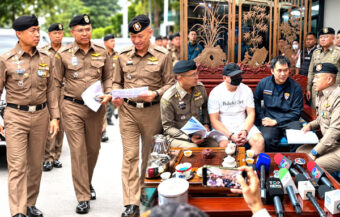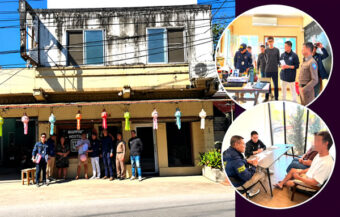
Parliament voted 308-126 to block a DSI move against Songkhla MP Chonnapat Naksua in a gambling probe linked to billions of baht. Rangsiman Rome blasted the decision, warning it shields serious allegations and risks undermining justice.
A political firestorm erupted on Friday after MPs voted 308-126 to block a Department of Special Investigation bid to question Kla Tham Party MP Chonnapat Naksua in an online gambling probe linked to billions of baht and allegations of police protection. The decision sparked an immediate backlash from People’s Party MP Rangsiman Rome, who accused Parliament of shielding a politician facing serious organised crime allegations, damaging public trust and risking the integrity of the justice system, while warning authorities to prepare now to ensure the Songkhla MP faces investigators when parliamentary immunity ends in July.
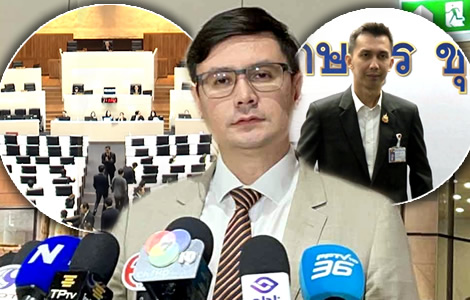
People’s Party MP Rangsiman Rome on Friday launched a strong attack on a House of Representatives decision that blocked a Department of Special Investigation (DSI) request to question Kla Tham Party MP Chonnapat Naksua in a major online gambling investigation.
The House voted 308 to 126 against the request, while two MPs abstained. As a result, DSI investigators cannot summon Mr Chonnapat during the current parliamentary session. Instead, they must wait until Parliament adjourns in July. The request had been submitted under Article 125 of the Constitution.
Moreover, it followed instructions from the Attorney General for investigators to summon the Songkhla MP to acknowledge charges and answer questions in the case.
House blocks DSI request to question Chonnapat as Parliament delays action until the July recess
The investigation centres on an alleged online gambling network. Furthermore, the case is understood to involve assets worth billions of baht. In addition, allegations have emerged of collusion involving elements of the Royal Thai Police.
Those allegations concern alleged efforts to protect Mr Chonnapat. However, Mr Rangsiman stressed that Parliament was not being asked to determine guilt or innocence. Instead, lawmakers were being asked whether legal procedures should be allowed to proceed.
According to the Bangkok party-list MP, Friday’s decision represented a serious failure of judgment by the House.
Speaking after the vote on May 29, Mr Rangsiman said public trust had been damaged. Indeed, he argued that trust in both Parliament and law enforcement had suffered another setback. He said lawmakers had chosen to protect a politician facing serious allegations rather than facilitate an investigation.
Rome says vote damages public trust as MPs reject request tied to online gambling allegations
Consequently, he warned that public confidence would continue to decline. “The public has definitely lost trust,” he said. Nevertheless, he repeatedly emphasised that his criticism was directed at the decision itself rather than any finding of guilt.
Mr Rangsiman argued that Parliament had relied too heavily on precedent. However, he said precedent alone should not determine every case. Instead, lawmakers should examine the facts and seriousness of each matter. According to him, this case differs significantly from others previously considered by Parliament.
Therefore, he rejected attempts to compare it with cases involving political disputes or democratic activism. He argued that allegations linked to organised crime and online gambling required a different approach. Moreover, he said, refusing the DSI request effectively protected an individual accused of involvement in transnational criminal activity and other offences. Consequently, he warned that Parliament had damaged its own standing.
The People’s Party MP also raised broader concerns about illegal gambling and political influence. He said many politicians may not fully appreciate the extent of the problem. Furthermore, he warned that illegal gambling networks could expand their influence if institutions failed to act decisively.
MP warns that organised crime and gambling networks gain from parliamentary protection
According to Mr Rangsiman, Parliament should be especially careful when dealing with allegations involving illicit financial activity. Instead, he said, Friday’s vote sent the wrong signal. As a result, he described the outcome as disappointing and harmful to Parliament’s credibility.
Attention then turned to the possibility that Mr Chonnapat might not be available once parliamentary immunity expires. Consequently, Mr Rangsiman urged authorities to prepare immediately. He called on the government, the DSI and police agencies to increase vigilance.
In particular, he urged close monitoring of border areas, immigration checkpoints and natural crossing routes. However, he stressed that these measures should be viewed as precautions rather than accusations. Nevertheless, he argued that law enforcement agencies should not ignore potential risks.
Mr Rangsiman noted that similar situations had occurred before. In some cases, suspects were never apprehended. Furthermore, some individuals remained at large despite court rulings. Therefore, he said authorities should begin preparations well before Parliament adjourns.
Rome urges border surveillance and advance planning to prevent any possible future escape
According to him, there is no excuse for delay because the parliamentary timetable is already known. Indeed, lawmakers already know when the current session will end. As a result, police and investigative agencies have ample time to prepare operational plans.
He also pointed to Mr Chonnapat’s position as a southern MP. Songkhla is located relatively close to international border areas. Therefore, Mr Rangsiman argued that authorities should pay particular attention to the region.
While he said he hoped no escape attempt would occur, he insisted that officials must remain alert. Moreover, he warned that any future failure would raise serious questions. If a suspect were able to leave the country, he said, responsible officials should be held accountable for negligence.
Mr Rangsiman also warned of wider consequences for the justice system. According to him, politicians accused of criminal activity should face the same legal standards as everyone else. Therefore, he argued that Parliament must avoid creating the perception of special treatment. If legal proceedings are ultimately frustrated, he said, lawmakers cannot deny their role in the outcome.
Furthermore, he warned that public faith in the justice system could suffer additional damage. In his view, Parliament shares responsibility whenever its decisions affect the ability of authorities to pursue legal action.
Concerns grow over cooperation and accountability as the legal process remains temporarily blocked
The People’s Party MP additionally questioned whether Mr Chonnapat would fully cooperate with investigators once the parliamentary session ends. His concerns stemmed from previous experience. During his time as chairman of the House National Security Committee, he invited Mr Chonnapat to attend committee meetings.
However, the Songkhla MP did not appear. Furthermore, Mr Rangsiman said no formal explanatory letter was submitted. Consequently, he said he could not confidently predict whether Mr Chonnapat would voluntarily cooperate with investigators in the future.
The controversy originated from a formal DSI request submitted to Parliament. The matter was debated during a House sitting chaired by Speaker Sophon Saram. Lawmakers considered whether investigators should be permitted to summon Mr Chonnapat during the parliamentary session.
Before the vote, MPs from several parties delivered speeches supporting and opposing the request. As a result, the debate highlighted competing views on parliamentary immunity, constitutional protections and public accountability.
Supporters argue that serious allegations justify ending immunity protections for serving MPs
Among those supporting the DSI request was People’s Party MP Nattawut Buaprathum. He argued that Parliament should establish a new democratic precedent. Accordingly, he supported allowing Mr Chonnapat to enter the judicial process immediately.
He said parliamentary immunity should not prevent legal scrutiny in serious cases. Furthermore, he argued that such an approach would strengthen confidence in democratic institutions. He also stated that if members of his own party faced similar circumstances, they should likewise submit to the legal process.
Democrat Party list MP Sathit Wongnongtoey also backed the request. He noted that the allegations predated the last general election. Moreover, he said there was no evidence of political harassment by the executive branch.
According to Mr Sathit, investigators had followed procedures designed for cases involving influential individuals. Furthermore, he argued that such investigations require extensive evidence before action can be taken. Therefore, he said Parliament should not obstruct the process.
Opponents insist constitutional safeguards outweigh demands for immediate legal proceedings
Mr Sathit also warned about reputational consequences. If Parliament appeared to protect MPs facing serious allegations, public confidence would suffer. Moreover, he argued that international perceptions of Thailand’s democratic institutions could be affected.
He noted that those facing investigation had publicly expressed willingness to cooperate with legal authorities. Consequently, he saw little justification for preventing investigators from proceeding. For that reason, the Democrat Party supported granting the DSI request.
Opponents of the request focused primarily on constitutional principles. Bhumjaithai Party list MP Nanthana Songprach argued that Article 125 exists to protect the functioning of Parliament. It does not place MPs above the law, she said.
However, she maintained that constitutional safeguards must be preserved. Since the parliamentary session is close to ending, she argued that only a short delay would result. Therefore, legal proceedings could continue after adjournment without undermining parliamentary operations.
According to Ms Nanthana, summoning MPs during the session could interfere with legislative duties. Consequently, she argued that Parliament should continue applying long-established principles. While acknowledging public demands for transparency, she said lawmakers must also protect institutional safeguards. Therefore, she supported maintaining parliamentary protections until the session concludes in July.
Chonnapat accepts the House decision while maintaining support for parliamentary protection
Prachachart Party MP Sukarno Mata adopted a similar position. He argued that Parliament had consistently applied the principle that MPs should not acknowledge charges before the DSI during an active session.
Therefore, he said, established standards should be maintained. However, he also requested clarification from Mr Chonnapat regarding whether he intended to rely on parliamentary immunity. His intervention reflected concerns about balancing precedent with public expectations.
Economic Party list MP Chris Potranan likewise defended parliamentary protections. He argued that such safeguards exist to prevent potential harassment of lawmakers. Furthermore, he cited hypothetical situations involving opposition politicians scrutinising the government.
However, he also urged Mr Chonnapat to demonstrate a willingness to enter the judicial process voluntarily. According to Mr Chris, cooperation after the parliamentary recess would help address public concerns.
Final vote leaves DSI waiting until July as debate over immunity and accountability intensifies
Before the vote, Mr Chonnapat addressed the chamber directly. He said he respected parliamentary principles and would accept the House’s decision. Moreover, he stated that he was prepared to enter the legal process.
However, he maintained that constitutional protections for MPs should continue during the parliamentary session. He also acknowledged that legal proceedings would eventually move forward once Parliament adjourned.
Parliament to decide on DSI request to quiz Songhla MP Chonnapat who police link to organised crime
Corruption killer submits evidence of criminality within the Thai Police to the National Police Chief
Rangsiman Rome sued for ฿100M by Deputy Prime Minister Thamanat Prompow for defamation
Shortly after the debate concluded, lawmakers cast their votes. At 12.37 pm, the result was announced. The House rejected the DSI request by a margin of 308 votes to 126, while two MPs abstained. Consequently, investigators must now wait until the parliamentary session ends before summoning Mr Chonnapat.
The decision immediately prompted criticism from Mr Rangsiman. Furthermore, it intensified debate over parliamentary immunity, accountability and the handling of serious criminal allegations against elected representatives. For now, however, the House’s decision stands, and any questioning by investigators must wait until after Parliament rises in July.
Join the Thai News forum, follow Thai Examiner on Facebook here
Receive all our stories as they come out on Telegram here
Follow Thai Examiner here
Further reading:
Parliament to decide on DSI request to quiz Songhla MP Chonnapat who police link to organised crime
Bombshell as former Police Chief Torsak and 200 senior officers are linked to corruption by board
High powered, secretive meeting chaired by PM agrees robust action against Cambodian networks