Thailand’s foreign tourism is in crisis as arrivals fall 9.8%. Confusion over entry rules, arbitrary refusals and stricter screening spark anxiety. Industry leaders demand clear guidance to protect visitors, confidence and the kingdom’s key revenue generator.
With a disappointing year looming for foreign tourism, industry leaders are urging the government to clarify screening and entry rules for visitors as reports emerge of arrivals being turned away at resorts and hotels. The alarm follows the case of a young woman refused entry last week at Don Mueang Airport who later entered Thailand on Tuesday, December 9th, at Suvarnabhumi Airport after flying from Vietnam. The concerns rise as Thailand faces a protracted war with Cambodia, a weakening dollar against the baht and political upheaval affecting the country’s stability, while the Tourism Authority of Thailand (TAT) this week confirmed that arrivals for 2025 were down 9.8%.
Thailand’s foreign tourism industry has issued its sharpest warning of the year to government. Operators say it must stabilise border procedures immediately. They argue that the current nationwide crackdown is creating uncertainty and doubt. They also say this comes at the worst possible moment, as arrivals fall and travellers report confusion at entry points.
They stress that unclear rules now threaten the kingdom’s all-important foreign-exchange earning sector. Tourism still supports up to 20% of employment. It also provides essential income to lower-wage workers and the self-employed.
The industry says the climate has become unstable and unpredictable. It warns that even more travellers will pick other destinations if the situation continues.
Confusion intensifies as Don Mueang refusal case exposes inconsistent enforcement across airports
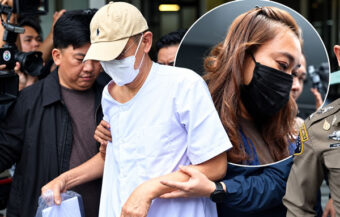
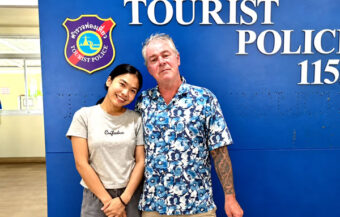
The alarm intensified after a case at Don Mueang Airport last week. A young foreign tourist was refused entry. Officers cited insufficient funds. However, the woman said no reason was given at the time.
She said airport security later informed her of the funding requirement. She also said the amount was unclear and never stated. She returned to Vietnam and re-entered Thailand the next day through a different airport. She said she was admitted without difficulty.
Her case spread quickly on social media. It became a symbol of inconsistency. The tourism sector says this inconsistency destroys confidence. It says travellers cannot plan trips if entry rules differ from airport to airport.
Funding rules are a key point of confusion. The government dropped these requirements in 2023. It did so to make entry easier and accelerate recovery. It later launched a liberalised visa regime under the Pheu Thai-led government in 2024.
However, the same funding requirements were reinstated in May 2025. Many tourists did not notice the change. Industry leaders say communication was insufficient.
Crackdowns escalate after grey-capital scandal as operators warn tourists now fear arbitrary refusals
Meanwhile, the present government took office in September. It ordered a series of intensive crackdowns. These operations are led by the Tourist Police and the Immigration Bureau. Officials say the goal is to remove illegal workers, overstayers and cybercriminals. They say the campaigns do not target genuine tourists. They also say short-stay visitors should face no issues.
Tourism operators, however, dispute the practical effect. They say tourists are being refused entry without a clear explanation. They say travellers now expect possible delays or interrogations. They also say many genuine visitors are uncertain about what documents to prepare.
At the same time, Thailand is facing a separate security crisis. A grey-capital scandal linked to Cambodia emerged in recent months.
Several senior government figures have been named in the fallout. After that, authorities discovered that scam-compound workers had entered Thailand repeatedly. Some had been deported before. These revelations triggered urgent tightening of entry screening.
Tougher screening triggered by TDAC rollout and grey-capital leaks creates confusion as arrivals weaken further
Police had already launched an online arrival card on May 1. It is called the Thailand Digital Arrival Card, or TDAC. It pre-screens passengers before they land. However, the revelations about scam-compound workers prompted even stricter procedures. The Immigration Bureau spent a full day reinforcing screening rules after the scandal broke in November. Officers were told to tighten checks again.
Tourism operators say the result is confusion at airports. They say travellers now face unclear expectations about funds, itinerary details or prior visits. They note that many tourists visit Thailand multiple times per year. They also note that frequent visits have long been normal for expats, retirees and long-stay tourists. The new scrutiny has unsettled these groups.
Arrivals are already under pressure. The baht remains strong. Indeed, it continues to appreciate against the baht, ending Thursday at ฿31.64 to the US dollar. Analysts link this to money flows connected to gold buying and scam centre money laundering.
Outbound airport taxes are due to rocket by 53% next year. Processing times are slower. Therefore, travellers now compare Thailand unfavourably to other destinations in Southeast Asia.
Visitor numbers slip 9.8% as nationwide arrests fuel apprehension and weaken Thailand’s tourism outlook
In the meantime, the security crackdown and arrests of foreigners across the country are creating an atmosphere of apprehension.
Arrivals this year reflect the weakness. As of December 10, Thailand recorded 30.2 million foreign visitors. This is a 9.8% drop from 2024, when it was 33.48 million. Authorities expect only 1.8 million more by year-end. Notably, from December 1st to December 7th, 2025, the figure was 669,691. This gives hope of a late-year recovery.
Malaysia, China, and India remain the top source markets.
Tourism operators say these numbers are fragile. They say the sector has still not recovered from the 2020 collapse. They add that the government must not create new barriers. They also warn that confusion spreads quickly online. They say every denial at a border post damages Thailand’s image.
The immigration crackdown continues regardless. Orders came from senior police leaders, including police chief Pol. Gen. Kittirat Phanphet. They instruct officers to locate and arrest foreigners suspected of illegal business operations. They also directed attention to groups linked to cybercrime, call-centre fraud, money laundering and drug distribution.
High-profile arrests highlight risks as police insist strict screening is vital for public safety
Several recent arrests show the scope of what is happening. While most expats and genuine tourists would see benefit in robust law enforcement, the ongoing crackdown presently appears relentless.
Undeniably, it is fostering anxiety. Firstly, to the extent of criminal activity surrounding foreigners and secondly, the fear of being found to be involved in any activity, no matter how trivial, which may be outside the law.
In Bangkok, police arrested a Singaporean national aged 32. He lacked a passport and had no entry record. Singaporean authorities confirmed he is wanted on a red notice. He is accused of running a call-centre fraud network. Investigators say the syndicate extracted funds from hundreds of victims. Raids earlier this year in Singapore and Cambodia seized assets worth more than S$2.5 million.
In another operation, officers raided a resort in eastern Bangkok. They arrested 17 suspected scam operators. Five Chinese nationals entered Thailand illegally. Twelve had no entry record. Five overstayed their visas. Police say the group fled Myanmar’s Shwe Kokko zone after a crackdown there. They say the group moved operations into Thailand.
In a separate case, police arrested a Nigerian national in a Bangkok apartment. They seized cocaine, ecstasy and cash. Officers say he sold drugs to foreign tourists. The suspect named another foreigner as his supplier. Police say the investigation continues.
Officers say these operations justify strict screening. They say similar groups seek to enter Thailand hidden among tourists. They insist the crackdown is essential for public safety. They also insist that legitimate tourists should have nothing to fear.
Viral refusal clips deepen global anxiety as reactivated funding rules spark more uncertainty for travellers
Tourism operators say fear exists anyway. They say tourists see viral clips of refusals and detentions. They say travellers fear being asked for financial proof with no warning. They say they fear missing connecting flights due to long immigration delays. They note that a single unclear case can reach millions of people online.
They also highlight the reactivation of funding requirements. They say tourists are often unaware of these minimums. They say enforcement varies. They note that officers can refuse entry at their discretion. They say this discretion is now the centre of traveller concern.
The Don Mueang case reinforces that concern. The woman said she received no explanation. She said security staff—not Immigration—revealed the reason. She said she was not given a chance to correct the issue. She said officers told her to fly back and try another airport. She did so. She re-entered Thailand the next day without issue.
Her video triggered immediate questions. Operators say such cases spread faster than official responses. They say this creates an information vacuum. They say tourists then assume inconsistent conduct is common. They fear this impression will affect high-season travel.
Frequent-visitor scrutiny threatens key arrival segments as rivals offer simpler rules and coherent screening
Analysts note another trend. During the pandemic, it was learned that Thailand’s ‘regular visitor’ tourist market is merged more closely with its expat and long-stay visitor base. Many travellers now enter multiple times a year. They do so for short visits, business, remote work or transit. Operators say these groups help maintain overall arrival numbers. They say strict enforcement of multiple entries could reduce these trips. They warn that a drop in these groups will lower occupancy and revenue.
The industry says Thailand already faces strong competition. Vietnam offers a simpler entry. Malaysia offers longer stays. Indonesia offers predictable screening at airports. Operators say these comparisons matter because travellers have choices.
They ask the government to stabilise procedures. They say TDAC provides enough pre-arrival data. They say standardised protocols can reduce officer-specific variation. They stress that clarity is vital during peak travel months.
Arrivals in December will determine year-end performance. Operators say the numbers remain fragile. They say uncertainty can trigger last-minute cancellations. They also say Thailand cannot rely on walk-in demand.
Industry urges clarity as police maintain strict stance while tourism confidence erodes further
Police continue to appeal for public cooperation in their crackdown. They encourage citizens to report suspicious foreigners. They also say enforcement will remain strict. They reiterate that they do not target tourists.
Tourism leaders say enforcement and clear communication can coexist. They say the current problem is a lack of predictable guidance. They emphasise that travellers need to know how much money to show, what documents to prepare, and what counts as excessive entry frequency.
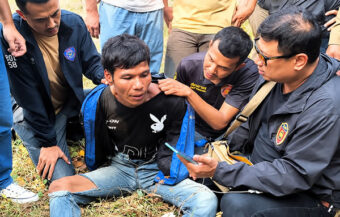
Nigerian drug dealer arrested in Inthamara area of Bangkok in sting operation with cocaine and ecstasy
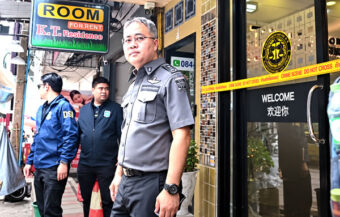
Woman denied entry to Thailand on proof of funds criteria. Rule brought back in May to tighten security
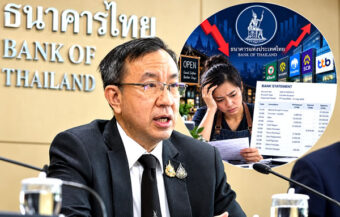
Thailand’s foreign tourism sector in crisis as visitor decline accelerates. 9.8% fewer arrivals than 2024
Thailand online TM 6 goes live for new arrivals after Thursday. Now paper TM6 forms will also be allowed
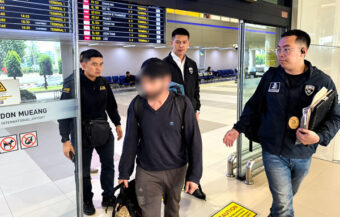
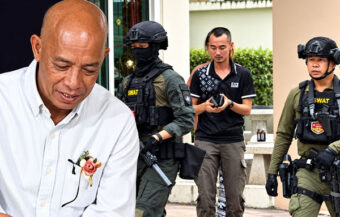
Scam centre volunteer fleeing Burma arrested in Mae Sot. Previously deported he had returned in August
They warn that uncertainty will push travellers elsewhere. They say Thailand’s tourism base remains significantly weaker than before 2020. They say confidence must be protected and indeed fostered. In effect, tourist goodwill.
Their message to the government is direct. Stabilise entry procedures. Communicate rule changes clearly. Prevent inconsistencies at airports. Maintain strict enforcement against criminals, but protect predictability for tourists.
The sector says the stakes are high. It says the kingdom cannot afford further shocks. It also says tourism remains the one sector capable of quick recovery if confidence is stable. That confidence, it says, has begun eroding now. Indeed, it has been an annus horribilis for Thailand’s critically important foreign tourism sector.
Join the Thai News forum, follow Thai Examiner on Facebook here
Receive all our stories as they come out on Telegram here
Follow Thai Examiner here
Further reading:
Frank guidance from Tourism Authority of Thailand (TAT) in confronting tourist scam centre fears
Immigration Bureau confirms Belarusian national travelled through Thailand at Suvarnabhumi Airport
Horror story of Belarusian woman taken in Bangkok by Burmese scam compound gang being investigated
Cambodian scam, centre bosses target young Thai nationals seeking better pay due to the poor economy
United States, South Korea and United Kingdom act against Cambodian scam industry with Thai tie-ins
Ben Smith affair & allegations of links to Cambodian scam centres continues to rage in parliament
Defiant Rangsiman Rome warns he’s not just fighting a defamation case but for the future of Thailand