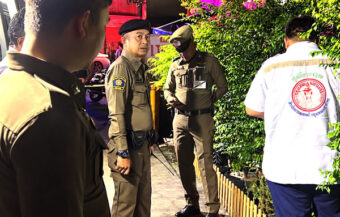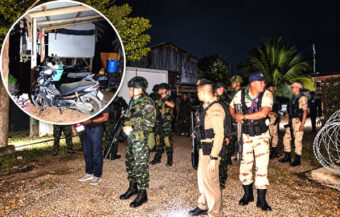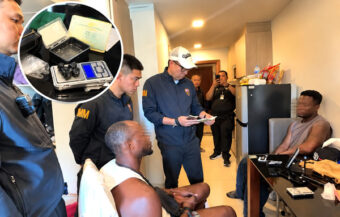
French drug fugitive “Bones” was arrested in Pattaya after fleeing Europe, ending an international Interpol manhunt. Thai police say the Syrian-born French national was wanted for large-scale drug and weapons trafficking linked to a Paris cartel.
A 31-year-old French gangster originally born in Saudi Arabia was arrested in a Pattaya Immigration Bureau operation on Monday. The detention of “Bones,” also known as Soufi Ayad, followed an Interpol red notice issued by French police. The suspected drug cartel figure is wanted in France for large-scale drug trafficking and arms importation. His arrest forms part of a wider international law enforcement campaign targeting gangs supplying the rising global demand for illicit narcotics.
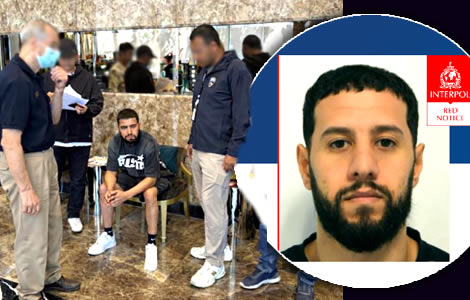
Thai police arrested a French fugitive in Pattaya on Monday, January 12, 2026, following an international manhunt. According to police, the suspect was wanted for large-scale drug smuggling between Europe and the Americas. The arrest was carried out by Immigration Bureau officers in the resort city. However, the man was not fully identified. Reports said he was approximately 32 years of age.
Certainly, it is not clear if he entered Thailand under a false passport or identity. Undeniably, he was listed across the world as wanted by Interpol.
His real name on the Interpol notice is Mr Soufi Ayad. According to Interpol records, he was 31 years old at the time of arrest. His date of birth was listed as January 15, 1995. Records also stated he was born in Homs, Syria. On Monday, however, the Royal Thai Police publicly identified him only by his nickname, “Bones.”
Suspect entered Thailand in December, hid in Pattaya. Tracked for an active Interpol Red Notice
According to the wanted notice, Ayad is a Syrian-born French national. On Monday, Immigration Bureau officials confirmed he entered Thailand in December through Suvarnabhumi Airport. Immediately afterwards, he travelled to Pattaya. There, police said, he went into hiding. According to authorities, he fled to the resort city in December to evade arrest in Paris.
Police said Ayad remained in Pattaya while planning onward travel. Specifically, investigators said he was preparing to leave Thailand for a third country. However, officers moved to arrest him before those plans could be carried out. As a result, he was taken into custody without resistance.
According to Thai police, Ayad was the subject of an active Interpol red notice. The notice had been issued at the request of French authorities. An Interpol red notice signals a national arrest warrant or court order. It also requests cooperation from police agencies worldwide. In this case, officials said, the notice played a key role in tracking Ayad’s movements.
French authorities linked Ayad to the importation of drugs and arms into France. According to French police, he is believed to be part of an influential Paris-based crime gang. The group, investigators said, operates across multiple regions. In particular, it is active in global drug shipments.
French police describe Paris-based cartel and outline extensive narcotics and weapons charges
Police described the gang as a major drug cartel. According to French officials, it holds influence in Paris and its surrounding areas. Authorities said the network uses international routes to move narcotics and weapons. As a result, it has drawn sustained attention from law enforcement agencies.
The Interpol red notice detailed a wide range of alleged offences. These included unauthorised importation of narcotics. Additionally, they included possession, transport, and acquisition of drugs. Authorities also cited unauthorised offering or transfer of narcotics.
Meanwhile, the notice listed extensive weapons-related charges. According to the document, these included unauthorised possession of Category B war materiel. That category covers weapons, ammunition, and essential components. Authorities also cited unauthorised acquisition of Category B weapons.
Furthermore, the notice alleged the transport of Category B weapons without valid authority. According to investigators, at least two people were involved in such transport. Additional charges involved Category C weapons and ammunition. These included acquisition and possession without declaration.
Notice lists multiple weapons categories as police track movements, prepare arrest and confirm custody
Moreover, authorities cited the transport of Category C weapons without authority. The notice also listed violations involving Category D weapons. According to police, these transports involved at least two persons.
In addition, the notice included a refusal to surrender to judicial authorities. It also cited failure to respect court orders. Authorities further referenced the use of cryptology methods. However, no technical details were disclosed.
According to Thai police, the red notice allowed authorities to monitor Ayad’s arrival in Thailand. Subsequently, officers tracked his movements after entry. Once his location was confirmed in Pattaya, police prepared the arrest. Officials did not disclose surveillance methods.
In Bangkok, senior officers confirmed the arrest later that day. According to police statements, Ayad was wanted for alleged crimes spanning several jurisdictions. These activities, it is understood, involved Europe and the Americas. As a result, the case was treated as a high priority.
Arrest placed in global cartel context as police cite UAE hubs and earlier Phuket gangland killing
Authorities placed the arrest within a broader international context. According to law enforcement sources, many global drug cartels operate across continents. At present, several use the United Arab Emirates as a base. These networks, police said, mirror international business structures.
According to investigators, such organisations rely on logistics hubs, financial systems, and international travel routes. Consequently, suspects often move across multiple countries. Thailand, police noted, has previously been used as a transit or hiding location.
Intelligence sources also referenced earlier regional cases linked to transnational crime. In June 2020, a cartel-linked killing occurred in Phuket. The victim was a 32-year-old man of Indian origin. He was identified as Jimi Sandhu.
According to police, Sandhu was a Canadian citizen of Indian origin. He had been deported from Canada in 2016. Subsequently, he was deported from India in 2018. Afterwards, investigators said, he lived between Dubai and Southeast Asia.
Canadian hitman extradited after Phuket murder as courts expose structure of transnational drug networks
In particular, Sandhu spent time in Cambodia, police said. He was later gunned down in a targeted hit in Phuket. The killing drew international attention due to his criminal background and movements.
Later, a Canadian former military expert was extradited from Canada to Thailand in connection with the case. The suspect was identified as Matthew Dupre. According to court records, Dupre pleaded guilty to the killing in Bangkok in 2024.
Police said such cases highlight the structure of international drug networks. According to authorities, kingpins manage shipments of illicit drugs and other cargo worldwide. These operations face sustained pressure from national police forces.
U.S. support, corruption concerns and cooperation cited as police put pressure on organised crime
Moreover, officials said enforcement efforts are often supported by U.S. authorities. At the same time, investigators noted that corruption in some regions continues to facilitate operations. These include parts of the Middle East, Africa, Asia and South America.
According to Thai police, the arrest of Ayad reflects ongoing international cooperation. As a result, authorities said suspects linked to organised crime face increasing difficulty evading capture.
Black Friday for 2 French men. Thai police swoop on Bangkok based pervert and drug trafficker in exile
Phuket tourist murder on Friday night was an international gangland hit on a known drug player
Nonetheless, the arrest also highlights the sophisticated and intentional nature of drug distribution across the world. These gangs, often formed by immigrant groups in Western countries, work with corrupt and influential networks to cater to rising demand for illicit narcotics such as cocaine, methamphetamine, ketamine and heroin.