Thailand tightens airport screening after India’s Nipah outbreak, reviving COVID-era controls. Officials warn the bat-linked virus kills up to 70%, is not airborne, and spreads by contact. No cases found, but surveillance is ramped up nationwide.
The Thai Ministry of Public Health has imposed heightened screening measures on foreign tourists at the country’s main international airports. It comes following the Nipah virus outbreak in India. This virus, unlike COVID-19, is not airborne but is linked to secretions from fruit bats, particularly through contaminated fruit that can enter the food chain. The Department of Disease Control has issued a hotline for public inquiries. On Sunday, leading Thai virologist Dr Yong Poovorawan said widespread transmission is unlikely, although with a fatality rate of 50–70%, authorities remain on high alert.
Thailand is tightening public health controls as concern grows over the Nipah virus outbreak in eastern India. The response follows confirmed cases in West Bengal. Authorities describe the measures as precautionary.
Nipah virus spreads through bodily fluids and close physical contact. It does not spread through the air. However, the disease is considered highly lethal. Reported fatality rates range from 50 to 70 per cent.
On Sunday, Thailand’s top virologist addressed the emerging risk. Dr Yong Poovorawan spoke publicly on the situation. He linked the virus to fruit bats. He also warned of risks if the virus enters animals or food systems.
Top virologist outlines Nipah risks as Thailand revives COVID-era controls and airport measures
Previously, Dr Yong advised the government during the COVID-19 crisis. Therefore, his remarks carried institutional weight. He said the virus is not airborne. However, he urged continued caution.
The disease causes severe infection. It often leads to pneumonia. In earlier outbreaks, encephalitis was also reported. Consequently, health authorities consider the virus dangerous despite limited transmission.
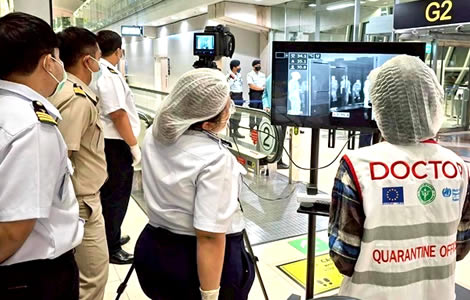
On Monday, the Ministry of Public Health confirmed renewed controls. Former COVID-19 screening protocols were reactivated. These measures target potential imported cases. As a result, airport surveillance has intensified.
Specifically, screening was increased at international airports. Suvarnabhumi and Don Mueang were prioritised. These airports handle the highest passenger volumes. Therefore, they were selected for early action.
Thailand screens West Bengal arrivals as disease control protocols are formally reactivated
Meanwhile, disease control officers began focused screening of travellers. The screenings target passengers arriving from West Bengal. The measures took effect on January 25, 2026. Authorities described the rollout as orderly.
Additionally, checkpoints were established within airport arrival zones. Officers conducted health assessments under existing disease frameworks. According to officials, cooperation from travellers was high. Immigration and airport staff assisted operations.
At the same time, the Department of Disease Control opened a hotline. The number is 1422. It operates daily from 8:00 a.m. to 8:00 p.m. The hotline provides disease information and guidance.
Meanwhile, officials continued monitoring international developments. The outbreak in India remains under observation. No confirmed human cases have been detected in Thailand. Nevertheless, surveillance remains active.
Virologist details Thailand’s exposure risks as fruit bats are widespread and linked to contamination
Dr Yong expanded on the scientific background the same day. He said Thailand faces inherent exposure risks. This is because fruit bats live nationwide. They are common in both urban and rural areas.
According to Dr Yong, bats often inhabit temples and orchards. They also live near residential communities. Therefore, environmental exposure risks exist. Food contamination remains a concern.
Previously, Nipah virus disease was first identified in 1998. The initial outbreak occurred in Malaysia. Specifically, Perak state recorded the largest outbreak. The virus later spread to Singapore.
During that outbreak, 265 cases were reported. Of those, 108 patients died. Symptoms included high fever. Encephalitis was also common. Investigations later confirmed fruit bats as carriers.
Past outbreaks show Nipah transmission from bats to pigs and humans before spreading across South Asia
At that time, transmission followed a specific pathway. Fruit contaminated with bat saliva fell into pig enclosures. The virus spread among pigs. Subsequently, it passed from pigs to humans.
Importantly, that outbreak did not reach Thailand. However, later outbreaks followed different patterns. Since 2002, smaller outbreaks have occurred. Most were reported in South Asia.
Bangladesh has recorded repeated Nipah cases. India has also reported outbreaks. Unlike Malaysia, transmission routes shifted. Bats infected humans directly through food products.
Specifically, fresh fruit and raw juices were implicated. Date palm juice was frequently identified. As a result, human-to-human transmission also occurred. Outbreaks involved small clusters.
In recent outbreaks, symptoms also changed. Fever remained common. Severe pneumonia became more prominent. Therefore, clinical presentation evolved over time.
Dr Yong said Nipah can spread between humans. Transmission occurs through direct contact with bodily fluids. He also confirmed pig-to-human transmission remains possible. However, airborne spread does not occur.
Widespread transmission unlikely. Nipah impact is limited compared with influenza and COVID-19
Nevertheless, Dr Yong said widespread transmission is unlikely. He compared it to influenza and COVID-19. Those diseases spread far more easily. Therefore, outbreak dynamics differ.
Notably, Thailand has not yet recorded a human case. However, Dr Yong outlined several domestic risk factors. These factors could support spillover events. Surveillance remains critical.
He pointed again to fruit bats. They occur naturally across the country. Areas near food sources carry a higher risk. Contamination can occur through bat saliva or urine.
Additionally, agricultural patterns increase exposure. Orchards are often close to homes. Fresh fruit consumption is common. Fresh juices are widely sold and consumed. Therefore, these are activities that must be monitored carefully.
Moreover, some communities consume raw or partially cooked foods. These practices may increase exposure pathways. Dr Yong listed them as risk factors. However, he underlined that no transmission has been recorded at this time.
Thailand’s pig industry was also highlighted. It is large and widely distributed. Dr Yong said pigs can act as amplifying hosts. Infection in animals could escalate transmission.
Authorities stress animal surveillance as pig industry and food systems raise potential spillover concerns
Therefore, animal surveillance remains relevant. If animals become infected, risks increase. This could affect both public health and trade. Authorities have not reported animal cases.
Dr Yong assessed the current risk as low. However, he warned of serious consequences if an outbreak occurred. He cited impacts on health systems. Economic effects were also noted.
Consequently, he recommended proactive surveillance. He also called for preparedness planning. These steps align with current government actions. Airport screening reflects that approach.
Meanwhile, Thai citizens planning travel to India received guidance. Health preparation before departure was advised. Travellers were urged to monitor official disease updates.
Travellers advised on health precautions as Thailand monitors Nipah situation and upgrades screening
Additionally, travellers were advised to avoid outbreak areas. Contact with known animal carriers was discouraged. Hand hygiene after animal contact was emphasised.
Symptoms were clearly outlined. Fever, headache, and fatigue were listed. Cough and neurological abnormalities were also noted. Travellers with symptoms were told to seek care immediately.
Indian in Pattaya the latest victim of street fraudsters. Paid ฿43,400 for 2 branded bottles of coconut oil
Pattaya pool party for Indian tourists raided by police. No drugs found but the event was unlicenced say police
Thailand moving to scrap all tourist restrictions this year once the Covid virus is declared endemic
As of Monday, January 265, 2026, no suspected cases have been reported domestically. Screening remains focused on travellers from West Bengal. Authorities continue daily monitoring.
Overall, Thailand’s response reflects heightened vigilance. Measures remain targeted and procedural. Officials continue coordination across agencies. Surveillance remains active at all key entry points.
Join the Thai News forum, follow Thai Examiner on Facebook here
Receive all our stories as they come out on Telegram here
Follow Thai Examiner here
Further reading:
German pays $700 for jars of herbal tonic to regrow hair on bald heads in Pattaya Christmas Eve scam
BBC gets a Red Light from viewers & fans of Thailand over the distorted docu-series aired last week
Sex tourism from the United Kingdom to Thailand spotlighted in BBC documentary series just aired
Pattaya punters preyed upon by transgender sex workers in a rash of hotel robberies while showering
Australian wheelchair user cheated by Thai woman he met on Pattaya’s beachfront on Thursday morning