Thailand orders mandatory 21-day Ebola quarantine for travellers linked to Congo and Uganda after deadly outbreak kills more than 200 people. Authorities tighten airport screening, surveillance, isolation and nationwide disease controls.
Thailand has imposed sweeping Ebola emergency controls after a deadly Central African outbreak spread into Uganda, triggering mandatory 21-day quarantines, airport restrictions, and nationwide traveller surveillance. Acting after the World Health Organisation declared the Bundibugyo strain a global health emergency, Thai authorities ordered compulsory quarantine or medical isolation for travellers linked to Congo and Uganda, where hundreds of suspected cases and more than 200 deaths have already been reported.
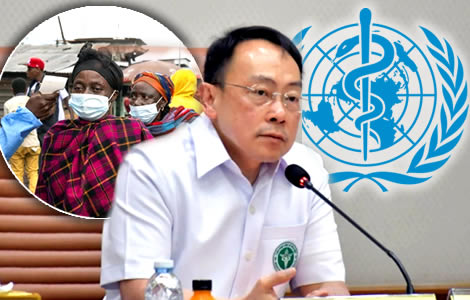
Thailand has imposed mandatory 21-day quarantine measures for travellers arriving from the Democratic Republic of Congo and Uganda after authorities escalated Ebola prevention controls nationwide.
The National Communicable Disease Committee approved the measures on May 26, 2026, during its third meeting of the year. Dr. Somruk Chungsaman chaired the meeting under instructions from Public Health Minister Pattana Promphat.
During the session, Dr. Somruk said the World Health Organisation had declared the Bundibugyo strain of Ebola a public health emergency of international concern. As a result, Thai health authorities moved quickly to tighten border screening, quarantine enforcement, and traveller monitoring procedures.
DR Congo outbreak spreads into Uganda as Thai officials warn international travel still poses risks
Currently, the outbreak remains concentrated in the Democratic Republic of Congo. Authorities there reported 867 suspected Ebola cases and 214 deaths linked to the outbreak. Among those figures, 10 cases were confirmed Ebola infections.
Meanwhile, another 204 deaths remain classified as suspected Ebola fatalities. Furthermore, the outbreak has already crossed into neighbouring Uganda. Ugandan authorities confirmed five Ebola cases and one death.
Although Thailand has never recorded a domestic Ebola infection, officials warned international travel still presents significant risks. Specifically, authorities identified travellers arriving from outbreak zones as a primary concern.
Therefore, the Ministry of Public Health formally designated the Democratic Republic of Congo and Uganda as dangerous communicable disease areas. According to officials, the declaration enables immediate enforcement of stricter disease control measures.
Thailand orders 21-day quarantine and isolation measures for Ebola-linked international arrivals
Consequently, all travellers arriving from or through both countries now face mandatory health controls. Under the new rules, disease control officers will issue legal orders to incoming travellers.
Moreover, asymptomatic travellers must enter quarantine for at least 21 days, even if screening detects no symptoms. Officials said quarantine will take place in designated facilities approved by health authorities.
Meanwhile, travellers showing symptoms consistent with Ebola will face immediate medical isolation. Those travellers will remain isolated in designated government hospitals for at least 21 days under medical supervision. In addition, authorities restricted entry routes connected to the outbreak response.
From now on, only Suvarnabhumi Airport will handle travellers arriving from or through affected areas. Officials said the restriction would centralise screening and monitoring operations. Meanwhile, the Department of Disease Control prepared quarantine facilities for incoming travellers. Authorities also confirmed accommodation costs would be covered during the first 72 hours of quarantine.
Authorities intensify traveller tracking and nationwide Ebola screening across government agencies
Furthermore, health officials ordered expanded surveillance operations across multiple state agencies. The Ministry of Public Health requested cooperation from immigration authorities, airports, local administrators, and security forces.
In particular, agencies were instructed to monitor travellers arriving from affected countries and outbreak zones. Additionally, officials must verify travel records, residential addresses, and movement histories.
Authorities also ordered stronger tracking procedures for travellers transiting through outbreak areas before entering Thailand. Meanwhile, international disease control checkpoints will intensify screening operations nationwide. Officials said disease screening would focus heavily on travellers linked to affected regions.
At the same time, local authorities were instructed to coordinate closely with national disease control agencies to support quarantine enforcement and traveller monitoring.
Thailand strengthens Ebola readiness with expanded surveillance systems and laboratory capacity
The ministry also expanded public awareness and risk communication operations as part of the response. According to officials, public messaging campaigns will support disease prevention efforts and outbreak monitoring nationwide.
Notably, Dr. Somruk said Thailand remained prepared for potential Ebola cases despite the absence of confirmed domestic infections. He said authorities had strengthened disease surveillance systems across the country.
In addition, hospitals and laboratories remain prepared for rapid response operations if suspected infections emerge. Officials also confirmed readiness in medical staffing, laboratory systems, protective equipment, and disease control infrastructure. Furthermore, health authorities urged travellers to cooperate fully with screening and monitoring procedures.
Specifically, officials requested accurate travel histories and truthful personal information from all incoming travellers. According to the ministry, accurate data would support faster monitoring, contact tracing, and containment procedures if suspected cases appear.
Thailand maintains strict Ebola quarantine enforcement as regional outbreak cases continue rising.
Meanwhile, the government described the measures as necessary to prevent Ebola from entering Thailand through international travel routes. Officials said the response specifically targets risks linked to global population movement and cross-border travel from outbreak regions.
In particular, travellers arriving from affected countries will remain under close surveillance throughout the quarantine period. Consequently, health authorities said screening, tracking, and quarantine enforcement would continue without interruption.
The ministry added that surveillance systems would remain active as the Ebola outbreak develops in Central and East Africa. Meanwhile, authorities emphasised that quarantine requirements apply regardless of symptom status upon arrival.
Thailand Pass and health screening introduced for 45 countries after Clade 1b Monkeypox confirmed
Top Thai health official assures the public as the first case of Clade 1b Monkeybox variant is suspected
Officials also confirmed that legal enforcement measures would remain active throughout the outbreak response period. As Ebola cases continue rising in affected regions, Thai authorities are tightening border disease controls, airport monitoring, quarantine enforcement, and nationwide surveillance operations.
Join the Thai News forum, follow Thai Examiner on Facebook here
Receive all our stories as they come out on Telegram here
Follow Thai Examiner here
Further reading:
Thailand Pass and health screening introduced for 45 countries after Clade 1b Monkeypox confirmed
Second case of monkeypox in Bangkok identified in a 47-year-old who had sex with foreign men
Mysterious African monkeypox sufferer arrested after illegally crossing the border into Cambodia
Monkeypox case in Thailand confirmed in transit passenger at Suvarnabhumi Airport last week
Thailand Pass to be used in Monkeypox screening at airports with new RT-PCR test for the disease