Thailand’s military goes on high alert as China supplies Cambodia with T-59D tanks amid unresolved border tensions, with Prime Minister Anutin Charnvirakul ordering vigilance, accelerating drone warfare preparations and warning the Kingdom is ready to defend itself.
As Chinese-made T-59D tanks arrive in Cambodia amid unresolved border disputes, Thailand is preparing for a new phase of regional security uncertainty, with Prime Minister Anutin Charnvirakul declaring the Kingdom ready for any contingency, accelerating drone warfare capabilities and maintaining close scrutiny of military developments across the frontier.
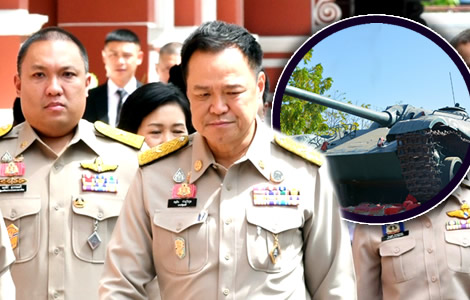
Prime Minister Anutin Charnvirakul declared Thailand ready for any border contingency on Monday as Bangkok continued to assess Cambodia’s military modernisation and lingering tensions along the frontier.
Speaking after a National Security Council meeting at Government House, Mr Anutin dismissed concerns over China’s delivery of refurbished T-59D tanks to Cambodia. Nevertheless, he insisted Thailand remained fully prepared to defend its sovereignty.
The Prime Minister said Cambodia had the right to manage military matters within its own territory. At the same time, Thailand would remain alert to any development affecting national security.
Anutin rejects tank fears but warns Thailand remains fully ready to defend its sovereignty if required
“They are in their own territory, in their own homes. We have no right to know or interfere,” Mr Anutin said.
“We are prepared to defend our territory and assure everyone that no one will trespass or invade our land,” he added.
The comments came amid reports that Cambodia had received a first batch of 39 Chinese T-59D main battle tanks. In addition, further deliveries are reportedly expected under a defence agreement between Phnom Penh and Beijing.
Although Thai officials have played down the transfer, the timing has drawn regional attention. The two countries remain divided by unresolved border and maritime disputes despite a ceasefire reached in late December 2025.
The ceasefire halted heavy fighting and large military movements. Even so, the underlying disagreements remain unsettled and continue to shape security planning in Bangkok.
Some former security officials have urged caution over the wider strategic picture. In particular, they have warned against Thailand relying too heavily on either China or the United States.
Former security figures warn Thailand against overreliance on either China and the United States
Against this backdrop, Mr Anutin chaired the fourth National Security Council meeting of 2026 at 2.20pm on Monday. The meeting took place at the Vichitvadakarn Conference Room on the third floor of the Office of the National Security Council at Government House.
The gathering brought together Thailand’s senior political, diplomatic and military leadership. Those present included Deputy Prime Minister Pakorn Nilapraphan, Deputy Prime Minister and Foreign Minister Sihasak Phuangketkaew, Justice Minister Pol Gen Ruddhaphol Naowarat and Digital Economy and Society Minister Chaiyanok Chidchob.
Also attending were National Security Council Secretary-General Mr Chatchai Bangchawad and commanders from Thailand’s armed forces. The meeting reviewed a broad range of national security issues.
Before the session began, reporters asked whether the Cambodian border issue would dominate discussions. In response, Mr Anutin gave a short reply, saying the council would discuss all matters.
Following the meeting at approximately 4.10pm, the Prime Minister outlined several decisions and security directions. Notably, the council discussed mechanisms connected to the 1982 United Nations Convention on the Law of the Sea, or UNCLOS.
National Security Council reviews UNCLOS measures as Thailand strengthens security planning
Separately, officials examined Thailand’s approach to drones and emerging battlefield technology. The discussion came before Tuesday’s Cabinet consideration of a national drone management and counter-drone control centre.
The proposal reflects a significant shift in military thinking. Across recent conflicts, drones have become essential tools for surveillance, intelligence gathering and battlefield strikes.
As a result, Thailand is seeking stronger coordination between military and civilian agencies. The planned centre will oversee drone operations and improve preparedness for future conflicts.
After the meeting, journalists questioned Mr Anutin over reports of Cambodian tanks moving towards the Thai border. The Prime Minister said no such intelligence had reached him.
Reporters also raised reports concerning a second shipment from China. Once again, Mr Anutin rejected suggestions that the tank deliveries represented an immediate threat.
Instead, he returned to Thailand’s central position. The Kingdom would respect Cambodia’s sovereign decisions but maintain complete readiness to protect its own territory.
Thailand maintains vigilance as officials say border tensions remain sensitive but still under control
The government’s message was clear. Thailand would avoid unnecessary escalation while maintaining military preparedness and close monitoring of developments along the border.
National Security Council Secretary-General Mr Chatchai Bangchawad previously provided a similar assessment of the border situation. According to Mr Chatchai, conditions remained fragile but firmly under control.
Security agencies had conducted detailed assessments of recent developments. Moreover, officials concluded that communication channels between local Thai and Cambodian authorities remained active.
Those mechanisms remain critical in preventing local incidents from escalating into wider confrontations. Nevertheless, the security situation continues to require constant observation and military readiness.
Mr Chatchai also addressed recent remarks by Cambodian Senate President and Acting Head of State Hun Sen regarding disputed territories. In doing so, he sought to place the statements within the broader political context.
Chatchai plays down Hun Sen’s remarks as Thailand follows the Prime Minister’s approach
“I understand that he has to speak in such a manner, but Thailand will follow an appropriate approach, as outlined by the Prime Minister,” Mr Chatchai said.
Earlier, Hun Sen spoke of Cambodia’s intention to reclaim disputed territories from Thailand. He also apologised to Cambodian citizens for not strengthening military preparedness before earlier clashes.
Furthermore, he said he had trusted Thailand too much and had therefore delayed additional weapons purchases. His comments came during a period of heightened attention to military capabilities on both sides of the border.
On another front, Cambodian representatives rejected suggestions that Hun Sen was calling for military action. Chea Thyrith, spokesman for the Senate President and Acting Head of State, said some Thai media reports had incorrectly represented Cambodia’s position.
According to Chea Thyrith, Hun Sen had not announced any intention to resolve the dispute through armed force. The spokesman said the comments made during a June 9 visit to displaced civilians in Banteay Meanchey province should not be interpreted as a declaration of military intent.
Defence Minister says Chinese tanks remain away from sensitive Thai border areas at this time
Meanwhile, Thailand’s Defence Minister Lt Gen Adul Boonthumjaroen provided further details on the Chinese tank transfer. He confirmed that Thai authorities had monitored Cambodia’s acquisition of the military vehicles.
The Defence Minister said the tanks were supplied under an existing agreement between Cambodia and China. In addition, he noted that the two countries had conducted joint military exercises since 2016.
Lt Gen Adul described the T-59D tanks as refurbished older platforms rather than a modern generation of armoured vehicles. Consequently, Thai military planners did not regard the arrival as a major change in battlefield balance.
Intelligence assessments indicated that the tanks had arrived at a Cambodian port. However, they had not been moved to areas close to the Thai border.
As part of this assessment, Thai security agencies continued monitoring the movements of troops and military equipment. Existing agreements between Thailand and Cambodia still regulate deployments near sensitive border zones.
Adul highlights diplomacy with China while warning against any border provocations from Cambodia
When questioned about possible discussions with Beijing, Lt Gen Adul said meetings with Chinese counterparts were expected as part of his new responsibilities.
In parallel, he highlighted extensive diplomatic efforts led by Foreign Minister Sihasak Phuangketkaew. Those initiatives have continued alongside military preparations and intelligence monitoring.
The Defence Minister said Thailand would not be drawn into provocations. Moreover, he said he could not determine whether Hun Sen’s statements about reclaiming territory represented a serious military intention.
Even so, Lt Gen Adul repeated Prime Minister Anutin’s warning regarding any possible use of force.
Those considering military action, he said, should think carefully about the consequences.
Beyond conventional military preparations, Thailand has also expanded attention towards new forms of warfare. In particular, drones have become increasingly important in modern conflicts.
Thailand expands drone warfare capability as modern conflicts transform military strategy on the ground
Recent wars have demonstrated their role in reconnaissance, intelligence collection and precision attacks. Accordingly, Thailand has accelerated plans for a national drone management and counter-drone command structure.
The planned centre will combine the capabilities of military and civilian agencies. It will coordinate battlefield drone operations and strengthen responses to emerging aerial threats.
Traditional armoured forces remain important elements of national defence. However, modern conflicts increasingly depend on unmanned systems, advanced surveillance and rapid information gathering.
For that reason, Cambodia’s acquisition of older Chinese tanks and Thailand’s investment in drone capabilities represent different dimensions of today’s changing military environment.
Cambodia has maintained that the Chinese tank acquisition was unrelated to the recent conflict with Thailand. Instead, Phnom Penh said the purchase fulfilled a military agreement made years before the latest border tensions.
Cambodia insists the Chinese tank purchase is defensive and unrelated to Thai tensions
According to Hun Sen, the arrival of the tanks represented normal military development and a legitimate act of national defence. He insisted the additional armour was not aimed at threatening neighbouring countries.
“Building military capacity in this manner is not a threat to anyone. It is part of self-defence,” Hun Sen said.
He also emphasised that Cambodia already operated hundreds of tanks. Therefore, the arrival of approximately 39 T-59D vehicles, with around 90 more reportedly on the way, was not a significant expansion of the country’s armoured strength.
“Cambodia does not threaten anyone, whether that country is strong or weak. Cambodia does not have the habit of invading anyone,” Hun Sen added.
Nevertheless, the timing of the delivery has drawn attention because relations between Bangkok and Phnom Penh remain delicate. Although the December 2025 ceasefire halted major hostilities, neither the territorial nor maritime disputes have been fully resolved.
Military observers examine T-59D tanks as Thai officials dismiss strategic threat concerns
The Royal Cambodian Army has not publicly commented on reports concerning the first tank shipment. However, the transfer has become a subject of close attention among military observers and regional security officials.
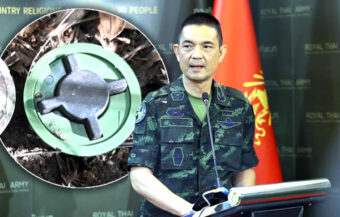
The T-59D is a modernised variant of China’s older Type 59 main battle tank. The original design was based on Soviet technology and became one of China’s most widely produced armoured vehicles.
Approximately 9,500 Type 59 tanks were built over several decades. The vehicle carries a crew of four and weighs around 37 tonnes.
Its primary armament is a 100mm rifled cannon. In addition, it carries two Type 59T 7.62mm machine guns and one Type 54 12.7mm anti-aircraft machine gun.
The tank is powered by a 12150L liquid-cooled diesel engine producing approximately 520 horsepower. Some upgraded variants use engines producing around 730 horsepower.
The vehicle can travel at approximately 50 kilometres per hour on roads and has an operational range of about 440 kilometres.
Thailand combines military readiness, diplomacy and drone strategy amid border tensions
By comparison, modern battle tanks used by Japan, South Korea, Australia and the United States are significantly more advanced. Consequently, Thai officials have repeatedly described the T-59D as an older refurbished platform rather than a major strategic threat.
Even so, Bangkok has not relaxed its security posture. The government continues to maintain military readiness, intelligence surveillance and diplomatic engagement.
Prime Minister Anutin’s message has remained consistent throughout the latest developments. Thailand will not interfere in Cambodia’s internal military decisions.
At the same time, the Kingdom will continue preparing for any situation involving its sovereignty and border security.
In addition, Thailand is pursuing diplomatic initiatives and international legal mechanisms to manage broader disputes with Cambodia. The National Security Council’s discussion of UNCLOS reflected continuing attention to maritime claims and international frameworks.
As the strategic environment evolves, Thailand is also adapting its military priorities. The planned drone management and counter-drone command centre represents a new layer of defence planning.
Anutin heralds a moment of luck after high-level security talks at Government House on Monday
The centre will coordinate operations between security agencies and strengthen Thailand’s ability to respond to future battlefield developments.
Meanwhile, after hours of discussions focused on military readiness and border tensions, Prime Minister Anutin experienced an unexpected moment at Government House.
As he walked back from the National Security Council building, a monitor lizard appeared near his path before entering the water.
“Wow, what a lucky day,” Mr Anutin said.
Minister and security official prepare to bolster the kingdom’s defences with a new drone warfare centre
Simmering tensions on display during Anutin’s two day visit to Hanoi. Mixed messages from Cambodia
Reporters asked whether the sight was considered a good omen. In response, the Prime Minister replied, “Of course, if you see these animals, it’s considered lucky.”
The brief encounter contrasted sharply with the serious security discussions that had dominated the day.
For now, Thailand’s official position remains unchanged. The government does not consider Cambodia’s Chinese tanks an immediate danger.
However, Bangkok will continue monitoring military developments, strengthening modern capabilities and maintaining readiness to defend every part of the Kingdom’s territory.
Join the Thai News forum, follow Thai Examiner on Facebook here
Receive all our stories as they come out on Telegram here
Follow Thai Examiner here
Further reading:
Ex Energy Minister supports oil and arms supplies blockade against Cambodia in the Gulf of Thailand
War to continue says PM Anutin. Dismisses President Trump’s ceasefire talk as a ‘misunderstanding’
Confusion after Trump’s 20 minute phone call with PM Anutin. US side claimed a ceasefire was agreed