Six political prisoners, including four jailed under Section 112, walk free under Thailand’s 2026 Royal Pardon as Parliament engages in a bitter amnesty battle. The government refuses to include Section 112 while at least 55 people remain in prison linked to political activities.
Six political prisoners, including four convicted under Section 112, have been freed under Thailand’s 2026 Royal Pardon just as Parliament prepares for a landmark battle over political amnesty. The releases expose the sharp legal divide between royal clemency and legislative amnesty, with the government refusing to extend any parliamentary relief to Section 112 offences despite royal sentence reductions already benefiting some prisoners. As at least 55 political detainees remain behind bars, the debate has become one of the most consequential tests yet of Thailand’s long-running effort to reconcile years of simmering political conflict.

Six political prisoners walked free on Thursday after qualifying for sentence reductions under the 2026 Royal Decree Granting a Royal Pardon.
However, rights monitors said at least 55 political detainees remain in custody. The releases came as the House of Representatives prepared to debate one of Thailand’s most politically sensitive amnesty bills in years.
Notably, the releases highlight the growing distinction between royal clemency and the parliamentary amnesty now before lawmakers. The government has already confirmed that offences under Section 112 of the Criminal Code, Thailand’s lèse-majesté law, will not be included in any legislative amnesty.
Government says Section 112 will stay outside planned amnesty bill despite releases under Royal Pardon
Instead, ministers maintain that offences involving the monarchy must continue through the normal criminal justice process. Even so, several prisoners convicted under Section 112 have already secured release this year through the King’s constitutional power to grant a Royal Pardon.
According to Thai Lawyers for Human Rights, four prisoners were released from Bangkok Special Prison on July 3 after meeting the eligibility requirements under the 2026 Royal Decree.
They were Weha Saenchonchanasuek, convicted under Section 112, Wachira, whose surname was withheld, convicted under the Computer Crime Act, and two prisoners identified by the pseudonyms Panithan and Tarun, both convicted under Section 112.
Separately, Veerawat and Methee were scheduled for release from Klong Prem Central Prison later the same day. As a result, the organisation said the number of political prisoners it monitors has fallen to at least 55.
Weha Saenchonchanasuek spent 1,142 days behind bars, or just over three years. He was convicted in three separate Section 112 cases. Combined, the courts imposed prison terms totalling nine years.
He had remained in custody since May 18, 2023. Earlier royal clemency measures gradually reduced his sentence. He ultimately qualified for release under this year’s Royal Decree. His case demonstrates how successive Royal Pardons can shorten prison terms while leaving convictions untouched.
Computer crime and Section 112 prisoners among those freed after meeting Royal Decree eligibility rules
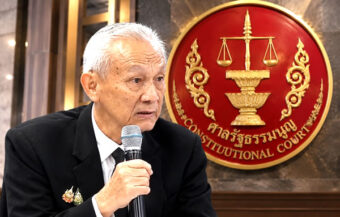
Meanwhile, Wachira spent 282 days in prison after his conviction under the Computer Crime Act. His prosecution arose from the hacking of the Constitutional Court’s website in 2021. Investigators said the site’s name was changed to “Kangaroo Court.”
The incident followed the court’s ruling in the sedition case involving leaders of the Ratsadon movement. He entered prison on September 24, 2025. The Court of Appeals sentenced him to one year and six months. Subsequently, the Supreme Court rejected his appeal. He later qualified for release under the Royal Decree.
Panithan served 416 days in prison following his conviction under Section 112. Prosecutors said the case centred on comments posted in the Facebook group Royalist Marketplace. He had remained in custody since May 13, 2025.
The Supreme Court sentenced him to one year and six months. Likewise, Tarun spent 458 days behind bars following his conviction under Section 112. His prosecution arose from comments posted during a livestream on the Facebook page of the People’s Centre for Protecting the Monarchy. He entered prison on April 1, 2025. Thereafter, the Court of Appeal upheld his sentence of one year and six months.
On another front, Veerawat secured release after serving 855 days in custody. His conviction related to explosives used during the September 19 protest. The court imposed a three-year prison sentence. He had remained behind bars since February 29, 2024.
Releases span Red Shirt protests, online speech, explosives and computer crime cases over many years
Methee also qualified under the Royal Decree after serving about two years in prison. His conviction related to firearms offences linked to the 2010 Red Shirt protests. Collectively, the six cases span political demonstrations, online expression, computer offences and public order incidents stretching back more than a decade.
Importantly, four of the six released prisoners had been convicted under Section 112. Yet none benefited from a parliamentary amnesty. Every release resulted from the operation of the Royal Decree.
That legal distinction now sits at the centre of Parliament’s approaching debate. Ministers have repeatedly stated that Section 112 will remain outside any legislative amnesty. They argue that protest-related offences should be treated differently from offences involving the monarchy. Accordingly, Section 112 cases must continue through the courts.
In contrast, opposition parties and civil society groups continue to challenge that position. They argue that any meaningful reconciliation process should include those prosecuted under Section 112. Government parties reject that proposal.
Political divide as Section 112 becomes the central dispute in Parliament’s amnesty legislation debate
They insist a legislative amnesty covering Section 112 would cross constitutional and political boundaries. Previous parliamentary proposals containing Section 112 failed to secure sufficient support. Consequently, the government has adopted a narrower approach.
The latest releases also underline the legal differences between royal clemency and parliamentary amnesty. Under the 2026 Royal Decree, convicted prisoners may qualify for sentence reductions or early release. However, strict eligibility conditions apply.
More importantly, the conviction remains on the offender’s criminal record. A Royal Pardon reduces or remits punishment. It does not erase the conviction. Nor does it overturn the court’s judgment. Pending Section 112 prosecutions also continue through the courts. Future offences remain fully prosecutable under the Criminal Code.
By comparison, a parliamentary amnesty would produce a very different legal outcome. Legislation could remove criminal liability for specified offences. It could halt ongoing prosecutions.
Royal Pardon reduces punishment while parliamentary amnesty would change legal liability and records
Depending on its wording, it could also remove the legal consequences of convictions. However, no such legislation has been enacted. Instead, the government is expected to support an amnesty covering selected politically related offences arising from demonstrations and political unrest. Section 112 will remain excluded.
As debate approaches, Thursday’s releases have sharpened attention on the two separate legal processes. Royal clemency is already providing relief to some convicted prisoners, including several convicted under Section 112.
Paul Chambers case officially over following Attorney General’s review. Academic has left Thailand
Jailed Human Rights lawyer Arnon Nampa received international award from Irish activist NGO in Dublin
By contrast, the parliamentary amnesty remains under political negotiation. For now, prisoners convicted under Section 112 may obtain sentence reductions only through a Royal Pardon if they satisfy the decree’s conditions. They remain outside the scope of the government’s proposed legislative amnesty, ensuring that distinction will dominate parliamentary debate in the weeks ahead.
Join the Thai News forum, follow Thai Examiner on Facebook here
Receive all our stories as they come out on Telegram here
Follow Thai Examiner here
Further reading:
Paul Chambers case officially over following Attorney General’s review. Academic has left Thailand
US academic Paul Chambers is fighting Nareauan’s University decision to dismiss him on April 9th
Third Army defends its role in the prosecution of American Professor Paul Chambers in Phitsanulok
Thaksin confirms that the Paul Chambers case now being raised by US trade negotiators with Thailand