Tentative border peace deal reached as Cambodia bows to Thai terms — but Anutin says no land will be ceded and the pact still needs cabinet approval. War fallout hits confidence and looms over Thailand’s Feb 8 election as the US urges both sides to end the bloodshed.
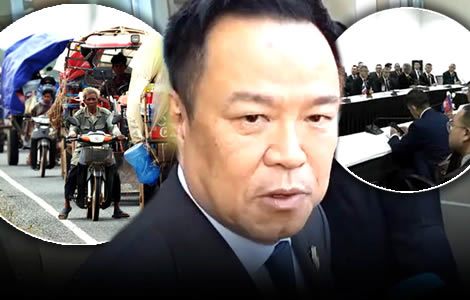
A tense Prime Minister Anutin Charnvirakul on Friday said he was awaiting details from the General Border Committee meeting with Cambodia. Reports indicate a breakthrough, with Cambodia agreeing to Thailand’s demands. However, the Prime Minister, the National Security Council and the Cabinet must approve the plan before both Defence Ministers sign it on Saturday. The move toward peace comes as Thailand faces falling confidence over the border war and concerns about its impact on the February 8th General Election.
There were signals on Friday that a tentative deal may be on the table ahead of a meeting of Thai and Cambodian defence ministers on Saturday. The development followed intensive discussions under the General Border Commission. Officials exchanged drafts and negotiated wording. Both sides focused on troop positions along key border areas.
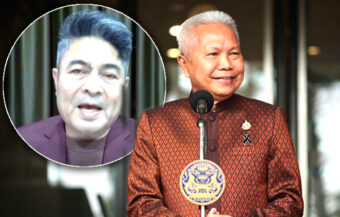
A somewhat nervous and touchy Prime Minister Anutin Charnvirakul spoke with reporters earlier on Friday. He emphasised that any agreement would not see Thailand concede an inch of territory. He stressed that Thailand is protecting its sovereignty. He also warned that inaccurate reporting could damage the process.
Nevertheless, it is thought that the deal proposed involves both armies pulling back from flashpoints. Thai security officials say any plan requires sequencing. Therefore, Thailand will act only after monitoring Cambodian withdrawals. Military sources state that withdrawal does not equal concession. The government describes the measures as security-based.
US presses for peace as deadly border war kills dozens and displaces hundreds of thousands
The United States, through Secretary of State Marco Rubio, is watching developments closely and is urging peace. Rubio contacted Cambodian Prime Minister Hun Manet. He repeated President Donald Trump’s support for ending the border clashes.
Moreover, the U.S. State Department said Washington is prepared to help facilitate discussions. The American position remains focused on stability and dialogue.
The cessation of the war, which saw 75 people killed, including civilians on both sides of the border and 22 soldiers, a figure which excludes Cambodian soldiers deceased in large numbers, reportedly. Any ceasefire deal presently has significant implications for Thailand as well as Cambodia. Clashes began on December 7. Earlier fighting in July ended under a mediated ceasefire. However, the situation later deteriorated.
Meanwhile, displacement has been widespread. Officials report more than half a million civilians moved from homes on both sides. Communities near the frontier remain affected. Medical and logistical services continue to operate under pressure.
Border war hurts investor confidence and strains finances, while election proceeds with displaced voters
Undoubtedly, the war has damaged confidence in the kingdom as an investment target. Any war linked to any country’s borders will do that. It has also meant increased public sector spending this year, with the cabinet approving over ฿5.2 billion in additional defence spending on Tuesday. These funds are tied directly to the crisis. Therefore, government finances remain under strain.
Significantly, it may also have an impact on the February 8th General Election in Thailand. On Friday, the Secretary-General of the Election Commission Sawaeng Boonmee said that a simultaneous election will take place as planned, having very much involved advance voting for a large number of evacuated people. Arrangements continue despite the conflict. However, displaced voting will require special administration.
Of course, this could prove legally troublesome after the poll. In short, a return to peace on the Thai-Cambodian border is an important factor for democratic rule in Thailand. In contrast, war raging puts it at risk. Very simply, war on a country’s territory destabilises its ongoing development, including democratic governance.
Government awaits border commission outcome as Anutin vows not to cede territory before review
Meanwhile, Thai internal security coordination continues. Anutin awaits the outcome of the GBC discussions before presenting to the National Security Council, vowing not to cede even an inch of territory.
He said he would wait to hear the results of the GBC negotiations before bringing the matter to the National Security Council meeting today. He emphasised that Thailand is establishing territorial integrity and stated that what belongs to the kingdom will remain so.
At 2:15 PM on December 26th, on Channel 3 Thai TV, Prime Minister and Minister of Interior Anutin Charnvirakul gave an interview regarding the National Security Council meeting. He stated that he had not yet received updates on the progress of the GBC meeting. He explained that General Natthapong Prawkaew is currently negotiating. The Deputy Chief of Staff of the Royal Thai Armed Forces leads the Thai delegation.
Therefore, if everything is in order, the NSC will review the outcome. The Minister of Defence is expected to take part in any signing ceremony. These steps are described as standard government procedure.
Anutin says Thailand is not on Cambodian land. Withdrawals will follow verified mine clearance
When asked about Cambodia’s desire to adhere to the Kuala Lumpur Declaration, Anutin replied that the declaration contains no requirement for Thailand to withdraw from occupied territory. He also said Thailand is not occupying Cambodian land.
Instead, Thailand is establishing security, sovereignty, and territorial integrity. He warned that inaccurate questions from media reporters may mislead the public.
In addition, he said past shelling had continued despite declarations. Therefore, Thailand reserves the right to observe events before withdrawing forces. He stated that Thai withdrawals would follow Cambodian withdrawals.
When asked about Cambodia still laying landmines around Prasat Ta Kwai, Anutin said mines had been laid there for many years. The Kuala Lumpur Declaration calls for landmine removal. He said Thailand does not want to lose even an inch of territory. He insisted the country is acting within legal frameworks.
Diplomatic pressure builds as Thai and Cambodian negotiators finalise draft deal for security, stability
Meanwhile, diplomatic signals continue. US Secretary of State Marco Rubio again called for an end to the violence. He confirmed that the United States remains ready to facilitate talks. The State Department disclosed the communication. Earlier mediation had involved Malaysia and the United States during the July clashes.
Back inside Thailand, reports indicate the draft border agreement has reached the technical stage after five negotiation rounds. Cambodia has accepted the Thai proposal. Therefore, Thai officials are finalising documentation. The draft will go to a National Security Council special session. A cabinet meeting will follow. After that, the proposal will be sent to the Prime Minister for approval. Details will be released only after formal review.
Officials describe the framework as intended to reduce tension, clarify procedures and establish structured cooperation. Security and diplomatic principles form the basis of the agreement. Implementation will depend on political approval.
Meanwhile, election preparations continue. The Election Commission is arranging advance voting for evacuees. However, political sources suggest that legal challenges could later arise. Monitoring will continue through the campaign period.
Border remains tense as casualties mount and Thailand insists sovereignty unchanged pending review
The border situation remains tense. Troops continue to hold positions while talks proceed. Casualties remain recorded at 75 dead, including civilians and 22 soldiers. Cambodian fatalities reportedly exceed that number but are not counted in the official figure. Displacement continues to affect daily life.
Nevertheless, Friday’s developments indicate movement toward agreement. Both defence ministers are expected to meet on Saturday. The session follows the reported acceptance of the Thai draft. Resolving troop positions remains central. Documentation is nearly complete.
However, the Thai position on sovereignty remains unchanged. Anutin has said repeatedly that Thailand will concede no territory. The Prime Minister also said Thailand acted in line with past declarations. He said continuous shelling forced Thailand to protect its territory. He has asked the media to avoid misleading narratives.
Therefore, the government insists that troop locations reflect security operations. Withdrawal will follow observable Cambodian action. Internal agencies are coordinating. National Security Council review remains pending. Cabinet oversight will follow.
United States keeps diplomatic pressure on Thailand and Cambodia. Offers to help facilitate peace
Meanwhile, Washington maintains diplomatic engagement. Rubio and Cambodian Prime Minister Hun Manet discussed peace. The U.S. State Department said the United States stands ready to help facilitate an understanding and peace deal. The message remains focused on preventing further casualties, displacement and the very real potential for further destabilisation.
As the process advances, attention now focuses on Bangkok. The National Security Council meets first. The cabinet then deliberates. The Prime Minister will ultimately decide on final approval. Implementation will depend on those outcomes, and of course, will come afterwards. This is always fraught with risk.
Cambodia formally requests ceasefire at General Border Committee (GBC) as talks in Chanathaburi begin
Ceasefire prospects still there but there is scepticism if a deal can be forged between military chiefs
Until then, the border remains on alert. Negotiations continue under established channels. Government agencies emphasise sovereignty, stability and legal process. Both governments now face decisions on military withdrawal, border management and public communication.
For Thailand, the crisis affects security, finances, election administration and its wider economy. For Cambodia, the crisis carries similar consequences. International monitoring continues. Domestic agencies are preparing for a possible transition to a ceasefire framework. The situation remains serious, but it now shows signs of progress.
Join the Thai News forum, follow Thai Examiner on Facebook here
Receive all our stories as they come out on Telegram here
Follow Thai Examiner here
Further reading:
War to continue says PM Anutin. Dismisses President Trump’s ceasefire talk as a ‘misunderstanding’
Confusion after Trump’s 20 minute phone call with PM Anutin. US side claimed a ceasefire was agreed