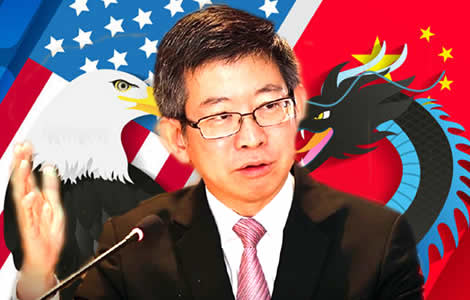
Thailand faces rising global risks as US-China tensions escalate, with experts warning of possible conflict in Asia, a Chinese move on Taiwan. US actions in Venezuela and Greenland may signal serious potential economic and security shocks for the next government.
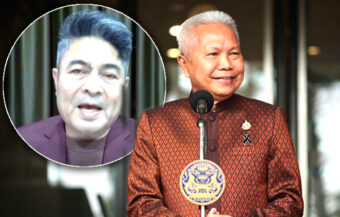
A former Prime Minister’s Office minister and top Bangkok Bank executive have warned that the next government could face war between the United States and China in Asia. Kobsak Pootrakool said on Tuesday that global geopolitics is becoming volatile and unpredictable. Rising tensions stem from a dangerously aggressive Trump White House and the growing threat of a Chinese move on Taiwan.
A key figure in Thailand’s banking sector has warned that the next government may face heightened geopolitical risks. Moreover, Kobsak Pootrakool, former minister at the Prime Minister’s Office under Prayut Chan Ocha and current chief economist at Bangkok Bank, said tensions between the United States and China are rising across Asia.
Speaking on a Facebook Live session on Tuesday, Kobsak said the next government must rely on professionals with proven expertise to manage these challenges. Furthermore, he highlighted that global military tensions are likely to increase through 2028.
Kobsak referred to recent moves by the United States in Venezuela and the Trump administration’s statements regarding Greenland. In addition, he said these actions indicate a continued US focus on strategic interventions abroad.
US moves in Venezuela and Greenland indicate rising tensions and risk of conflict in Asia
“There is a possibility of further US military operations across the Americas, including Cuba and Colombia, as well as Greenland,” Kobsak said. He added, however, that 2026 may see intensified military confrontations and the resumption of US tariff measures.
Kobsak noted that 2027 is expected to be a critical year. Consequently, analysts anticipate a potential confrontation between the US and China, accompanied by heightened tensions across Asia. The potential for a Chinese invasion or military action against Taiwan is rising. Defence and foreign affairs analysts in Asia have long predicted this timeframe.
By 2028, he said, the final year of Trump’s presidency, the outlook remains uncertain. Therefore, he cautioned that it is too early to assess the risk of a broader global conflict.
China has taken steps to strengthen strategic preparedness. For instance, its holdings of US Treasury securities have been reduced from approximately $3 trillion to $680 billion. This move, he said, is seen as a precaution against possible US asset seizures.
China strengthens financial and strategic preparedness amid escalating tensions in Asia
The mainland also expanded military exercises during the New Year period. In addition, Kobsak said, “The world is entering an era where ‘anything goes’ and ‘might makes right’. China may even move to invade Taiwan.”
Kobsak warned that Thailand cannot avoid the effects of global instability. As a result, he said the country will face mounting challenges due to its relatively small economy. He emphasised the need for realistic risk assessments and stronger national preparedness.
With a general election approaching, Kobsak said political parties and the incoming government must address increasingly complex risks. Accordingly, he urged the appointment of experts capable of navigating geopolitical and economic uncertainties.
Kobsak also highlighted the need for Thailand to prepare for an increasingly polarised global order. “Political party platforms should place greater emphasis on these strategic considerations, rather than focusing solely on conventional policies such as cash-handout schemes,” he said. Likewise, he stressed strategic planning should guide policy development.
Thailand must prepare for growing global instability and strengthen its strategic planning
Separately, a Finance Ministry source, speaking on condition of anonymity, said US military intervention in Venezuela may impact global oil markets in the long term. However, the source noted that the operation is not expected to affect short-term oil production or prices, which are currently influenced by excess supply.
The source said the US role in Venezuela could boost the country’s oil production and exports over the next one to two years. Consequently, this is expected to contribute to lower global oil prices.
Global oil prices remained stable following news of the US military operation. Dubai crude oil closed on January 5 at $60.95 per barrel, up $0.16 per barrel.
Venezuela’s oil production averaged 930,000 barrels per day in November 2025. In comparison, this was up from 870,000 barrels per day in 2024, representing 2.12% of total global oil production. Most of Venezuela’s oil exports are shipped to China and India. Venezuela holds the world’s largest proven oil reserves.
US intervention expected to boost Venezuela’s oil output and depress long-term crude prices
Following the US military intervention, American companies are expected to resume a major role in Venezuela’s oil production and exports. This will include compensation for previously seized assets, new investments, and gradual easing of sanctions.
The Finance Ministry source said these developments are likely to increase Venezuela’s oil output. Over time, this is expected to drive a significant decline in global oil prices.
Kobsak emphasised that the Thai government must anticipate spillover effects from these developments. In addition, he said rising global tensions, combined with potential US-China confrontation, will create complex economic and security challenges.
He advised that the incoming government engage professionals capable of monitoring international developments and formulating contingency strategies. Otherwise, he said, Thailand could be vulnerable to shocks in both regional security and global markets.
Thailand must anticipate global risks from US China tensions and have policies to avoid shocks
Kobsak’s warnings follow growing concerns among analysts about US-China tensions in Asia. These concerns include Taiwan, the South China Sea and broader geopolitical competition. Experts suggest 2027 may be a pivotal year for regional stability.
Kobsak also linked US operations in Latin America with broader global economic implications. He said the combination of geopolitical tensions and energy market changes requires coordinated planning at the national level.
Industrial policy shift urgently needed. Thailand loses 100 factories a month since 2021 linked to China
Central bank to lower rates as Thailand prepares for tariff crisis as it decides between US and China
Pichai’s team not to fly to the United States this week but next week as US-Chinese tensions escalate
Elite US military unit Seal Team Six are training in Virginia for action against China over Taiwan if war breaks out
Thailand’s policymakers, he said, must balance domestic priorities with international risks. Moreover, he stressed that effective preparation requires technical expertise, strategic planning, and careful monitoring of global developments.
The next government will face pressures across multiple fronts. These include potential military conflicts, energy market volatility, and economic disruptions linked to US-China competition. Kobsak’s analysis suggests a prolonged period of uncertainty.
He concluded that national preparedness, realistic risk assessment and the appointment of qualified experts will be critical. Furthermore, political leaders must recognise the complex and interconnected nature of modern global risks.
Join the Thai News forum, follow Thai Examiner on Facebook here
Receive all our stories as they come out on Telegram here
Follow Thai Examiner here
Further reading:
Thaksin does not rule out joining talks in US as Thai team finalises plans. They fly out on Thursday