Thai poll cash fears. Bank of Thailand flags massive suspicious withdrawals as vote-buying fears surge nationwide ahead of Feb 8 election, with billions of baht, low-denomination notes and grey money under scrutiny by regulators and watchdogs.
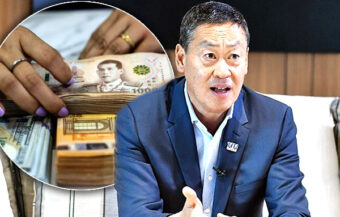
On Wednesday, Bank of Thailand Governor Vitai Ratanakorn warned of a pattern of highly unusual and suspicious cash withdrawals in recent days. Some withdrawals reached ฿250 million, with requests for only ฿500 notes. The alert comes as the General Election enters its final stretch amid mounting warnings of rampant vote buying. Nearly 80% of the Thai public, according to a recent poll, believe vote buying will influence the February 8 election. Meanwhile, politicians and analysts estimate that between ฿11 billion and ฿20 billion is in play nationwide, deployed by some parties and candidates to sway hotly contested House seats. Earlier this month, Mr Vitai ordered extensive monitoring to detect the activity. On Wednesday, he also called on statutory bodies such as the Election Commission to act and moved to reduce daily withdrawal limits, particularly in border areas.
On Wednesday, the Bank of Thailand publicly raised alarm over unusually large cash withdrawals across the country. The warning came from Governor Vitai Ratanakorn. He said some withdrawals amounted to hundreds of millions of baht. In several cases, the sums were far above normal retail banking patterns.
Earlier this month, the central bank had already instructed commercial banks to step up monitoring. That order applied nationwide. Since then, banks have reported a series of suspicious transactions. As a result, the scale and consistency of the withdrawals have drawn attention at the highest level.
Over the past 10 to 14 days, retail banks flagged multiple large cases. One involved withdrawals exceeding 250 million baht. Another involved a total of 200 million baht split across two banks. In addition, several customers requested only 500-baht banknotes.
Unusually large cash withdrawals in low denominations raise red flags across banking system
According to banking officials, such requests are highly unusual. Normally, large transactions are conducted electronically. Transfers and cheques dominate high-value payments. By contrast, heavy cash usage at this scale has become rare.
Consequently, the denomination requests added to concern. Lower-value notes are easier to distribute. Moreover, the volume required to assemble such sums increases logistical complexity. Therefore, banks treated the pattern as abnormal.
Governor Vitai said the Bank of Thailand is accelerating measures against grey-market funds. He also referred to the informal economy. According to him, both have significantly affected Thailand’s economic structure and stability. Furthermore, he said large cash usage may be linked to corruption or other wrongdoing.
At the same time, he stressed that the monitoring is not aimed at any specific political group. Instead, he said the objective is to curb illegal cash transactions. Nevertheless, the timing has coincided with heightened political sensitivity.
Central bank traces suspicious money flows. Monitoring is not targeted at political actors
The central bank has begun tracing the money trails. Officials are examining both sources and destinations. If irregularities are identified, information will be forwarded to the Anti-Money Laundering Office. Similarly, if political links are detected, findings will be sent to the Election Commission.
However, the Bank of Thailand has no enforcement powers. Its role is limited to detection and reporting. Therefore, it has urged other agencies to act within their authority. In particular, it has called on the Election Commission to intervene where election laws may be breached.
Alongside monitoring, the central bank is preparing regulatory changes. These changes would apply to large cash withdrawals. They are expected within two to three months. The goal is to strengthen oversight at the transaction level.
Under the proposed framework, banks would conduct additional checks. These would apply above a specified threshold. The threshold remains under consideration. Figures of three million or five million baht have been discussed.
Proposed banking rules would tighten scrutiny on large cash withdrawals and enhanced verification
Under the new rules, banks would be required to verify withdrawal purposes. They would also assess whether requests align with customer business profiles. In addition, all relevant information would be formally recorded.
Legitimate business withdrawals would continue as normal. However, individuals without clear commercial needs would face additional scrutiny. Consequently, banks would be required to question and document such requests in detail.
Governor Vitai said there are few reasons to use large volumes of cash today. Most asset transactions can be completed digitally. Therefore, unusually large cash withdrawals raise red flags for regulators.
In parallel, the Bank of Thailand will tighten controls on currency exchange operators. Daily exchange limits will be capped at 800,000 baht per person. In border areas, the limit will be reduced to 200,000 baht. These measures aim to prevent illicit funds from entering the financial system.
Grey-market cash remains a structural weakness as financial oversight tightens ahead of election
According to the central bank, grey-market cash remains a structural vulnerability. Cash continues to play a significant role in informal activity. As a result, oversight remains challenging despite digital progress.
These financial developments are unfolding during Thailand’s General Election campaign. The election is now entering its final stretch. Contrary to earlier expectations, the contest has become significantly more competitive.
At the same time, concerns over vote-buying have intensified. Large sums of cash are suspected to be circulating nationwide. Estimates range from 11 billion to 20 billion baht. These figures have been cited by multiple sources.
According to the supplied material, the funds are being targeted at constituency level. Lower-denomination notes are preferred. This pattern closely matches the withdrawals flagged by banks.
Rising fears that large-scale cash use could distort election outcomes prompt increased scrutiny
As a result, fears have grown that the election outcome could be distorted. Officials have warned that excessive cash influence may affect results. Consequently, the integrity of the process has come under scrutiny.
However, the Bank of Thailand cannot intervene directly. Instead, it has referred findings to other agencies. The Election Commission has been urged to act where illegal activity is suspected.
The Election Commission has acknowledged the risks. Its response follows a series of surveys indicating widespread concern. On January 20, it confirmed that allegations of vote-buying were under examination.
The review followed findings from the Joint Standing Committee on Commerce, Industry and Banking. The JSCCIB represents business and banking interests. It described vote-buying as increasingly aggressive.
Business and banking survey details widespread vote-buying allegations and growing concern
According to the JSCCIB survey, reported payments ranged from 3,000 to 7,500 baht per voter. Bangkok and surrounding provinces recorded the highest figures. Other regions reported lower, but still significant, amounts.
The JSCCIB survey involved 4,814 respondents nationwide. Of these, 3,043 were members of the public. Another 1,771 were representatives from the business sector. The findings were released publicly.
According to the results, 42 per cent of respondents believe vote-buying will be widespread. Meanwhile, 69 per cent said they would refuse money. However, a notable minority cited financial need or familiarity as influencing factors.
Election Commission secretary-general Sawaeng Boonmee responded to the findings. He said officials had been instructed to monitor the situation closely. He also said the commission already possesses relevant intelligence.
Election Commission responds to survey outlining enforcement priorities and voter turnout expectations
Therefore, he said it was unnecessary to invite the survey organisers for additional briefings. He emphasised that enforcement remains the commission’s responsibility. At the same time, he said suppression efforts would continue.
Mr Sawaeng also addressed voter turnout. He said participation is expected to exceed 75 per cent. That would surpass the previous election. Accordingly, the commission has prioritised oversight alongside engagement.
He also explained the commission’s monitoring framework. Provinces are classified into red, yellow, and white zones. Red zones indicate intense political competition. They do not, however, confirm wrongdoing.
Another survey reinforced expectations of vote-buying. The National Institute of Development Administration released earlier findings. Those results showed similar concerns among voters.
NIDA poll shows overwhelming public expectation of vote-buying despite strong enthusiasm
The NIDA poll surveyed 1,250 people nationwide. Interviews were conducted by telephone. Respondents were aged 18 and over. The sample covered varied education levels and occupations.
According to the poll, 78.16 per cent expect vote-buying to be rampant. Only 18.88 per cent believed it would not occur. The remainder were uncertain. Despite this, enthusiasm for voting remained high.
More than 72 per cent of respondents said they were eager to vote. The election follows years without one. Consequently, turnout expectations remain elevated.
Meanwhile, political dynamics have shifted. The impact of tensions linked to the Thai-Cambodian border has faded. Public focus has returned to domestic political competition.
In September 2025, the People’s Party supported the election of Anutin Charnvirakul as prime minister. He is the leader of the Bhumjaithai Party. That decision drew widespread attention at the time.
Shifting political alliances reshape polling trends as major parties adjust strategies late in campaign
Since then, Bhumjaithai’s standing, while it has not weakened, is failing to achieve the heights predicted at the outset of the campaign. Polling suggests the People’s Party is also paying a price, even though it is leading all opinion polls. This shift has altered the balance among major parties.
By contrast, the Pheu Thai Party has recovered ground. Its electoral fortunes have improved. Support for its prime ministerial candidate, Yotsanan Wongsawat, has increased in recent polling.
At the same time, younger voters have become more prominent. Many are backing the People’s Party. Their influence has reshaped the campaign narrative. At the same time, Thailand’s elections are notoriously fickle, with massive shifts in opinion often happening in the last week.
As competition has intensified, financial scrutiny has increased. Reports of large cash movements have multiplied. Business groups and regulators have confirmed the scale involved.
According to intelligence from key sources, billions of baht are believed to be in circulation. These funds have been described as “grey” capital. Their presence has been publicly acknowledged by multiple bodies and political figures.
Billions of baht in grey capital linked to contested constituencies heighten scrutiny of election financing
The money is understood to be directed toward contested constituencies. Party pollsters are weighing marginal seats. Resources are deployed accordingly.
Therefore, monitoring has intensified in swing areas. Lower-denomination notes are favoured for distribution. This preference aligns with bank reports.
The General Election is widely viewed as economically significant. Thailand’s economy has faced prolonged challenges. Growth has remained constrained.
According to most experts, GDP growth has been affected by structural problems. Political instability has compounded these issues. Long-term policy decisions and implementation have been limited. In short, it has failed to emerge due to ongoing political convulsions and legal warfare.
Prolonged political instability and weak reform have deepened economic challenges ahead of election
For more than two decades, reform efforts have stalled. Policy continuity has been weak. As a result, the informal economy has persisted.
The Bank of Thailand has linked these challenges to financial oversight. Grey-market funds are presently seeking to undermine the people’s genuine democratic will. Cash passed from hand to hand complicates enforcement and monitoring.
Bank of Thailand Governor orders monitoring of cash withdrawals amid widespread vote buying fears
Pheu Thai candidate calls on Election Commission to act. ฿1 billion for vote buying in Ubon Ratchathani
Former minister and party leader Sudarat warns of ฿20 billion plot by ‘Scambodia’ to take political power
Therefore, the central bank has prioritised detection and reporting. Coordination with other agencies is happening where it is possible. In the meantime, the bank is attempting to frustrate the trend through its own powers, which are, of course, limited. At the end of the day, the Election Commission is tasked legally with this mission.
Certainly, there are doubts about the adequacy of present oversight mechanisms. The country is still reeling from the scandal of the 2024 Senate election. Just this week, prosecutors refused to proceed against eight people suspected in that matter despite a recommendation from the Department of Special Investigation (DSI).
However, enforcement remains the responsibility of the designated bodies. The Anti-Money Laundering Office has been asked to act on financial violations. The Election Commission, meanwhile, insists it is monitoring the campaign for electoral breaches.
The election is scheduled for February 8. As polling day approaches, scrutiny is expected to intensify. Authorities are signalling continued vigilance across the designated agencies. However, the fear is that there simply is no effective enforcement. Basically, the existing oversight of Thailand’s elections lacks teeth.
Join the Thai News forum, follow Thai Examiner on Facebook here
Receive all our stories as they come out on Telegram here
Follow Thai Examiner here
Further reading:
Bank of Thailand Governor orders monitoring of cash withdrawals amid widespread vote buying fears
High powered, secretive meeting chaired by PM agrees robust action against Cambodian networks
Thailand and Cambodia face danger from ‘Dragon Head’ the Chinese mafia leader behind the scams
Cyber police and Money Laundering agency seek UK and US co-operation targeting Cambodian networks
United States, South Korea and United Kingdom act against Cambodian scam industry with Thai tie-ins
Ben Smith affair & allegations of links to Cambodian scam centres continues to rage in parliament