
Thailand faces a 50:50 credit downgrade risk as debt tops 66% of GDP, growth limps at 2.3% and its tax base shrinks. Moody’s and Fitch have turned negative. Tourism is falling and structural strains are deepening — piling intense pressure on the incoming government.
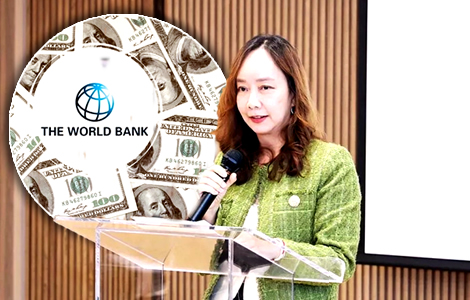
On Thursday, Public Debt Management Office Director-General Jindarat Viriyataveekul said Thailand must keep international funding channels open, despite 99.2% of public debt being denominated in baht, pointing to the World Bank and the Asian Development Bank as key sources, as the country confronts stalled economic growth, an ageing population and anaemic expansion. She stressed the robust structure of current public debt but analysts warn that emerging fault lines must be addressed by the new government due to be formed by May.
Thailand’s sovereign credit rating is a central concern for any incoming government. At present, the risk profile is tightening. Despite official reassurances, the threat of a downgrade remains real.
In fact, there is a 50:50 chance of at least one downgrade from one of the three major rating agencies. Such a move would carry immediate consequences. For example, borrowing costs could rise. Moreover, investor confidence could weaken. Consequently, capital flows may come under pressure.
At the core of the issue are Thailand’s economic fundamentals. Undeniably, structural strains are evident. First, the population is ageing. At the same time, the tax base is declining. As a result, long-term fiscal capacity is under stress.
Debt levels rise above 66% of GDP as regional peers maintain significantly lower ratios
Meanwhile, these demographic and revenue trends weigh on sustainability metrics. Therefore, rating agencies are monitoring the trajectory closely.
Public debt has also climbed. By the end of 2025, it stood at over 66% of GDP. By international standards, that level is considered conservative. However, regional comparisons are less forgiving. In contrast, several Southeast Asian peers report lower ratios.
For instance, Vietnam’s public debt stands between 31% and 34% of GDP. That is roughly half Thailand’s level. Similarly, the Philippines reports debt under 61% of GDP. Although Malaysia’s figure is higher than Vietnam’s, it remains part of the regional comparison. Consequently, Thailand’s 66% ratio compares poorly with some neighbours.
This regional divergence matters. Rating agencies assess sovereigns in a comparative context. Therefore, gaps within Southeast Asia draw attention. Moreover, relative performance influences outlook revisions. At the same time, investors allocate capital based on such metrics. As a result, Thailand’s position within the region carries weight.
High baht-denominated debt limits currency risk while external funding channels remain open
Nevertheless, the structure of Thailand’s debt provides a stabilising factor. Notably, 99.2% of public debt is denominated in baht. As a result, exposure to foreign exchange volatility is minimal. Therefore, currency swings pose limited direct risk to repayment costs. In addition, reliance on foreign currency borrowing is extremely low. Consequently, one major source of external vulnerability is contained.
However, external financing channels remain important. In this regard, Jindarat Viriyataveekul, director-general of the Public Debt Management Office, has been explicit.
She underlined the need for Thailand to continue borrowing from international institutions. For example, she cited the World Bank in addition to the Asian Development Bank. These institutions provide funds linked to particular projects.
Accordingly, such borrowing keeps foreign credit lines open. Moreover, it preserves access to diversified funding sources. In turn, this supports financial stability.
Fixed interest profile and moderate servicing costs offset mounting structural fiscal strain
Significantly, much of the funding for key projects in Thailand comes from Japan. Furthermore, Ms Jindarat highlighted that Thai public debt is based on fixed interest rates. 87.3% of debt is like this, while only 0.23% is unhedged.
Furthermore, the percentage of state revenue used to service the kingdom’s debt is 10.3%. This is significantly less than the 12% rate at which Thai investments would carry a junk rating. Of course, it highlights the need for the government to raise taxation.
At the same time, structural pressures are not easing. An ageing population implies rising long-term obligations. Meanwhile, a shrinking tax base constrains revenue growth. Consequently, fiscal flexibility narrows. Furthermore, public debt above 66% of GDP limits room for manoeuvre. Although conservative by global benchmarks, the ratio stands out regionally. Therefore, comparative weakness remains visible.
However, on Thursday, Ms Jindarat insisted that the figure was only 56% when state-owned enterprises were taken out of the equation. Of course, these include a number of government-owned banks and financial institutions.
Outlook downgrades and weak growth increase pressure on Thailand’s sovereign credit rating
Despite government statements aimed at calming markets, the downgrade probability remains at 50:50. That assessment is not marginal. Instead, it signals a material and immediate risk. Even one downgrade would send a strong signal to investors. Moreover, rating agencies weigh debt levels, demographic trends and revenue capacity together. In Thailand’s case, each factor is under scrutiny.
Overall, the fiscal landscape presents both constraints and buffers. On the one hand, debt exceeds 66% of GDP. On the other hand, nearly all of it is denominated in baht. Similarly, demographic pressures are intensifying. Thailand’s ageing crisis is becoming more acute. Meanwhile, its economy remains dependent on cheaper labour.
S&P retains Thailand’s BBB+ credit rating and its stable outlook. Economy will grow by 2.3% this year
Officials defend government. Moody’s downgrades Thailand’s outlook from stable to negative in new note
Yet currency risk is limited. Nevertheless, both Moody’s and Fitch downgraded their outlook on Thailand in 2025. Notably, S&P retained a stable outlook. However, there is now also a pattern of declining foreign tourist arrivals.
This, combined with anaemically low growth and other issues such as rising corruption, is becoming red lights. For the incoming government, the numbers are clear and the scrutiny will not take long to ramp up.
Join the Thai News forum, follow Thai Examiner on Facebook here
Receive all our stories as they come out on Telegram here
Follow Thai Examiner here
Further reading:
Commerce Minister meets US trade boss Jamieson Greer in Korea. Paul Chambers case still dogs talks