Thailand’s February 8 election plunges into crisis as barcode ballot row explodes. Ombudsman orders probe, 209 academics raise alarm, senators sue, and court action looms. With the count stalled at 94%, the poll could be voided, leaving the nation in political limbo.
Thailand is sliding into another political crisis as questions intensify over the conduct of the February 8th General Election. The poll faces a mounting wave of legal challenges across a widening field of disputes. Foremost is the escalating row over barcodes and QR codes, now a serious threat to the already embattled Election Commission’s conduct of the poll. Beyond that are complaints over constituency-level irregularities, conflicting tabulation data, ballot box management, missing documentation and the stalled count, frozen at 94% complete. On Monday, the Ombudsman gave the Election Commission seven days to justify its use of barcodes while it considers possible legal action.
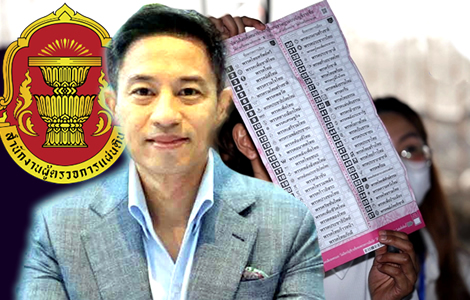
The peril surrounding Thailand’s February 8 general election is intensifying. Currently, multiple petitions now target the conduct of the poll. In particular, scrutiny is focused on ballot design, vote counting, and result tabulation. As a result, several state bodies are engaged.
On February 16, the Office of the Ombudsman formally intervened. At that point, it sent a letter to the Election Commission of Thailand. In the letter, clarification is demanded within seven days. Specifically, the issue concerns barcodes and QR codes printed on ballot papers. Accordingly, the response is required before results are compiled and submitted to the Constitutional Court.
The Ombudsman’s action follows twelve petitions. All of these relate to the management of the February election. Notably, one petition specifically challenges the printing of barcodes on ballots. In doing so, the complaint asks whether this violates Article 85 of the Constitution. It also cites Article 96 of the Organic Act on the Election of Members of Parliament.
Ombudsman demands clarification over ballot barcodes before possible Constitutional Court referral
Article 85 guarantees direct and secret elections. However, petitioners argue that barcodes could compromise secrecy. In particular, they question whether ballots can be traced to individual voters. As a result, the Ombudsman has requested a formal explanation from the Election Commission. Accordingly, the Commission has seven days to respond.
In total, three petitions prompted the clarification request. For example, one was filed by Mr. Patarapong Supakorn, also known as Lawyer Aun Buriram. Meanwhile, another was submitted by Mr. Tankawin Ratwattakangkul, described as a businessman and independent academic. Additionally, a third petitioner requested anonymity.
Under procedure, the Ombudsman will review the Commission’s reply. Subsequently, the matter will then be presented at an Ombudsman meeting. If so, the complaint is deemed to have merit, it will be forwarded to the Constitutional Court. If not, the case will be closed.
At present, Thailand presently has two Ombudsmen. Specifically, Mr. Songsak Saichue serves as Chairman. In addition, Pol. Gen. Sarayuth Sanguanphokai also holds office. Meanwhile, the selection process for a third Ombudsman is ongoing.
People’s Party challenges barcode use, claiming ballots can be traced to individual voters
Concerns over ballot secrecy are central to the dispute. The People’s Party has raised repeated objections. Its leader, Nattapong Ruangpanyawut, has publicly challenged the Commission. He claims the barcode on the pink party-list ballot can identify voters. He alleges it can trace ballots back to individuals.
The Election Commission has denied these claims. It maintains that ballots remain secret. However, critics dispute this assurance. They argue that barcodes correspond to voter information on ballot stubs.
Experts have stated that the barcode matches the name of the voter on the stub. Each ballot sheet is torn from a stub before casting. Previously, the Commission indicated that ballots and stubs would be stored separately. Critics cite regulations suggesting otherwise.
Election Commission Regulation 184 is central to the argument. Legal scholar Prinya Tevanarumitkul of Thammasat University has questioned the rule. He states the regulation requires stubs to be placed in the same ballot box. If correct, ballots and identifying stubs would be stored together.
Allegations widen to data leaks, QR codes, vote discrepancies and stalled national count
Mr. Nattapong has also alleged possible data leakage. On February 15, he suggested voting data may have leaked from the Commission’s database. He claimed dark web markets were offering voting data for sale. No official confirmation of such leakage has been reported.
Questions also surround QR codes printed on green constituency ballots. Their specific purpose remains unclear. No detailed explanation has been issued publicly.
Beyond ballot design, broader discrepancies are under review. Experts and academics have cited inconsistencies in vote totals. They highlight a gap between party-list and constituency vote counts. The difference approaches 400,000 votes. Each voter receives two ballots. Critics argue that such a large discrepancy requires explanation.
Allegations extend to polling station procedures. Questions have arisen about vote counting during power outages. Reports cite ballots marked on overlapping papers. Observers point to inconsistencies in polling station tallies. Aggregated results have also been challenged.
The national vote count has drawn attention. The Commission’s unofficial count stalled at 94 per cent on election night. Several days later, no official result has been certified. The delay has intensified scrutiny.
Irregular ballot storage claims and cross party criticism deepen the election controversy
Reports also allege irregularities in ballot storage. Critics claim procedures were not strictly followed. Some allege ballot boxes were moved or stored improperly. There are claims that ballot papers were found in landfills. Other reports cite vote totals exceeding the number of eligible voters in certain constituencies.
The controversy has broadened politically. Both the People’s Party and the Pheu Thai Party have accepted the reported landslide win of the Bhumjaithai Party. However, members across parties have criticised the Election Commission’s management. Some elected MPs, even from the winning Bhumjaithai Party, have also called for clarification.
On February 16, a group of 209 legal professors and academics issued a statement. They titled it “The Election Commission’s Responsibility in Managing the Election.” The signatories expressed concern about the conduct of the February 8 poll. They identified four main issues.
First, they questioned whether secret balloting was preserved. The note signed by the group of academics cited Article 85 of the 2017 Constitution. They argued that if ballots can be traced, secrecy is compromised. They stated that secret voting is a fundamental democratic principle.
209 academics outline four key concerns over secrecy, counting delays and ballot storage
Second, they raised concerns about polling station vote counting. The high-powered group cited reports of counting during power outages. At the same time, they referred to ballots marked on overlapping sheets. They pointed to discrepancies in announced results.
Third, they criticised the pace and accuracy of the national count. The academic experts noted the 94 per cent figure remained unchanged. After that, they highlighted the gap between constituency and party-list totals. They stated that such a discrepancy should not occur when each voter receives two ballots.
Fourth, they questioned ballot collection and storage. In particular, they stated that procedures may not have been strictly followed. They suggested that movement and storage of ballot boxes could create opportunities for interference.
The statement emphasised the Commission’s responsibility. The group called for detailed explanations. In addition, the legal experts urged transparency and full opportunity for questioning. It stated that legal mechanisms should not be used to silence critics.
Senate committee and senator escalate pressure as legal challenges reach the Supreme Administrative Court
The Senate Committee on Political Development has also entered the debate. Its chairman, Mr. Noraset Prachyakorn, posted comments on February 16. He stated that if votes can be traced, the election is no longer secret. He described the situation as a complete failure if secrecy is lost.
The committee has scheduled a meeting for February 17 at 10:00 a.m. The agenda includes the Commission’s prosecution of citizens. These citizens had demanded a recount in Constituency 1 of Chonburi Province. Officials and legal representatives have been invited to provide clarification.
Pro democracy activist Senator Nantana Nanthavaropas has also spoken publicly. On February 16, she posted criticism of the ballot design. The upper house member described the ballots as deceptive. Notably, she insisted that storing ballots and stubs together removes secrecy. She also noted that sample ballots sent to households did not display barcodes.
Senator calls for election to be voided and ballots destroyed amid mounting political pressure
She called for the election to be declared void. She demanded that all ballots be destroyed. Her comments add to mounting political pressure.
Legal action has now reached the Supreme Administrative Court. Senator Akkarawat Pongthanachalitkul, a reserve-list senator, filed suit on February 15. The lawsuit targets the Election Commission, its office, and the Secretary-General. It alleges misconduct in managing the parliamentary election.
The filing challenges the printing of barcodes and QR codes. It argues that this violates constitutional principles of secret voting. The lawsuit was submitted through the electronic administrative litigation system.
The plaintiffs request that all ballots cast on February 1 and 8 be declared invalid. This includes both proportional and constituency ballots. They seek an order for a new election. They also request that certification of results be temporarily suspended pending judgment.
The suit further seeks compensation for the costs of holding a new election. It asks that the Commission and named officials be held jointly responsible. It also calls for penalties under the Constitution of the Election of Members of the House of Representatives, B.E. 2561 (2018).
Prospect grows that the Feb 8 election could be voided leaving Thailand under a caretaker government
Mr. Akkarawat stated that the Commission had defended the barcode measure as a security step. The Commission said it aimed to prevent counterfeit ballots. However, he argued this explanation was unconvincing. He noted that referendum ballots did not contain barcodes or QR codes.
The reserve senator claimed the difference suggests targeted application in parliamentary elections. He stated that if ballots are photographed during counting, votes could be traced. He said this could undermine voter confidence.
Poll could be voided if court cases underway succeed. Public however has faith in Election Commission
People’s Party and Pheu Thai Party call for Election Commission to back up Sunday’s election outcome
As legal proceedings advance, the Constitutional Court may become central. The Ombudsman may refer the barcode issue to the Court. Several petitions already request a constitutional review. There is a rising prospect that the February 8 election could be declared null and void.
For now, the Election Commission has not certified the final results. The official count remains incomplete. Public debate continues across political lines. As the days pass, it looks like the February 8th elections are in jeopardy. After that, Thailand faces another political unknown under a caretaker government without an elected lower house.
Even if a new poll is ordered, there are now serious doubts about the competence and capacity of the Election Commission after a national election that has degenerated into a shambolic exercise.
Join the Thai News forum, follow Thai Examiner on Facebook here
Receive all our stories as they come out on Telegram here
Follow Thai Examiner here
Further reading:
People’s Party and Pheu Thai Party call for Election Commission to back up Sunday’s election outcome
Outcry as anomalies and errors detected in Sunday’s General Election. Spontaneous protests break out
Trade expert warns the government on barter deals with China being pursued by the Commerce Ministry
Top Commerce Ministry official warns that any US trade deal must wait for new parliament and cabinet
Asean Summit on Monday and Tuesday seen by United States as pivotal to restoring border peace
War to continue says PM Anutin. Dismisses President Trump’s ceasefire talk as a ‘misunderstanding’