US and Israel launch major strikes on Iran, triggering missile retaliation across the Gulf, mass airspace closures and 9,600 flight delays worldwide. Oil routes through the Strait of Hormuz face risk as Bangkok braces for aviation fallout and rising global tension.
Senior ministers and officials in Bangkok are closely monitoring rapidly escalating developments in the Middle East following the outbreak of all-out war between the United States, backed by Israel, and Iran’s religious regime. Reports indicate that Iran has already retaliated with strikes on US bases, Israel and the United Arab Emirates. The stated aim of the US-led operation is the removal of the reviled Shia Muslim-led regime in Tehran. Reports on Saturday showed Iranians in the capital and other cities celebrating the assault in the hope of regime change.
Mounting fears are rising in Bangkok after Israel and the United States attacked Iran on Saturday. Officials believe this is not another limited exchange. Instead, it signals a broader military escalation. Already, the conflict has expanded across the Middle East.
Iranian forces have struck targets throughout the region. Notably, US bases were hit. In addition, the United Arab Emirates came under attack. Targets in Abu Dhabi and Dubai were struck. Consequently, governments across Asia began monitoring developments in real time.
For Thailand, the immediate concern is aviation disruption. Because the Middle East is a primary east–west air corridor, closures carry a direct impact. Therefore, Thai authorities are assessing flight schedules and contingency routes.
Airlines reroute flights as Gulf airspace shuts and Putin warns of possible nuclear war
Meanwhile, airlines are recalculating fuel loads and diversion plans. As a result, delays are spreading beyond the region. Moreover, wider geopolitical risks are being tracked. Russian President Vladimir Putin has issued a warning about possible nuclear war. Thus, the crisis has widened beyond conventional military exchanges.
Across the Persian Gulf, countries closed their airspace on Saturday. The move followed Iranian retaliation against US bases across the peninsula. Earlier that day, Israel and the United States launched strikes on Tehran.
In response, Iran targeted military sites and strategic assets. Consequently, commercial aircraft were cleared from wide sections of airspace. Airlines worldwide began urgent operational changes.
At the same time, reports from Tehran and other cities showed Iranians celebrating what they hope will be the downfall of the reviled regime, which reportedly killed over thirty thousand protesters in January. The protests then demanded the return of the Pahlavi dynasty Shah.
Thousands of flights delayed and cancelled as Gulf closures disrupt global aviation corridors
According to FlightAware, the disruption escalated rapidly. As of 1030 GMT on Saturday, more than 9,600 flights were delayed worldwide. Additionally, more than 500 flights were cancelled. Many of the affected services were concentrated in the Middle East. Therefore, one of the world’s busiest aviation corridors slowed sharply within hours.
Qatar temporarily closed its airspace. As a result, Qatar Airways halted operations. The airline ranks among the largest international carriers. Similarly, the United Arab Emirates shut its skies. Kuwait followed with its own closure. Notably, both states were among those targeted by Tehran. Consequently, civilian aviation across the Gulf was suspended or rerouted.
Most major airlines cancelled flights into Gulf hubs. Dubai, home to Emirates, saw immediate disruption. In addition, Indian carriers reduced services. IndiGo and Air India suspended multiple routes.
Meanwhile, some aircraft aborted flights midair. An Emirates A380 en route to San Francisco turned back and returned to Dubai. Therefore, long-haul operations were directly affected.
Regional air forces engage missiles as European and Asian carriers suspend Middle East services
Jordan announced defensive air force drills to protect its airspace. Subsequently, officials said two ballistic missiles were shot down. Likewise, Kuwait reported engaging incoming missiles. As a result, military activity extended across several borders.
Because the Middle East connects Europe, Asia and Africa, closures ripple globally. Iraq and Bahrain also shut their airspace after the Israeli-US campaign began. Consequently, airlines faced immediate decisions to suspend or divert services.
Among the carriers halting flights were Turkish Airlines and Deutsche Lufthansa. In addition, India’s primary carriers paused regional operations. British Airways cancelled flights to Tel Aviv and Bahrain through March 3.
It also cancelled a scheduled service to Amman. Meanwhile, Air France suspended flights to Tel Aviv and Beirut. Emirates confirmed multiple disruptions caused by regional closures. At the same time, Israel closed its airspace and urged citizens to stay away from airports. Iran also shut its skies following the attacks. Therefore, civilian aviation across much of the region contracted sharply.
Aviation safety alerts issued as regulators warn of high risk across conflict airspace
Last year, an Iranian strike on the largest US military base in the region forced Qatar and neighbouring countries to close their airspace. Tens of thousands of passengers were stranded.
Consequently, operations at Doha airport fell into chaos. Over the past two years, Middle Eastern airspace has faced repeated restrictions. Airlines have cancelled profitable routes and absorbed higher fuel costs. In some cases, aircraft flew through alternative corridors, including over Afghanistan. Thus, the industry has repeatedly adjusted to conflict-driven closures.
On Saturday, the European Union Aviation Safety Agency issued urgent guidance. EASA recommended that operators avoid all flight levels and altitudes in the affected region. In a safety advisory, it cited a high risk to civil aviation. Specifically, it warned of spillover risks, misidentification and interception failures. Therefore, regulators signalled that the threat environment had intensified.
Russia’s air transport authority, Rosaviatsia, cancelled all commercial flights to Israel and Iran until further notice. Meanwhile, Turkish Airlines suspended flights to ten Middle Eastern nations. Air France confirmed cancellations and said updates would follow. As the list of suspended routes expanded, global flight maps were redrawn.
Trump launches Operation Epic Fury as US and Israel strike Tehran in major escalation
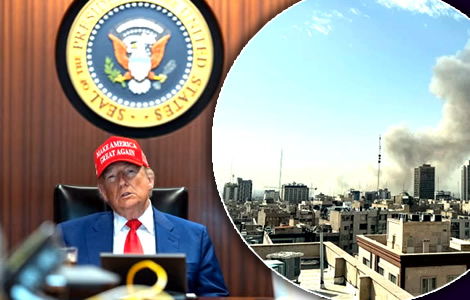
The escalation followed a formal announcement from Washington. President Donald Trump declared the launch of “major combat operations” in Iran. He spoke from the Oval Office in a video posted early Saturday.
The operation is named “Operation Epic Fury.” Trump said the objective is to stop Iran from developing a nuclear weapon. He also cited the need to protect American personnel and interests at home and abroad.
Furthermore, Trump described the Iranian regime as an imminent threat. Standing behind a podium in a navy suit and “USA” cap, he acknowledged possible American casualties. “The lives of courageous American heroes may be lost,” he said. However, he stated the mission was necessary for future security.
Israel confirmed participation in the offensive. The Associated Press reported a daylight strike on Tehran. At the same time, the Israel Defence Forces said Iran launched missiles toward Israel. Consequently, the confrontation widened immediately. Israeli Prime Minister Benjamin Netanyahu said the joint action aimed to remove an existential threat posed by Iran. He stated the objective was to end the threat from Iran’s ruling leadership.
Iran retaliates with missile fire as Houthis threaten Red Sea shipping and nuclear tensions rise
Meanwhile, Iranian missiles were fired toward Israel, Qatar and Abu Dhabi. In addition, Iranian-backed Houthi rebels in Yemen announced they would resume attacks on shipping in the Red Sea. Previously, such strikes drove up shipping prices and disrupted trade. Therefore, maritime routes now face renewed danger.
Iran’s foreign ministry condemned the US and Israeli strikes. It said defensive and civilian facilities were targeted. Moreover, it stated the offensive occurred while Iran was engaged in diplomatic discussions with Washington. Tehran called on the United Nations Security Council to act swiftly. Additionally, it described the attacks as criminal military aggression.
Iran’s armed forces pledged a decisive response. Officials stated they were prepared for sustained confrontation. Thus, retaliation remains active as missile exchanges continue.
Trump referred to stalled negotiations over Iran’s nuclear programme. He said Tehran rejected repeated opportunities to renounce nuclear ambitions. Furthermore, he accused Iran of rebuilding nuclear capabilities after earlier US strikes. In June 2025, US forces bombed three Iranian nuclear sites. However, a subsequent US intelligence report said the programme was set back only a few months, not fully destroyed as initially claimed.
Trump defends eighth intervention as comparisons are drawn with the Afghanistan and Iraq conflicts
Trump warned that Iran was developing long-range missiles. He said such weapons could threaten US allies in Europe and potentially reach American shores. Therefore, he framed the campaign as a defensive action.
He also called on Iran’s Revolutionary Guard and military forces to lay down their arms. He described the operation as massive and sweeping.
This intervention is the eighth military action of Trump’s second term. Previously, he pledged to end costly foreign wars. Nevertheless, this campaign marks one of the largest offensives of his presidency. Democrats are expected to criticise the absence of congressional authorisation. In contrast, President George W. Bush sought approval before launching wars in Afghanistan and Iraq after the September 11 attacks.
Those earlier conflicts demonstrated the limits of air campaigns alone. While initial strikes achieved a rapid impact, ground forces were later deployed. Subsequently, prolonged civil wars followed in both countries. Tens of thousands of people were killed. Therefore, the scale of current operations is being measured against that history.
Strait of Hormuz tensions rise as carriers deploy and diplomatic talks collapse
Over the past month, tensions between Washington and Tehran intensified. Trump publicly called for regime change. He signalled plans for a second direct attack by what he described as a “massive armada.” Two US aircraft carriers were deployed within striking distance of Iran. A central focus is securing the Strait of Hormuz.
Roughly 20 per cent of the world’s oil supply passes through that narrow channel. At one point, it is only 21 miles wide. Consequently, any attempt to close or restrict it could move global energy markets sharply.
The US Fifth Fleet, based in Bahrain, is tasked with keeping the strait open. It will also counter Iranian attacks on shipping. Public exchanges between Trump and Iran’s Supreme Leader, Ayatollah Khamenei, intensified in recent weeks. On February 17, Khamenei posted an image depicting the USS Gerald R. Ford at the bottom of the ocean. The Ford is the world’s largest warship and one of the carriers deployed to the region.
Meanwhile, diplomatic efforts had continued days before the strikes. US special envoy Steve Witkoff, Jared Kushner and Iranian Foreign Minister Abbas Araghchi met in Geneva on February 26. Oman’s Foreign Minister Badr Al-Busaidi served as mediator. Technical talks were scheduled for Vienna the following week. However, military action overtook negotiations.
Years of threats and assassination plots deepen hostilities between Washington and Tehran
In January, Araghchi warned that Iran was ready for war with the United States. He cautioned against repeating what he called a failed June operation.
Earlier, on January 12, the US government issued a security alert directing Americans to leave Iran by land immediately. Several foreign embassies in Tehran reduced operations or temporarily closed, including the British embassy.
The confrontation also draws on earlier hostilities. In January 2020, Trump ordered a drone strike that killed Qassem Soleimani, Iran’s military and intelligence chief. Subsequently, Iran repeatedly threatened retaliation against Trump. During the 2024 presidential campaign, he received additional Secret Service protection due to those threats.
Soon after his election in November 2024, the Biden Justice Department charged an alleged Iranian government asset in a murder-for-hire plot targeting Trump. Later, on February 4, 2025, Trump warned that Iran would “get obliterated” if he were assassinated. As a result, personal threats and state-level conflict have unfolded in parallel.
Second foreign intervention adds to the rising death toll and widening global aviation disruption
This marks the second major foreign intervention of Trump’s current administration. Earlier this year, US forces captured Venezuelan President Nicolás Maduro and his wife, Cilia Flores. That operation killed nearly 40 people.
Additionally, US forces struck dozens of boats accused of illegal narcotics trafficking in the Caribbean and eastern Pacific. According to a tally based on US government figures, 144 people were killed in those maritime operations.
US attack on Iran and Gulf of Hormuz threats spark fears of an oil price shock and more economic pain
PM comforts 4 bereft Thai families as the war death toll for Thai nationals in Israel reaches 48 since Hamas invasion
Now, aviation disruption and military escalation are unfolding simultaneously. Thousands of passengers face delays. Hundreds of flights remain cancelled. Moreover, airspace closures continue to shift.
Airlines are recalculating schedules, fuel loads and crew rotations daily. Consequently, global aviation remains under sustained strain. In Bangkok, authorities continue monitoring the situation closely as military operations proceed across the Middle East.
Join the Thai News forum, follow Thai Examiner on Facebook here
Receive all our stories as they come out on Telegram here
Follow Thai Examiner here
Further reading:
Liquidity crisis or shortage of cash on the ground is shrinking Thailand’s economic growth prospects
Thai Minsters engage with US trade chief Jamieson Greer in Paris at global OECD ministerial meeting
Commerce Minister meets US trade boss Jamieson Greer in Korea. Paul Chambers case still dogs talks