Thailand slashes power bills for low users under new June tariff, hits heavy users, targets costly energy deals, and pushes rooftop solar as LNG-driven price pressures surge nationwide.
Thailand is preparing for a sweeping overhaul of electricity pricing as Energy Minister Ekanat Promphan drives a high-stakes tariff reset from June 2026. The plan responds to the Middle East cost-of-living crisis. It cuts rates for millions of low-usage households while sharply raising costs for heavy consumers, confronting costly legacy energy contracts, and accelerating a nationwide shift to rooftop solar, as global energy shocks and rising LNG dependence intensify one of the most significant power pricing reforms in over two decades.
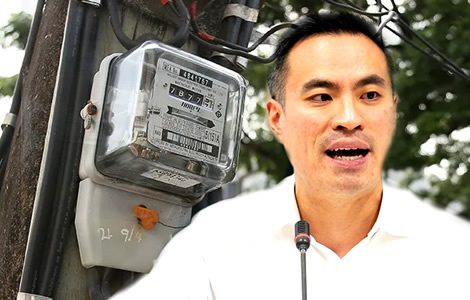
Thailand’s Energy Minister Ekanat Promphan is advancing a new electricity tariff regime set to begin with the June 2026 billing cycle. The proposal introduces a three-tier pricing structure. It is designed to cut costs for low-usage households.
At the same time, it increases charges for heavy users. The move follows rising energy prices linked to the Middle East conflict. As a result, electricity costs have climbed. Therefore, the ministry is acting to ease pressure on households.
Under the new structure, consumption below 200 units will not exceed 3 baht per unit. This measure targets 15.4 million households. In addition, another 7.8 million households will receive this capped rate for their first 200 units.
Tiered electricity pricing expands with mid and high usage households facing steady and rising rates
Meanwhile, households consuming between 200 and 400 units will pay 3.95 baht per unit. This group covers 4.6 million households. However, they still benefit from the discounted first 200 units. As a result, their total bills may fall.
By contrast, households using more than 401 units will face higher tariffs. The rate will exceed 5 baht per unit. Previously, it stood at 4.50 baht per unit. Therefore, the increase is clear.
However, the ministry stated that minor excess above 400 units will not immediately trigger sharp increases. Instead, higher costs become more evident at 480 to 500 units. At that level, the new tariff may reach a break-even point. Overall, the reform will affect 23.2 million households nationwide.
Notably, the current tariff system has remained unchanged for over 20 years. Consequently, it does not reflect consumption-based pricing. Accordingly, the new system applies lower rates to lower usage. Conversely, higher consumption will result in higher costs.
Heavy reliance on natural gas and LNG imports exposes Thailand’s electricity pricing to global volatility
At present, Thailand relies heavily on natural gas for electricity generation. More than 60% of power comes from gas. In addition, about 30% of liquefied natural gas is imported. Therefore, global price volatility directly affects domestic tariffs.
During crises, LNG imports become more expensive. As a result, electricity prices rise. To address this, the ministry aims to cut LNG imports by 5 to 10%. This would reduce the share to around 20%. Consequently, the fuel adjustment charge could fall by 10 satang per unit.
Currently, the average tariff for May to August stands at 3.95 baht per unit. Previously, it was 3.88 baht per unit from January to April. The increase reflects a 7 satang rise in the FT charge. Therefore, the ministry is seeking funding to reduce costs.
Options include central government funds. In addition, contributions from three electricity authorities are under review. Compensation mechanisms are also being considered. Moreover, officials are examining differences in natural gas cost estimates.
Government targets lower tariffs and renegotiates costly renewable contracts to reduce long-term burden
Lower actual costs could reduce LNG imports. As a result, savings may be passed to consumers. The goal is to reduce the average tariff to 3.50 baht per unit. This reduction will focus on the first 200 units.
At the same time, Ekanat Promphan is targeting legacy renewable energy contracts. These agreements include price adders that increase purchase costs. Currently, 4,000 megawatts fall under such contracts.
This represents about 10% of total generation capacity. Prices range between 3 and 5 baht per unit. In addition, these contracts renew automatically. They also add around 20 satang per unit to the FT charge. Therefore, they remain a major cost burden.
Accordingly, the minister has begun negotiations with private producers. He is seeking price reductions. However, he has warned that contracts may be terminated. He stated that solar electricity should not exceed 2.20 baht per unit.
Meanwhile, biomass prices must also be reviewed. Furthermore, he noted that many producers have already recovered their investments. Therefore, current pricing no longer reflects market conditions.
Solar rollout expands with loans and incentives to cut high household electricity costs long term
If negotiations fail, contracts may be cancelled. The ministry has already consulted the Office of the Attorney General. Legal action is considered possible. However, the minister stated the government is prepared for disputes. He said electricity prices cannot remain high. Officials estimate that resolving the adder issue could save 10 satang per unit.
In parallel, the ministry is promoting rooftop solar installations. This policy targets high-consumption households. Specifically, those using 480 to 500 units are encouraged to install solar systems. For example, a 1-kilowatt system produces 100 to 150 units per month. Meanwhile, a 2 to 3 kilowatt system produces 400 to 450 units.
Therefore, solar can offset a large share of consumption. Installation costs for a 2 to 3-kilowatt system are about 60,000 baht. However, financing options are available. The government offers low-interest loans with no down payment.
The repayment period is 10 years. The interest rate is set at 3%. As a result, monthly payments are about 600 baht. By comparison, equivalent electricity usage could cost 1,500 baht. Therefore, households can shift spending toward solar investment.
Faster approvals and expanded buyback quotas aim to accelerate solar adoption across households
To support this policy, installation procedures will be streamlined. Previously, approvals could take years. Now, timelines will be significantly reduced. For instance, the Provincial Electricity Authority is expected to approve meter installations within one month. This follows coordination with the Interior Ministry.
For systems used only for self-consumption, approval may take just seven days. As a result, adoption is expected to increase rapidly. Moreover, households can sell excess electricity back to the grid. The purchase rate is set at 2.20 baht per unit. This is higher than the rate offered to solar farms.
Thailand faces inflation at 3.5% in 2026 as Anutin braces for growing unpopularity. Net Zero won’t help
Energy Minister confirms no rise in electricity prices as government policy aims for cheaper tariffs
Previously, the government limited buyback capacity to 90 megawatts. This represented only 0.1% of total national capacity of 50,000 megawatts. Therefore, participation remained low. Now, the quota will increase to 500 megawatts.
Further expansion will depend on public response. In addition, the ministry is preparing to seek further budget support. Discussions with the Finance Ministry are underway. These funds will support solar installation and related measures.
Overall, the policy combines tariff restructuring, contract renegotiation, and renewable expansion. Each measure targets cost reduction. At the same time, energy efficiency is being enforced through pricing. Finally, Ekanat Promphan confirmed that the new tariff will take effect in June. It will apply nationwide. Therefore, households will see changes in the next billing cycle.
Join the Thai News forum, follow Thai Examiner on Facebook here
Receive all our stories as they come out on Telegram here
Follow Thai Examiner here
Further reading:
IMF warns of slow growth as S&P express concern about Thailand’s banking system amid uncertainty
60-day visa regime to be ended confirms Minister responding to rising industry security concerns
Tourism boss warns Thailand it is facing a Chinese blacklist if another security controversy erupts