A suspected yakuza boss was snared at Suvarnabhumi Airport moments before take-off after a Thai-Japanese manhunt. Police say Takafumi Sugawara ran a Cambodia scam empire that stole over ฿200 million and trapped recruits in call-centre compounds.
A suspected Japanese yakuza boss accused of running a Cambodia-based scam empire that stole more than ฿200 million was dramatically arrested at Suvarnabhumi Airport moments before an international flight, ending a joint Thai-Japanese manhunt that uncovered allegations of sophisticated telephone fraud, fake police investigations, forced labour in Cambodian scam compounds and a criminal network stretching from Japan through Cambodia to Thailand.
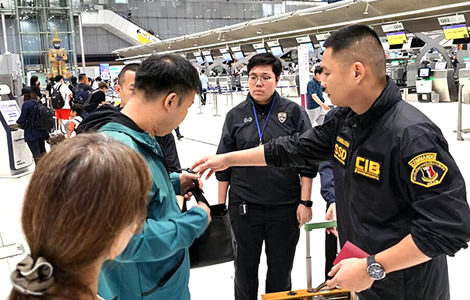
A suspected Japanese yakuza boss accused of running a massive Cambodia-based scam operation was seized at Suvarnabhumi Airport just minutes before take-off.
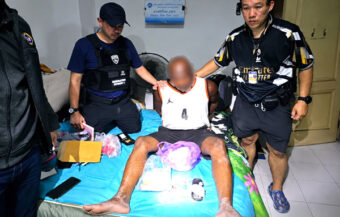
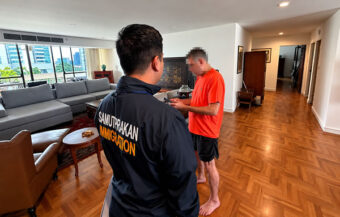
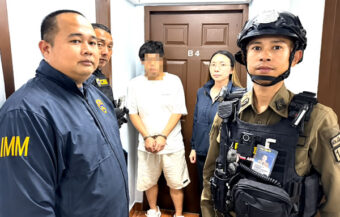
Takafumi Sugawara, 31, was arrested on Sunday evening as he checked in for a Malaysia Airlines flight. Officers from the Central Investigation Bureau (CIB) and the Immigration Bureau moved in before the gate closed. The Japanese national was immediately detained and escorted away.
Police say Sugawara was no ordinary fugitive. Japanese investigators identify him as a senior yakuza figure and the alleged head of a call centre scam network operating from Cambodia. The organisation is accused of stealing more than one billion yen, or over ฿200 million, from victims.
Thai and Japanese police trace alleged yakuza scam boss before dramatic Suvarnabhumi airport arrest
Notably, the network allegedly carried out at least 40 frauds during 2024 alone. Investigators say the operation stretched from Japan to Cambodia and into Thailand.
The arrest followed weeks of intelligence work between Thai and Japanese authorities. Information was first shared through Japan’s Anti-Online Fraud Centre. The Japanese Embassy then alerted Thai investigators. In response, officers began tracing the suspect’s movements inside Thailand.
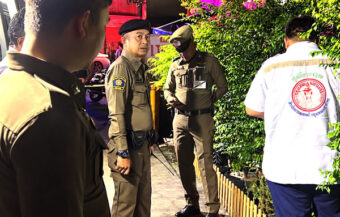
Police eventually learned Sugawara had booked a flight to a third country. As part of this, surveillance teams were dispatched to Suvarnabhumi Airport. Plain-clothes officers blended into the crowds. Some posed as travellers. Others watched departure areas and airline counters.
The suspect appeared only moments before check-in closed. However, officers were waiting. They identified him at the Malaysia Airlines counter and quickly moved to make the arrest.
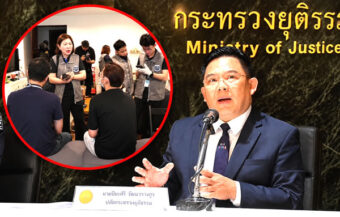
According to Pol. Lt. Gen. Nattasak Chaowanasai, commissioner of the Central Investigation Bureau, said Sugawara was a prohibited person under Thailand’s Immigration Act. Authorities subsequently revoked his permission to remain in the kingdom.
Suspect faces deportation as investigators reveal elaborate three-stage telephone fraud scheme
Thereafter, he was transferred to the detention facility of Immigration Division 3. Thai authorities are now preparing his deportation to Japan, where legal proceedings await.
Japanese investigators believe Sugawara directed a sophisticated fraud machine from Cambodia. The gang allegedly targeted victims using a carefully structured telephone scam.
The operation began with automated calls. Victims were told the calls came from NTT, one of Japan’s largest telecommunications providers. The recorded message warned that telephone services were about to be terminated.
Victims were instructed to press a number for assistance. Once connected, they were transferred to frontline operators. Those operators collected personal information and assessed potential targets.
The call then moved to another layer of the organisation. At that stage, gang members allegedly impersonated police officers. Others posed as prosecutors’ office representatives.
Victims lost millions in fake investigations as recruiters lured workers into the online scam network
Victims were told their bank accounts had become linked to criminal activity. In some cases, callers claimed the accounts were connected to yakuza operations. The pressure then intensified.
Callers allegedly warned victims they faced serious legal consequences. They were told they needed to prove their innocence. Consequently, victims were instructed to transfer funds to designated accounts for examination.
The money was never returned.
Investigators say the fraud generated extraordinary profits. Yet the telephone scam was only one side of the operation.
Separately, police uncovered allegations of a recruitment pipeline targeting Japanese nationals. The network allegedly advertised fake jobs and created bogus employment profiles. Prospective workers believed they were accepting legitimate overseas positions.
Instead, they were allegedly drawn into a criminal enterprise.
Recruits flown to Cambodia were allegedly trapped and forced to run scam centre operations
After accepting the offers, recruits were flown to Cambodia. Most arrived through Phnom Penh. From there, investigators say they were taken to locations controlled by the network.
On another front, police allege many recruits were prevented from leaving. Rather than starting legitimate jobs, they were forced to work inside scam centres. Some became call operators. Others served as administrators.
According to investigators, threats were used to maintain control. As a result, the organisation secured a steady workforce for its fraud operations.
The allegations paint a picture of a highly organised transnational network. Victims were allegedly deceived at several levels. Money was extracted through fear and impersonation. Meanwhile, workers were allegedly recruited through deception and transported across borders.
Intelligence trail led to airport capture as police widen probes into regional scam networks
The operation eventually attracted the attention of Japanese authorities. Thereafter, investigators pieced together evidence linking the network to dozens of fraud cases and losses exceeding ฿200 million.
Crucially, intelligence suggested the alleged gang leader was hiding in Thailand. That discovery triggered the hunt that ended at Suvarnabhumi Airport on Sunday evening.
Police top brass push back on claims by Cambodia’s Hun Sen that scammers enter through Thailand
24 year old Nigerian scammer arrested in Nonthaburi after 23 complaints police linked to Thai girlfriend
By the time Sugawara reached the check-in counter, the operation was already in place. Indeed, officers had spread throughout the terminal. Surveillance teams were watching. The suspect had little room to manoeuvre.
Within minutes, the alleged yakuza boss was in custody.
Meanwhile, investigators in Thailand and Japan continue examining the wider network, its finances and its operations across the region.
Join the Thai News forum, follow Thai Examiner on Facebook here
Receive all our stories as they come out on Telegram here
Follow Thai Examiner here
Further reading:
Police top brass push back on claims by Cambodia’s Hun Sen that scammers enter through Thailand
Money Laundering Office seizes assets with money trail linked to South African financier Ben Smith
Kla Tham MP dismisses unproven scam centre claims about Deputy Prime Minister Thamanat Prompow
People’s Party warns Anutin of a No Confidence move over cabinet links to Cambodian scam networks
United States, South Korea and United Kingdom act against Cambodian scam industry with Thai tie-ins