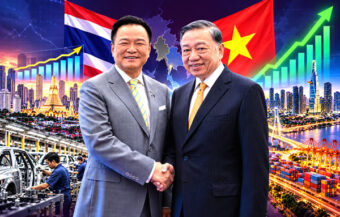
Thailand tilts toward China in ASEAN survey with 55% support versus 45% for the US. Regionally, China leads 52–48 in the ISEAS-Yusof Ishak Institute poll of 2,008 across member states, conducted before US Operation Epic Fury on Iran. It confirmed a narrow, divided Southeast Asian ten-nation bloc.
An annual survey produced by a leading international affairs think tank in Singapore shows the ASEAN 10-nation bloc has shifted from 2025 and now marginally supports China over the United States. With a new government taking office this week, led by Prime Minister Anutin Charnvirakul, the survey shows 55% of Thai people support China, while a minority of 45% still support the ‘land of the free’. Notably, the survey was conducted before the US attack on Iran and Operation Epic Fury. It highlights that the new Thai government faces a difficult task balancing the two powers. Especially as the survey shows the country’s neighbours moving into the orbit of the United States or in the opposite direction.
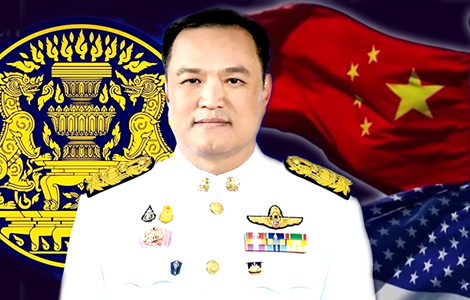
In Thailand, public preference in a forced geopolitical choice leans toward China. However, the margin remains narrow within Southeast Asia. The latest regional survey shows Thailand at 55 per cent support for China. Meanwhile, 45 per cent of Thai respondents chose the United States. Therefore, Thailand sits within a divided regional alignment pattern.
The findings come from the annual State of Southeast Asia survey. It is produced by the ISEAS-Yusof Ishak Institute. Moreover, the 2026 edition marks the eighth release of the study. The survey was conducted from January 5 to February 20. Notably, it ended before the US launched Operation Epic Fury on Iran. Therefore, responses reflect sentiment prior to that escalation.
Across Southeast Asia, the forced-choice question produces a narrow split. Regionally, 52 per cent choose China. In contrast, 48 per cent choose the United States. Moreover, the margin is described as structurally tight. Therefore, no decisive regional pivot emerges in the results.
In Thailand and ASEAN survey shows a narrow China lead over US before Operation Epic Fury escalation
Thailand aligns with a group leaning toward China. Additionally, Indonesia records 80.1 per cent support for China. Malaysia follows at 68 per cent. Singapore stands at 66.3 per cent. Brunei records 53.5 per cent. Timor-Leste shows 58.2 per cent. Therefore, Thailand’s 55 per cent places it in the lower-middle range of China support.
However, several countries diverge strongly from this pattern. The Philippines records 76.8 per cent support for the United States. Meanwhile, Myanmar shows 61.4 per cent US support. Vietnam also records 59.2 per cent. Cambodia shows 61 per cent. Therefore, ASEAN displays sharply split preferences across subregions.
Thailand’s position is notable given its formal alliance structure. The country remains a military ally of the United States. However, public sentiment leans toward China in the survey. Moreover, Thailand has deepened economic ties with Beijing over two decades. Therefore, the result reflects a dual-track external orientation.
This shift is commonly linked to political developments since 2014. Following the coup d’état, Thailand’s relations with Beijing strengthened. Moreover, the first government of General Prayut Chan-o-cha accelerated engagement. However, the survey does not measure official policy alignment. Therefore, it captures perception rather than state strategy.
In ASEAN, China seen as top economic power while US retains its appeal as a strong ally amid regional split
Across ASEAN, China’s influence is widely recognised. Additionally, 55.9 per cent view China as the top economic power. Meanwhile, 49 per cent see it as the leading political and strategic power. However, respondents also express strategic concerns. Therefore, influence and caution coexist across the region.
Thailand is included in this broader perception structure. Moreover, concerns about maritime disputes and regional security appear in responses. Additionally, encroachments in exclusive economic zones are cited. However, the intensity of concern varies by country. Therefore, Thailand’s position reflects a mixed perception environment.
In contrast, the United States retains strong support in specific allies. The Philippines remains the clearest example. It records 76.8 per cent support for the United States. Moreover, this reflects long-standing defence ties. Therefore, treaty alliances continue to shape responses strongly.
Elsewhere, Vietnam and Cambodia also show US preference. Vietnam records 59.2 per cent support for the United States. Cambodia shows 61 per cent. Meanwhile, Myanmar records 61.4 per cent. However, Laos remains evenly split. Therefore, mainland Southeast Asia shows no unified direction.
In survey, China leads ASEAN while Thailand mirrors oscillating preference and rising Chinese influence
The survey covers 2,008 respondents across ASEAN. Additionally, participants include officials, academics, media, NGOs, and private sector actors. It spans all 11 ASEAN member states. Moreover, Timor-Leste is included following its accession in 2025. Therefore, the dataset reflects a broad regional cross-section.
The results also highlight shifting historical trends. China leads the 2026 result at 52 per cent. However, the United States previously led from 2020 to 2023. Additionally, the US led again in 2025 at 47.7 per cent versus China’s 52.3 per cent. Therefore, leadership has fluctuated repeatedly across editions.
Thailand’s 55 per cent preference for China fits this oscillation. Moreover, it sits slightly above the regional average for China support. However, it remains far from overwhelming dominance. Therefore, Thailand reflects incremental rather than structural change.
The survey also records expectations about future relations. Across ASEAN, 55.6 per cent expect ties with China to improve. Additionally, this outlook covers the next three years. However, expectations for US relations are more cautious. Therefore, future sentiment also tilts slightly toward Beijing.
Experts say ASEAN avoids binary choice as Thailand reflects a balanced outlook amid US-China dynamics
Thailand reflects this broader expectation trend. Moreover, Thai respondents align with improving China relations. However, there is no equivalent strong shift toward the United States. Therefore, expectations mirror current preference patterns.
Experts cited in the survey emphasise regional balance. Scot Marciel, a former US ambassador, notes limited movement toward China. Moreover, he highlights Southeast Asia’s desire to avoid overdependence. However, he also stresses continued US economic importance. Therefore, engagement with both powers remains structurally necessary.
Marciel further states that US policy shifts do not automatically benefit China. Additionally, he notes regional diversification strategies. These include engagement with Japan, Korea, India, and Australia. However, he rejects a strict zero-sum interpretation. Therefore, alignment remains multidirectional.
Wang Huiyao of the Centre for China and Globalisation offers a different reading. Moreover, he argues China is no longer disadvantaged in forced comparisons. However, he also stresses ASEAN autonomy. Therefore, he frames the result as non-exclusive.
ASEAN remains fragmented as Thailand balances US alliance and China tilt amid structural constraints
Wang Zichen also urges caution in interpretation. Additionally, he rejects the idea of a clear choice between blocs. However, he acknowledges China’s improved position in perception. Therefore, the survey reflects balance rather than commitment.
Thailand’s position illustrates this ambiguity. Moreover, it remains a US treaty ally. However, its public preference leans toward China. Additionally, its economic ties with Beijing remain significant. Therefore, Thailand embodies dual alignment dynamics.
Regionally, ASEAN remains fragmented. Indonesia and Malaysia lean strongly toward China. Meanwhile, the Philippines and Vietnam lean toward the United States. However, Laos shows near parity. Therefore, no unified ASEAN direction emerges.
The ASEAN framework remains central to this diversity. The Association of Southeast Asian Nations links all member states. Moreover, it includes economies with different strategic alignments. However, internal divergence persists across the bloc. Therefore, cohesion remains limited in external orientation.
In ASEAN framework links member states amid divergence, while concerns over US Trump tariffs persist
Concerns about external powers also shape responses. US leadership under President Donald Trump is cited as a key concern. Additionally, trade uncertainty and tariffs are referenced. However, concerns are not limited to one power. Therefore, perceptions remain distributed across both superpowers.
Thailand is part of this concern structure. Moreover, it shares regional anxiety over geopolitical uncertainty. However, it also maintains pragmatic economic ties. Additionally, strategic partnerships remain intact. Therefore, Thailand balances concern with engagement.
Trade expert warns the government on barter deals with China being pursued by the Commerce Ministry
China has become a bad news story for business investors who are shifting to ASEAN bloc countries
The survey also highlights structural economic realities. Southeast Asia’s population totals around 680 million. Moreover, its economic weight continues to rise. However, dependency on external powers remains significant. Therefore, alignment decisions reflect structural constraints.
In Thailand, this translates into a stable but divided preference. Moreover, the 55 per cent China support is not overwhelming. However, it is consistent with regional patterns. Additionally, it reflects gradual rather than abrupt movement. Therefore, Thailand remains firmly within ASEAN’s divided middle.
Overall, the findings show a region without a single centre of gravity. Moreover, China holds a narrow regional lead at 52 per cent. However, the United States remains close at 48 per cent. Additionally, Thailand sits within the middle of this spectrum, tilted toward China. Therefore, Southeast Asia remains split. Thailand reflects that split clearly.
However, this presents two nagging problems. Firstly, Thailand is a US military ally. After that, is the fact that Thailand’s neighbours, Cambodia, Vietnam and even Myanmar, support and gravitate towards the United States.
Join the Thai News forum, follow Thai Examiner on Facebook here
Receive all our stories as they come out on Telegram here
Follow Thai Examiner here
Further reading:
Trade expert warns the government on barter deals with China being pursued by the Commerce Ministry
Top Commerce Ministry official warns that any US trade deal must wait for new parliament and cabinet
Asean Summit on Monday and Tuesday seen by United States as pivotal to restoring border peace
War to continue says PM Anutin. Dismisses President Trump’s ceasefire talk as a ‘misunderstanding’
Confusion after Trump’s 20 minute phone call with PM Anutin. US side claimed a ceasefire was agreed