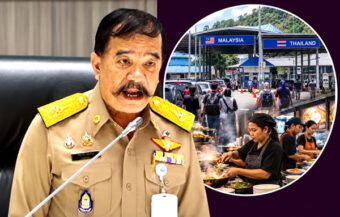
Chinese-linked firms are in Thailand’s crosshairs as PM Anutin’s nominee crackdown widens from tourist hotspots to the wider economy. Raids in Bangkok uncovered 53 high-risk businesses, AMLO-linked names and suspected foreign control spanning restaurants, construction and transport.
Raids on Chinese-owned businesses in Bangkok’s Huai Khwang district have pushed Thailand’s nominee shareholding crackdown into a new phase, shifting attention from tourist hotspots to what officials increasingly see as a deeper challenge inside the wider economy. Investigators have identified 53 high-risk firms, uncovered links to an AMLO watchlist and opened inquiries into suspected nominee structures spanning restaurants, retail, construction and transport. The findings come as Prime Minister Anutin Charnvirakul intensifies a campaign that began last September, raising fresh questions about the scale of foreign influence operating behind Thai corporate fronts. In turn, these firms are colonising lucrative economic sectors.
Thailand’s campaign against nominee shareholdings is moving into a more aggressive phase. The drive began in September, days after Prime Minister Anutin Charnvirakul entered Government House. Since then, enforcement activity has broadened steadily.
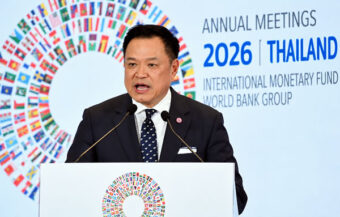
Last week, the prime minister reaffirmed the policy at a high-level meeting of senior officials. The message was clear. Agencies were expected to intensify investigations and increase cooperation.
Significantly, the crackdown is rooted in concerns about illegal foreign control of Thai businesses. It is also linked to fears of criminal infiltration through corporate structures. However, the central focus remains ownership.
Government targets foreign control of tourism, transport and property sectors through nominee firms
Officials are examining whether foreigners have gained effective control of businesses reserved for Thai participation. Tourism sits near the top of that list. Transport is another priority. Construction, engineering and property development have also attracted scrutiny.
Notably, officials have expressed concern about foreign concentrations in certain locations. Pai in Mae Hong Son has drawn attention. Koh Phangan has as well. Government agencies have also highlighted reports of exclusive facilities operating outside normal local participation. Those concerns have placed both destinations under closer observation.
Across southern Thailand, attention has centred on Phuket, Koh Samui and Koh Phangan. Investigators are examining allegations involving foreign businessmen from Europe and Israel. The concern is that nominee arrangements may have been used to secure control of land and tourism assets.
Villas, hotels and related businesses are receiving particular attention. Authorities are assessing whether such structures have distorted ownership patterns in parts of the tourism sector.
Chinese-linked business networks emerge as a larger challenge beyond tourism and property sectors
On another front, officials increasingly view Chinese-linked business networks as a larger challenge. Those concerns extend well beyond tourism. For more than a decade, questions have persisted about Chinese involvement in construction, engineering and transport.
The concern is not simply foreign participation. Rather, investigators are examining whether nominee arrangements have been used to bypass legal ownership restrictions. That issue has become a growing focus of enforcement activity.
This week, those concerns converged in Bangkok’s Huai Khwang district. The trigger appeared relatively minor. A customer reportedly complained that Thai baht was not accepted at a Chinese-operated restaurant.
Yet the allegation quickly spread. It attracted media attention and prompted official scrutiny. In response, the Department of Business Development (DBD) launched a deeper investigation. What followed extended far beyond a single restaurant.
Investigation into restaurant complaint expands into wider probe of foreign-linked businesses
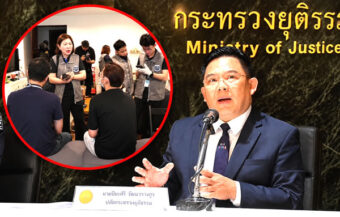
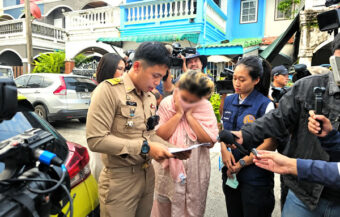
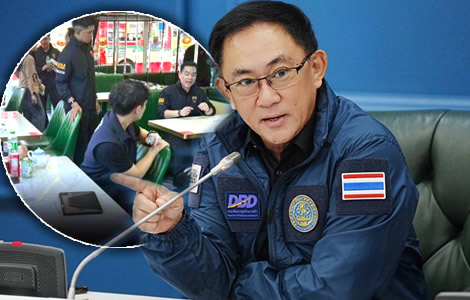
On Friday, June 5, DBD Director-General Poonpong Naiyanapakorn disclosed the results of a review of foreign-linked businesses in Huai Khwang. According to Mr Poonpong, the district remains one of Bangkok’s highest-risk areas. Large numbers of foreigners live and operate businesses there. As a result, the area has been monitored continuously by enforcement agencies.
Mr Poonpong said the department had repeatedly supplied information to the Anti-Money Laundering Office (AMLO), the Royal Thai Police and the Revenue Department. Those agencies have authority in different areas. Therefore, information sharing has become a key part of the government’s approach.
The latest review produced significant findings. Investigators identified 53 legal entities considered at risk of operating as nominee businesses. The companies were engaged in activities regulated under the Foreign Business Act.
Their registered capital ranged from 1 million baht to 4.999 billion baht. The scale of the businesses varied considerably. However, investigators found enough warning signs to justify further examination.
Discovery of 53 high-risk entities triggers money trail and ownership investigations by agencies
Separately, officials discovered that some shareholders and accountants linked to the firms appeared in AMLO’s HR03 registry. That finding immediately elevated concern. Consequently, information relating to the companies was forwarded to AMLO. Financial transactions and money trails are now under review. Other information was also sent to relevant agencies for further investigation.
Mr Poonpong stressed that enforcement would continue. He said strict action was necessary to maintain public confidence in lawful business operations. The department, he added, would continue working with partner agencies to address suspected violations.
The restaurant that sparked the controversy soon became a major focus. Records showed the company was registered in 2024. Its declared activities included operating a restaurant, cafe, bakery, beverage outlet and fast-food business. Corporate documents listed one Thai shareholder and two Chinese shareholders. The ownership structure reflected a 51% Thai and 49% Chinese split.
However, officials disclosed additional concerns. The company had previously been inspected. Directors and shareholders had been summoned for clarification. According to the department, they failed to comply. That refusal constituted a violation of a formal order signed by a senior official. The DBD is now pursuing legal action and seeking penalties permitted under the law.
Joint agency operation widens investigation into ownership, labour and immigration compliance issues
At the same time, information relating to the company was passed to other agencies. Authorities began examining the business from several directions. Ownership structures were reviewed. Financial records were scrutinised. Employment practices also came under examination.
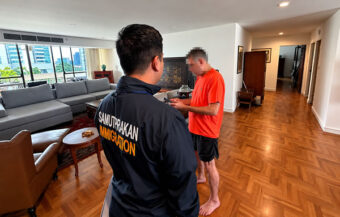
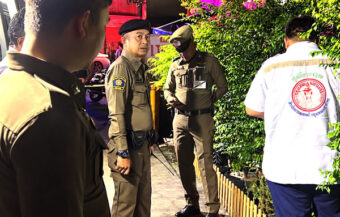
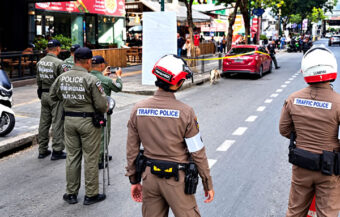
As part of this effort, the DBD launched a joint operation on Friday, June 5. Officials from the Immigration Bureau and the Department of Employment joined the inspections. Teams visited restaurants, supermarkets and real estate businesses.
The operation focused on Pracharath Bamrung Road in Huai Khwang. Investigators examined compliance with business, labour and immigration laws simultaneously.
The following day, further details emerged. Mr Poonpong said Deputy Director-General M.L. Phuthong Thongyai had led the operation. Inspectors uncovered suspected wrongdoing in several areas. Some findings involved ownership structures. Others involved labour and immigration offences.
One investigation centred on four companies operating from the same address. That discovery immediately attracted attention. Further examination revealed complex links between the firms.
Four linked companies draw scrutiny as investigators uncover ownership and reporting irregularities
One company operated as a legal and business consultancy. Its ownership included both Thai and foreign shareholders. Investigators therefore identified potential nominee concerns. Two additional companies shared the same group of directors and shareholders. Together, they possessed registered capital of 30 million baht.
Meanwhile, another company operated as a construction contractor. Officially, all shares were held by Thai nationals. However, the company had a foreign director. When investigators visited the premises, only a caretaker was present. No directors appeared. No shareholders attended. The caretaker could provide no information regarding the business.
Subsequent inquiries uncovered further irregularities. Shareholders connected to the companies had previously served as directors elsewhere. That company was registered in 2022. Since then, it has changed its name five times.
It also failed to submit financial statements for three consecutive years. Those years were 2023, 2024 and 2025. Despite that failure, corporate changes continued to be registered.
For investigators, those findings raised additional questions. The DBD and Immigration Bureau have therefore expanded their inquiries. Officials are examining whether further violations occurred within the group.
Supermarket and restaurant probes reveal questions over permits, funding and business control
Another case involved a supermarket. Records showed the business was 60% foreign-owned. When officials arrived, the premises were closed. Further checks revealed concerns regarding permits. Investigators concluded that required authorisations had not been obtained. The matter has now been referred for legal action.
The restaurant inspection produced some of the operation’s most notable findings. Investigators encountered a Chinese national listed as a company director. Foreign employees were also present. According to officials, the director stated that Chinese investors had provided all investment funds. Thai nationals had been invited to become shareholders.
That statement intensified scrutiny immediately. Officials then reviewed recent payment records. The examination covered five days of transactions. Those records indicated daily revenue of approximately 30,000 baht. Investigators also discovered that customer transfers were entering an account held by the Chinese company director.
In turn, the department ordered the business to submit clarifying documentation. Officials want a fuller explanation of ownership arrangements and operational structures. Further analysis is continuing.
Labour and immigration violations widen the scope of investigations beyond nominee shareholding issues
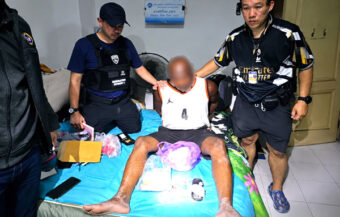
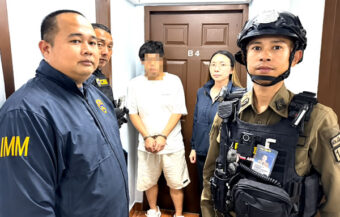
The operation also uncovered labour violations. Department of Employment officers identified foreign nationals working outside authorised conditions. Others had allegedly failed to notify authorities about their employers. Those individuals were detained and transferred to investigators at Huai Khwang Police Station. Employers also face legal proceedings.
Immigration officers made separate discoveries. One foreign national was found to have entered Thailand illegally. Another had failed to report a place of residence. Both cases were referred to police investigators for further action.
Taken together, the Huai Khwang operation illustrates the changing nature of Thailand’s nominee crackdown. Investigations are no longer confined to shareholding records. Instead, agencies are examining ownership structures, financial flows, labour practices and immigration compliance simultaneously.
Moreover, the operation revealed the scale of the challenge confronting regulators. Fifty-three high-risk entities were identified in a single district. Some were linked to individuals appearing in an AMLO registry. Others raised concerns through ownership arrangements or operational practices.
Government prepares broader investigations as nominee crackdown expands across multiple sectors
Yet officials acknowledge that larger investigations remain ahead. Cases involving restaurants and tourism businesses are significant. However, construction, engineering and transport may prove even more complex. Those sectors involve larger investments and broader business networks.
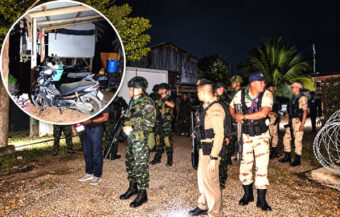
Sweep of nominee firms and business networks on Koh Phangan. 22 arrested, 200 million in land seized
Anutin visits Koh Phangan as nominee crackdown shows 68% of firms with foreign ownership links
For now, the government’s direction appears clear. The prime minister has publicly recommitted to the campaign. Agencies are increasing cooperation. Information sharing is expanding. Joint operations are becoming more frequent.
Following the latest raids, officials confirmed that investigations remain active. Ownership records, financial transactions and business structures continue to be examined. As enforcement widens, Huai Khwang may offer an early indication of how far Thailand intends to push its campaign against nominee-controlled businesses.
Join the Thai News forum, follow Thai Examiner on Facebook here
Receive all our stories as they come out on Telegram here
Follow Thai Examiner here
Further reading:
Sweep of nominee firms and business networks on Koh Phangan. 22 arrested, 200 million in land seized
Anutin visits Koh Phangan as nominee crackdown shows 68% of firms with foreign ownership links
Blitzkrieg on foreign firms and enterprises on Koh Phangan continues with French owned resort busted
Russian-Chinese Koh Phangan alliance to sell drugs to foreigners. Accused entered Thailand illegally
Crackdown aimed at upending foreign business trade moves from Koh Phangan to Phuket. Four arrested