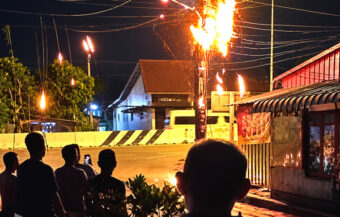
Fresh cracks and sinking roads have forced evacuations, road closures and round-the-clock repairs at Bangkok’s Wongwian Yai as engineers battle a leaking Purple Line tunnel, reviving memories of the capital’s shocking 2025 sinkhole and raising fresh fears over ground stability.
A widening underground engineering emergency beneath one of Bangkok’s busiest intersections has forced evacuations, road closures and round-the-clock repairs after a leaking Purple Line MRT tunnel triggered ground subsidence and fresh cracking around Wongwian Yai, reviving memories of the capital’s 2025 sinkhole disaster. Although a minister says subsidence has slowed and engineers expect to seal the leak within 12 days, residents remain displaced and businesses are closed as investigators race to stabilise the ground and determine what caused the crisis.
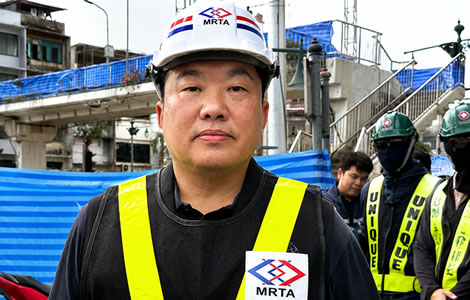
Residents and business owners near Wongwian Yai Roundabout are growing increasingly alarmed despite official assurances that engineers expect to seal a major underground leak within seven to 12 days.
The emergency has disrupted one of Bangkok’s busiest commercial districts, forcing evacuations, road closures and an expanding exclusion zone. Although officials insist the rate of subsidence is slowing, fresh cracks discovered on Friday have heightened concern among those living and working nearby.
The incident centres on the construction of the Purple Line South MRT extension between Tao Poon and Rat Burana. Water first entered the underground works through a sump pit on Wednesday, July 8. At the time, the Mass Rapid Transit Authority of Thailand (MRTA) said the situation was under control. It also stated there was no impact on construction or surrounding ground conditions. Within a day, however, those assurances came under intense scrutiny.
Residents evacuated after widening cracks and subsidence triggered an all-out emergency response
Residents along Prachathipok Road and around Wongwian Yai Roundabout soon reported visible movement in the road surface. In response, engineers carried out detailed inspections across the area.
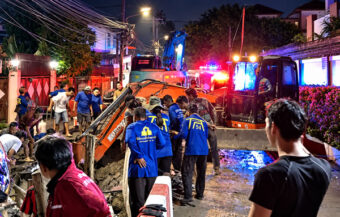
They confirmed ground subsidence and widening cracks close to Wongwian Yai Intersection. The findings immediately triggered a multi-agency emergency operation involving the MRTA, the Bangkok Metropolitan Administration (BMA), district officials and engineering specialists.
Authorities first ordered residents closest to the damaged area to leave their homes. The evacuation covered commercial buildings within a 30-metre radius of the incident. Around 60 residents were advised to leave for one week and take valuables, essential documents and personal belongings. At the same time, businesses inside the exclusion zone suspended operations while engineers assessed the stability of nearby structures.
Separately, the Khlong San District Office instructed displaced residents to report to a joint command centre established near the King Taksin the Great Monument. The MRTA arranged temporary accommodation for those forced from their homes.
Road closure, command centre and monitoring systems deployed as authorities tighten safety
Officials also closed approximately 200 metres of Prachathipok Road between Ban Kaek Intersection and Wongwian Yai Intersection. They said reducing traffic would minimise vibrations that could affect weakened ground and nearby buildings.
As part of the emergency response, Bangkok Governor Chadchart Sittipunt visited the site with Deputy Governor Wissanu Subsomphon. Both supervised the city’s initial response and reviewed conditions with engineers.
Notably, officials established a command centre to coordinate technical operations, emergency planning and public safety. The centre also oversees evacuations, monitors structural movement and directs engineering resources.
In parallel, specialists installed continuous monitoring equipment around the affected area. The ScopeEye monitoring system measures structural tilt, vibration and ground movement in real time.
The Department of Disaster Prevention and Mitigation operates the equipment with Urban Search and Rescue Thailand. Consequently, engineers receive constant data from buildings and road surfaces surrounding the construction site.
Deputy minister says slowing subsidence offers encouraging signs as engineers accelerate repairs
Deputy Transport Minister Siripong Angkasakulkiat travelled to Wongwian Yai on Friday afternoon to inspect progress. Afterwards, he apologised for the disruption caused by the incident.
Nevertheless, he said engineering data suggested conditions were beginning to improve. According to Mr Siripong, the road surface subsided by more than 20 centimetres on Thursday. During the following 24 hours, however, the ground dropped by only another eight centimetres.
He described the latest measurements as encouraging. Previously, subsidence continued almost without interruption. Engineers recorded movement averaging between one and two centimetres every hour.
By Friday, the pattern had changed significantly. Instead, movement occurred only intermittently and varied according to underground conditions. Officials believe that the shift indicates some stabilisation beneath the damaged section.
Mr Siripong said engineers have already succeeded in filling several underground voids beneath the affected area. As a result, some sections have become noticeably more stable. Additional heavy machinery has now been deployed to accelerate repairs. On another front, the BMA and the MRTA are coordinating the removal of a pedestrian bridge to improve access for engineering equipment and construction vehicles.
Building inspections continue as investigators examine the leak history and possible contributing factors
Attention has also focused on nearby buildings. Mr Siripong said one structure showing signs of movement had not leaned any further since Thursday. Engineering teams continue inspecting the building every 30 minutes. Those inspections remain part of an intensive monitoring programme covering surrounding properties and public infrastructure.
Addressing construction standards, Mr Siripong said the contractor had followed recognised engineering procedures throughout the project. Construction manuals and technical standards had also been observed.
Even so, he acknowledged that several factors may have contributed to the emergency. The precise cause, however, remains under investigation. Engineers are continuing technical assessments before reaching any final conclusion.
Mr Siripong also disclosed that the MRTA had identified water leakage before the current incident developed. Engineers attempted repairs after discovering the problem. Those earlier measures included traffic restrictions and precautionary evacuations. Despite those efforts, the leak later developed into significant ground subsidence around Wongwian Yai.
Engineers say tunnel pressure must be maintained before permanent repairs and compensation can proceed
Investigators have not yet determined the full size of the leak. According to Mr Siripong, that assessment cannot be completed while water continues entering the tunnel. First, engineers must maintain pressure inside the underground structure.
Only afterwards can they inspect the damaged section completely. He explained that the tunnel uses a pressure-balancing design requiring equal pressure inside and outside the structure.
Engineers must therefore seal every external void before permanent repairs can begin. The process requires specialised engineering techniques designed to equalise pressure safely around the tunnel lining. Based on current assessments, officials estimate repairs will take between seven and 12 days. Until then, stabilisation work will continue around the clock.
Questions were also raised about compensation for residents and businesses affected by the emergency. Mr Siripong confirmed that the contractor carries insurance covering damage and disruption. Those forced to leave their homes or business premises will also receive assistance from the contractor during the evacuation period. He assured affected residents that compensation would be provided.
Prime Minister orders safety first as minister defends engineering decisions and apologises to residents
Mr Siripong said the Prime Minister had instructed every agency to place public safety above every other consideration. Accordingly, all decisions at the site are being made according to engineering principles rather than public opinion. He rejected suggestions that technical decisions should be influenced by outside pressure.
“No one can dictate the engineering process,” he said.
“It must follow engineering standards.”
The Deputy Minister also revealed that recognised engineering specialists from Thailand and overseas had joined discussions examining the incident. Experts from the Department of Disaster Prevention and Mitigation and the Department of Public Works are also participating. According to Mr Siripong, conclusions will be based on collective technical analysis rather than the opinion of any single specialist.
“I must sincerely apologise for what happened,” Mr Siripong said.
“However, the Ministry of Transport will oversee and resolve the issue at every step, following the Prime Minister’s policy, which prioritises public safety. Please be patient; we will do our best to resolve the problem.”
Engineering adviser says slower subsidence points to progress despite continuing groundwater fears
Later on Friday, engineering adviser Thanet Weerasiri provided a further technical assessment from the site. Mr Thanet, an adviser to the Engineering Institute of Thailand, said the latest measurements pointed to improving conditions beneath the road surface. Even so, he stressed that engineers would continue monitoring the area continuously until the leak had been fully contained.
According to Mr Thanet, the affected road subsided by about 20 centimetres on Thursday. During the following 24 hours, however, it dropped by only another eight centimetres. He described that change as a positive engineering indicator.
Unlike the previous day, the ground was no longer sinking continuously. Instead, movement now occurred intermittently and depended on conditions at different locations beneath the surface.
He cautioned that work remained challenging despite the slower rate of subsidence. Engineers are still dealing with groundwater entering the tunnel. That, he said, remains the principal obstacle to completing repairs. Rainfall may complicate operations slightly. Nevertheless, he said it would not significantly affect the overall engineering plan. Officials continue monitoring the site constantly, and at present, no additional engineering failures have been detected.
Fresh cracks force wider exclusion zone as engineers continue stabilising ground around Wongwian Yai
Despite those encouraging assessments, Friday brought fresh concern. Engineers discovered additional cracking near the original leak during afternoon inspections. In response, officials widened the safety cordon around the affected roadway by another three metres.
The latest cracking appeared along Prachathipok Road close to Wongwian Yai Roundabout. Although it remained inside the original 30-metre exclusion zone, engineers concluded that additional protection was necessary while repair work continued.
The wider exclusion zone immediately affected pedestrians and motorists moving through the busy junction. Officials increased restrictions around the damaged area while engineering teams continued stabilisation work.
Public access remains tightly controlled as inspectors monitor every change in the road surface. The expanded cordon reflects continuing caution despite official statements that the rate of subsidence has slowed.
Engineers are focusing on sealing voids surrounding the tunnel before permanent repairs begin. That process requires maintaining balanced pressure inside and outside the underground structure. Officials say the technique is essential to prevent further movement while repairs are completed. Until those voids are sealed, engineers cannot fully assess the damaged section or determine the precise size of the leak.
Round-the-clock repairs continue as investigators review earlier leak warnings and response
Heavy equipment continues operating around the clock inside the restricted area. Construction crews are filling underground cavities while monitoring every stage of the work.
At the same time, structural specialists continue inspecting nearby buildings for any further movement. One building remains under close observation every 30 minutes. According to officials, it has shown no additional leaning since Thursday.
Elsewhere around the site, monitoring systems continue recording structural movement in real time. Engineers are tracking vibration, settlement and tilt across surrounding buildings and roads. The data is reviewed continuously as repair work progresses. Officials say this allows them to respond immediately should conditions change.
Attention has also turned to how the leak developed after earlier intervention by the MRTA. Mr Siripong confirmed that engineers had previously detected water entering the tunnel and attempted repairs before the current emergency unfolded.
Those earlier measures included traffic restrictions and precautionary evacuations. Nevertheless, the leak later developed into significant subsidence, forcing a much larger emergency response.
New emergency revives memories of the sinkhole that devastated Samsen Road in September 2025
Questions are also likely to focus on whether further technical safeguards are required for major underground projects. However, officials insist it is too early to draw conclusions. Mr Siripong said investigators must first establish the precise cause before making any assessment of contributing factors. Technical specialists continue examining the site while engineering work remains the immediate priority.
The incident has also revived memories of one of Bangkok’s most dramatic construction failures. On September 24, 2025, a huge sinkhole opened during construction of the same Purple Line project on Samsen Road.
The collapse measured approximately 30 metres by 30 metres and reached an estimated depth of 50 metres. It opened directly outside Vajira Hospital and beside a police station in central Bangkok.
Investigators later concluded that soil had shifted into an underground Purple Line construction tunnel. The collapse caused severe ground failure around the site and forced extensive emergency operations. Subsequently, the newly completed police station was demolished because of structural damage. That incident became one of the capital’s most significant transport construction failures.
Evacuations and road closures remain as engineers race to secure Bangkok’s troubled Purple Line project
Although officials have not directly linked the two incidents beyond the construction project itself, the similarities have attracted widespread public attention.
Both emergencies involved ground movement associated with Purple Line tunnelling. Both also required extensive engineering intervention and public safety measures. As a result, the latest incident is being watched closely by residents, commuters and businesses across Bangkok.
For those living around Wongwian Yai, however, the immediate concern remains safety. Evacuation orders continue for residents inside the restricted area. Businesses closest to the damaged section also remain closed while inspections continue. Access to affected buildings is tightly controlled as engineers monitor conditions beneath the road.
Traffic restrictions are also expected to remain in place while stabilisation work continues. The closure of part of Prachathipok Road has disrupted one of the city’s key transport corridors. Officials say the restrictions are necessary to reduce vibrations that could affect weakened ground. They will remain until engineers determine that the area is safe.
Engineers maintain intensive monitoring as repairs continue and investigators seek answers over failure
Meanwhile, the joint command centre continues coordinating the response between the MRTA, the Bangkok Metropolitan Administration, district officials and engineering specialists.
Emergency accommodation remains available for displaced residents. Officials are also maintaining regular inspections of surrounding buildings and infrastructure while reviewing fresh engineering data as it becomes available.
Bangkok engineers scrambled to repair another large sinkhole in the busy Bang Kapi area of the capital
Sinkhole collapse report delivered to the Ministry of Transport. Phiphat will soon know what went wrong
For now, engineers believe the slower rate of subsidence offers cautious encouragement. Even so, the appearance of fresh cracks and the decision to expand the safety cordon underline that risks remain. Repair work is expected to continue for at least another week before the underground leak can be fully sealed.
Until then, Wongwian Yai will remain the focus of one of Bangkok’s most closely monitored engineering operations. Every stage of the repair is being scrutinised by specialists as crews work to stabilise the ground, seal the tunnel leak and restore safety around one of the capital’s busiest transport intersections.
Join the Thai News forum, follow Thai Examiner on Facebook here
Receive all our stories as they come out on Telegram here
Follow Thai Examiner here
Further reading:
Just another accident or disaster on Saturday as Thailand’s image abroad takes a battering this week
Italian Thai boss and 16 others arrested on Thursday charged with Auditor General building deaths
Arrested man linked with Chatuchak building collapse now tells police he is a Chinese state employee
Prime Minister orders arrests over the Chatuchak Auditor General building disaster within seven days
Chinese steel firm linked to Chatuchak disaster faces DSI probes. Minister cancels investment status