
A 29-year-old Thai man has been arrested for allegedly posing as a police officer to trick a Thai woman in California into transferring nearly ฿200 million, as investigators uncover a wider transnational scam network involving more than 75 suspects.
Officers from the Central Investigation Bureau (CIB) swooped in on a 29-year-old man in Prachin Buri on Tuesday. Mr. Yongyut was taken into custody on fraud and money-laundering charges linked to an international scam that defrauded a Thai woman in California of nearly ฿200 million, or $6.4 million. The case raises stark questions about how these criminal gangs gain access to sensitive financial data and how convincingly they impersonate Thai police and regulators to pressure victims into surrendering their savings.
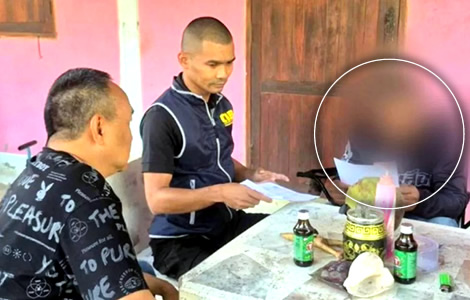
The Central Investigation Bureau (CIB) has detained a 29-year-old man in Prachin Buri on charges of posing as a Thai police officer and extorting money from a Thai woman living in the United States.
Notably, investigators claim the woman lost almost ฿200 million during the scheme. Officers state that the suspect used false claims linking her to a money-laundering case. The arrest followed a formal complaint and a multi-agency investigation.
Deputy Crime Suppression Division commander Pol Col Pongpanot Chukaew led the arrest operation. Officers detained the suspect, identified as Yongyut, in front of a house in the Hat Nang Kaeo sub-district of Krabin Buri on Tuesday. Police say the suspect’s surname has been withheld pending further investigation. The Central Investigation Bureau reports that the man is 29 years old and was wanted on several serious charges.
Police detail fraud and money laundering charges as California victim reports initial telecom approach
According to police, the charges include colluding in a transnational criminal organisation and fraud by impersonation. In addition, he is also accused of entering false information into a computer system.
Furthermore, investigators allege that he allowed others to use bank accounts and electronic cards for financial crimes. Consequently, serious money laundering charges were also listed in the arrest warrant.
The case began after the victim, identified only as Jenjira, filed a complaint with the Technology Crime Suppression Division 2. Her surname has also been withheld. Meanwhile, investigators state that the woman resides in California.
She told officers she firstly received a call from a woman who claimed to work for a telecom company. At length, the caller told her that a phone number registered in her name had been used for illegal activity.
Fake police contact and bank book forgeries pressure the victim into transfers of nearly ฿199 million
Soon after that call, another person contacted her through the Line app. Significantly, this caller allegedly posed as a police officer. Moreover, he informed her that she was involved in a money-laundering case.
According to the complaint, he sent messages and fabricated evidence to bolster the claim. Police say this included photographs of bank books showing her name. Investigators believe the intent was to convince her that she faced imminent criminal prosecution.
The victim said therefore she was therefore pressured to cooperate. Consequently, she was allegedly ordered to transfer money for verification. The funds came from her accounts in both the United States and Thailand.
Investigators confirm that these transfers occurred several times. The total amount transferred reached approximately ฿198.86 million. Police say the money was sent to accounts controlled by the criminal group.
Investigators probe bank trails as seventy five suspects face warrants in a fraud network
A key question linked to these scam efforts is the data that the scammers undoubtedly have access to. In particular, they appear to discern who has access to funds. In turn, they use this inside knowledge to convict the target or mark that they are the authorities. However, the question is where this data is coming from.
Previously, the Royal Thai Police arrested and prosecuted government officials who leaked official data. Notably, additional information must originate within the banking system.
Police sources report that the funds were routed through the suspect’s account. Then the money was distributed to other accomplices. Investigators say the operation involved multiple bank transactions and layers of accounts. They describe the structure as organised and coordinated.
According to the investigation, more than 75 people took part in the fraud. Therefore, police say arrest warrants have been issued for all identified suspects. Officers state that the case forms part of a broader crackdown on transnational crime networks. The investigation covers financial trails, communications, and account records.
Suspect denies role as cybercrime case advances while police pursue funds across borders.
When confronted by officers, Yongyut admitted he was the person named in the warrant. However, he denied involvement in the fraudulent scheme. Police have not released further details regarding his statement.
The suspect was transferred to Technology Crime Suppression Division 2 for legal processing. Investigators say the case will proceed under existing financial and cybercrime laws.
Officials emphasise that the complaint from the victim triggered the investigation. The alleged impersonation included deception through digital messaging, personal data misuse, and falsified financial records. Police stress that the false identification as law enforcement was central to the scheme. Moreover, the fabricated evidence allegedly created a sense of urgency and pressure.
Authorities have not disclosed the current status of the stolen funds. However, recovery efforts are ongoing as investigators track the transactions. Officers state that the network extends across borders. The case involved multiple bank accounts in different locations. Evidence collection continues.
All identified suspects face prosecution as investigators review digital devices and bank records
The Central Investigation Bureau says that all suspects identified so far face prosecution. Meanwhile, the case remains active, and further arrests are expected. Investigators plan to examine digital devices, bank records, and communication logs. Police say these efforts aim to determine each suspect’s precise role in the operation.
Officials have not released further personal information about the victim beyond her first name and nationality. They confirm that she resides in California and maintains financial accounts in Thailand and the United States. Investigators believe she acted in response to perceived legal threats created by the scammers.
Police save 75 year old woman from scammers as the scale and scope of the threat still rises in Thailand
Immigration Bureau tightens rules for foreign tourist visas as the country feels the heat on scammers
Finally, authorities state that the suspect is presently in custody while the investigation proceeds. Officers will forward the case to the courts when the inquiry concludes. The charges include several serious offences carrying significant penalties under Thai law.
Join the Thai News forum, follow Thai Examiner on Facebook here
Receive all our stories as they come out on Telegram here
Follow Thai Examiner here
Further reading:
Money Laundering Office seizes assets with money trail linked to South African financier Ben Smith
Kla Tham MP dismisses unproven scam centre claims about Deputy Prime Minister Thamanat Prompow
People’s Party warns Anutin of a No Confidence move over cabinet links to Cambodian scam networks
United States, South Korea and United Kingdom act against Cambodian scam industry with Thai tie-ins
Ben Smith affair & allegations of links to Cambodian scam centres continues to rage in parliament
Defiant Rangsiman Rome warns he’s not just fighting a defamation case but for the future of Thailand
Ben Smith money fixer to the elite in Thailand lines up ฿100M defamation case against Rangsiman Rome
Leader of deadly scam gang in Cambodia and henchmen still at large with 4 more Thais arrested
Police in Cambodia close in on fake scam loan app leadership after family murders in Samut Prakan
Cambodian cybercrime industry run by Chinese criminals could be generating up to 38% of its GDP