Baht at five-year high sparks warning from ex-PM as exporters, farmers and tourism feel the squeeze. Growth ticks up to 2.1% for 2026, but debt, trade tensions and political uncertainty threaten momentum. Calls grow for bolder Bank of Thailand action.
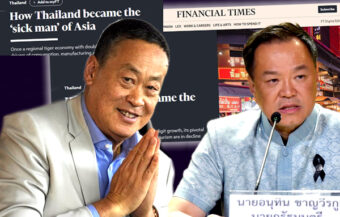
In a week when the Bank of Thailand cut its benchmark rate to 1% amid firmer trade and GDP data, Thailand’s baht surged to a five-year high against the US dollar. In a Friday opinion piece, former Prime Minister Srettha Thavisin called for bolder action by the central bank and the country’s economic leadership to rein in what he described as a runaway currency. He said a weaker baht would immediately sharpen export and tourism competitiveness, while boosting Thai investors and businesses abroad when income is repatriated. That, Mr Srettha argued, would feed directly into stronger liquidity and renewed momentum in the domestic economy.
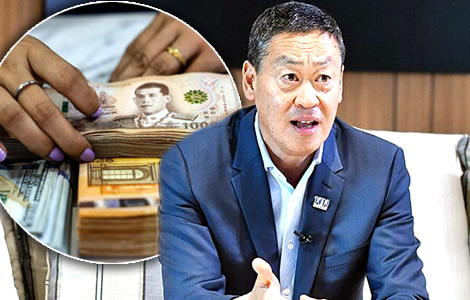
Former Prime Minister Srettha Thavisin has issued a pointed warning over the strength of the Thai baht after it climbed to a five-year high against the US dollar. This week, the currency touched 30.98 baht per dollar, its strongest level in almost five years.
However, the appreciation came despite monetary easing by the Bank of Thailand. On Wednesday, the Monetary Policy Committee cut the policy rate by 25 basis points to 1.00%. As a result, borrowing costs now stand at their lowest level in years.
Nevertheless, the baht strengthened further, highlighting a divergence between exchange rate movements and policy intent.
Stronger data lift 2026 outlook, but overall growth remains modest and below potential
At the same time, recent economic data have shown firmer momentum. In the fourth quarter of 2025, Thailand’s economy expanded 2.4% year-on-year. That figure exceeded earlier expectations. Consequently, TRIS Rating revised its 2026 growth forecast upward to 2.1%, from 1.7%.
Even so, overall expansion remains modest. Growth is still around 2%, and therefore below the country’s potential. Moreover, it continues to lag behind several regional peers.
In his February 27 column in Prachachat Business, Srettha framed the issue bluntly. He wrote that the question is not whether Thailand is growing. Instead, he asked how to accelerate the economy without waiting for large investment or new spending packages.
While structural reform and labour upgrades are necessary, he argued that exchange rate management is immediate. Accordingly, he described the currency as a policy tool rather than a symbol of prestige. In an increasingly competitive environment, he said, allowing the baht to appreciate beyond the economic rhythm risks missed opportunities.
Strong baht squeezes exports, farmers and tourism as price competitiveness erodes
When the baht strengthens, Thai exports become more expensive in foreign currency terms. Yet production costs, labour inputs and product quality remain unchanged. However, global buyers compare prices across competing suppliers.
As a result, orders may shift to countries with weaker currencies. In particular, agricultural goods and food products are exposed. These sectors are traditional Thai strengths. Nevertheless, neighbouring producers often gain on price. Consequently, market share can erode even when quality holds steady.
Therefore, farmers and small-scale producers bear direct pressure. Margins in those sectors are already narrow. Moreover, many exporters lack natural currency hedges. Thus, exchange rate shifts translate quickly into pricing disadvantages. According to Srettha, the issue is not inferior goods but higher relative prices. In that context, he questioned whether a strong baht truly supports national objectives.
Similarly, tourism faces measurable effects. Visitors continue to choose Thailand for its culture, services and natural attractions. However, a stronger baht raises effective travel costs. As a result, tourists may shorten stays or trim discretionary spending.
Remittances and domestic income weaken as currency strength reduces baht conversion gains
They may skip optional tours or reduce shopping budgets. Consequently, average revenue per visitor declines. By contrast, even a slight depreciation could alter perceptions of value. In turn, visitors might extend stays and spend more locally. That additional spending would circulate within the domestic economy in baht terms.
Another channel involves overseas income. Many Thais work, invest or operate businesses abroad. When the baht strengthens, remittances convert into fewer baht. Therefore, domestic purchasing power declines immediately.
Conversely, if the baht weakens gradually, foreign income translates into more baht. Those funds are typically used for consumption, housing, investment and family support. As a result, real economic activity increases without additional fiscal spending.
Srettha acknowledged trade-offs linked to currency adjustment. A weaker baht can raise import costs for certain goods. In addition, inflationary pressures may emerge in specific categories. Businesses carrying foreign currency debt may also face higher repayment burdens.
Gradual currency adjustment urged as stability mandate confronts growth needs
However, he argued that gradual, well-communicated moves can mitigate volatility. Step-by-step adjustments reduce shock effects. Therefore, sequencing and clarity become critical elements of policy management.
He also stressed that stability must serve growth. During his tenure as prime minister, he maintained that monetary stability should not obstruct economic opportunity. The Bank of Thailand’s primary mandate centres on financial stability.
Meanwhile, the government must assess growth, income and competitiveness together. Thus, institutional perspectives differ by design. According to Srettha, sustainable stability requires rising incomes and forward movement in the real economy.
While he rejected drastic devaluation, he supported alignment with the economic structure. A gradual, slight depreciation could support exports and tourism simultaneously. Moreover, it would enhance the domestic value of overseas earnings. In that sense, he presented exchange rate management as a low-cost lever. It would not require new budget allocations. Instead, it would rely on calibrated policy signalling.
Debt burdens and political uncertainty threaten budget timing and 2026 momentum
Broader data illustrate the constraints surrounding that debate. Although TRIS Rating lifted its 2026 growth forecast to 2.1%, it cautioned that structural headwinds persist.
Private consumption remains fragile. In December 2025, the Consumer Confidence Index fell to 51.9 from 53.2 in November. The decline followed the dissolution of parliament. In addition, household debt reached 86.8% of GDP in the second quarter of 2025. That is the highest level among ASEAN peers. Consequently, debt burdens continue to restrain spending.
Furthermore, fiscal processes face uncertainty. The February 8 general election delivered a preliminary majority for the Bhumjaithai Party. However, results have yet to be formally certified. In the meantime, legal cases, petitions, and, significantly, public opinion in relation to the general election are turning pointedly negative.
Therefore, at the very least, approval of the 2027 fiscal budget could be delayed by two to three months. As seen in previous election cycles, such delays slow public consumption and investment. In turn, near-term growth momentum can soften.
Trade tensions, tariff shifts and low inflation complicate Thailand’s outlook. Growth is constrained by problems
External conditions add further complexity. Exports expanded 12.7% in US dollar terms in 2025, driven by electronics and machinery. However, that strong base effect may dampen 2026 growth rates.
Moreover, uncertainty over US trade policy persists. In late February, the US Supreme Court ruled that certain reciprocal tariffs were unconstitutional. However, the US administration invoked Section 122 of the Trade Act of 1974. Consequently, a temporary global tariff of up to 15% was introduced for 150 days. Existing 25% tariffs on autos, auto parts, steel and aluminium remain in place.
Energy prices offer limited inflationary pressure. TRIS expects Dubai crude to average between $60 and $70 per barrel this year.
The forecast reflects a global slowdown and rising supply from OPEC+ producers. As a result, headline inflation is projected at 0.0% to 0.5% in 2026. In 2025, it averaged minus 0.13%. Core inflation averaged 0.83% last year. Therefore, price pressures remain subdued.
January data show mixed momentum as the Bank of Thailand flags four key risks
The Bank of Thailand reported continued growth in January 2026. Exports rose 7% month-on-month, led by computer components and telecommunications equipment to the United States. Imports increased 30.1%, driven by electronic components and appliances from Taiwan.
The rise partly reflected concerns over a global chip shortage. Meanwhile, private consumption grew 1% in January. That was slower than December’s 2.3% increase, following the expiration of stimulus programs. However, durable goods purchases remained supported by vehicle deliveries.
Private investment also increased, particularly in machinery and equipment. In addition, vehicle investment was boosted by the EV 3.0 measure, which extended registration deadlines to the end of January. Tourism recovery continued, with 3.3 million foreign arrivals recorded in January. At the same time, inflation fell by 0.66% month-on-month, largely due to lower vegetable prices.
Looking ahead, the Bank of Thailand identified four key risks. First, US trade policy and geopolitical factors remain fluid. Second, the pace of tourism could fluctuate as it did last year. Third, manufacturing liquidity and adaptability require monitoring. Fourth, the 2027 budget process and related government measures may affect the timing of expenditure. Consequently, growth is expected to moderate after temporary stimulus effects fade.
Baht debate intensifies as strength persists and calls grow for bolder policy action
Against this backdrop, the baht’s path has moved to the centre of policy discussion. It strengthened despite rate cuts and subdued inflation. Growth improved in late 2025, yet remains moderate overall. Structural debt burdens persist.
External trade uncertainty continues. Therefore, the exchange rate debate should align directly with competitiveness, income flows and sectoral performance. However, as of now, it appears the baht is still guided by an invisible force or hand. Its value is inflated well beyond what the country’s economic dynamics suggest.
Bank of Thailand boss issues warning about private sector debt weighing down the Thai economy in 2026
Trump fires back with 10% tariff under a 1974 law after Supreme Court setback. Good news for Thailand
In 2026, with growth projected at 2.1%, management of the baht remains a critical variable in Thailand’s economic outlook. The question is how, unless the Bank of Thailand takes more robust and extraordinary action.
This, of course, carries risk, and therefore successful central bank governors have opted for stability. Former Prime Minister Srettha is suggesting bolder action.
Join the Thai News forum, follow Thai Examiner on Facebook here
Receive all our stories as they come out on Telegram here
Follow Thai Examiner here
Further reading:
Trade expert warns the government on barter deals with China being pursued by the Commerce Ministry
Top Commerce Ministry official warns that any US trade deal must wait for new parliament and cabinet
Asean Summit on Monday and Tuesday seen by United States as pivotal to restoring border peace
War to continue says PM Anutin. Dismisses President Trump’s ceasefire talk as a ‘misunderstanding’
Confusion after Trump’s 20 minute phone call with PM Anutin. US side claimed a ceasefire was agreed